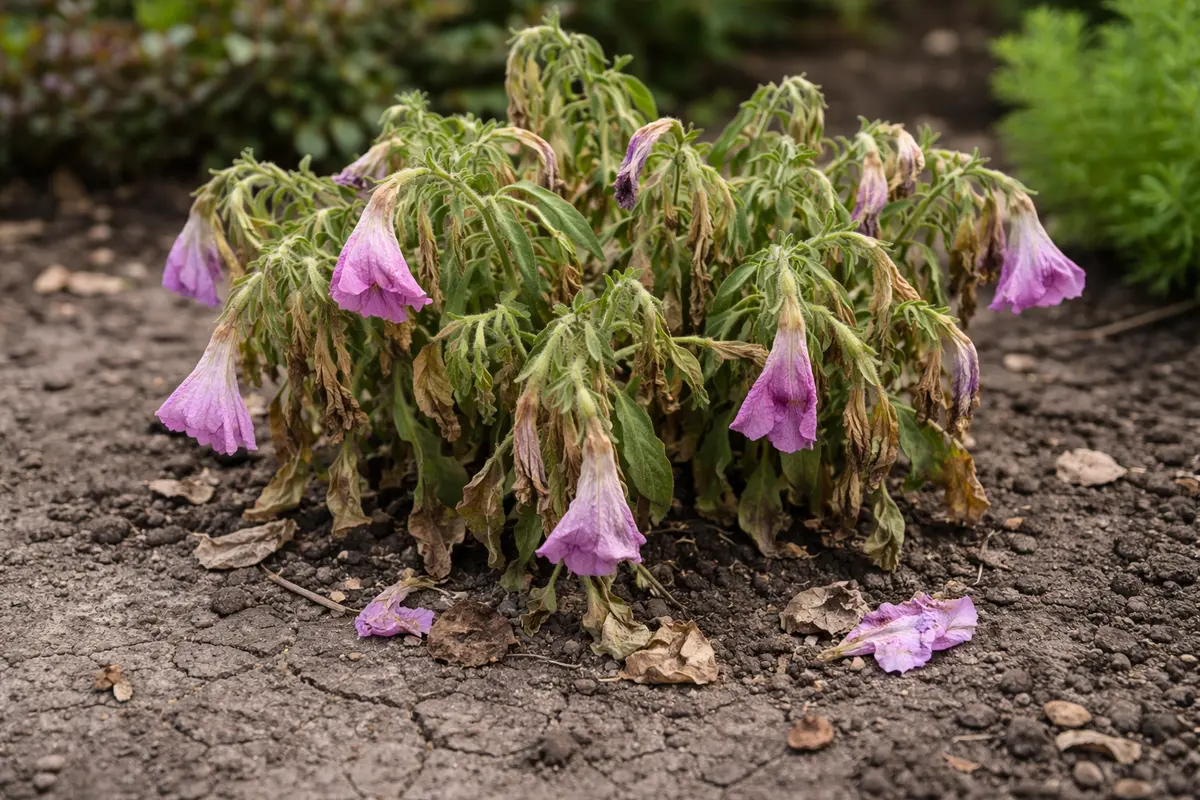
You come across your petunias wilting after a week-long trip without watering, and you’re wondering how to revive wilting petunias after missing water. The leaves appear limp, and the flowers are drooping, indicating they urgently need moisture. If you don’t act quickly, the damage could worsen, leading to permanent wilting or loss of blooms, but it’s fixable with prompt attention. Addressing the issue swiftly improves the chances for rejuvenation and restores the beauty of your garden. Keep a close watch on the petunias as you implement these recovery steps, because their resilience can be a direct result of your timely actions.
Step 1 – Revive Wilted Petunias with Watering Technique
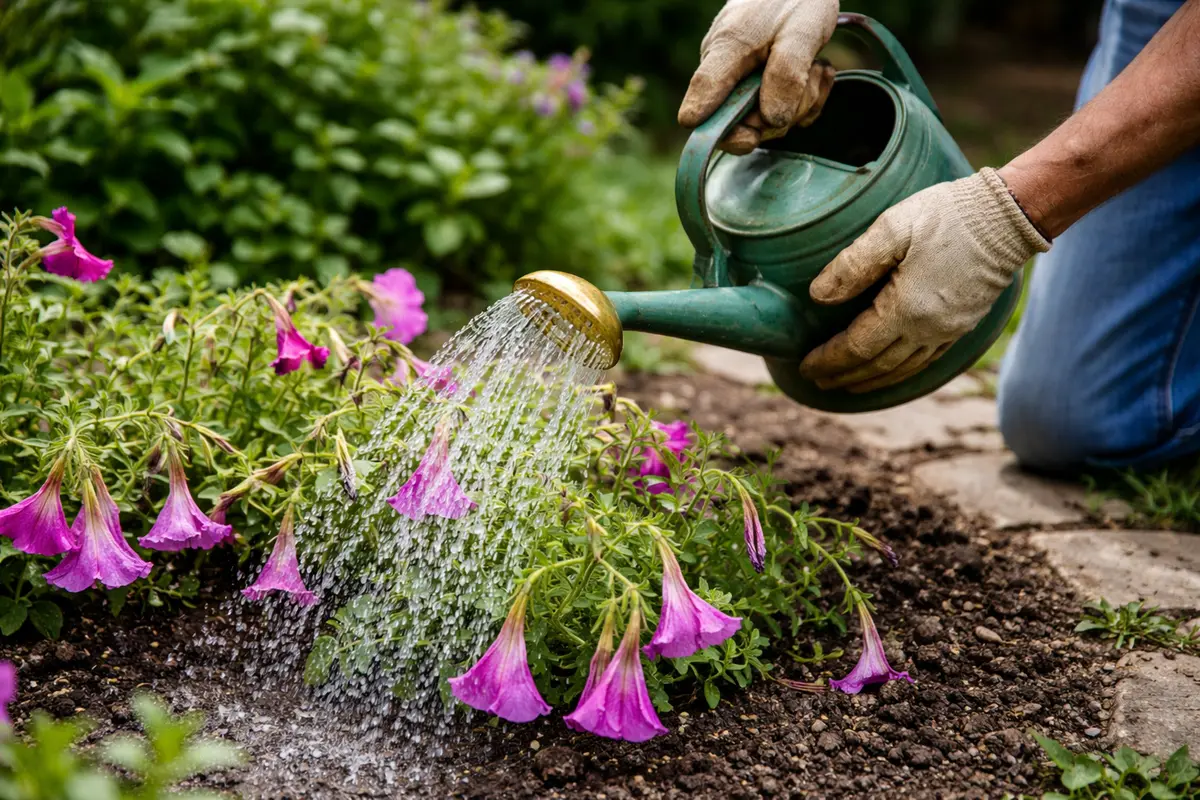
Start by watering the petunias thoroughly—soak the soil until it feels moist down to a depth of six inches. You will notice the leaves begin to perk up within a few hours. If the wilting is significant, consider using a watering can with a narrow spout for better control or a soaker hose to ensure even distribution without overwhelming the roots. When soaking, aim to provide about 1 to 1.5 inches of water, which allows moisture to reach the necessary depths effectively. Monitor the soil’s surface during this process; pooling or visible runoff may indicate the saturation threshold has been reached. If you don’t see the soil absorbing water properly, try adjusting the watering method or checking for compacted soil that might be repelling moisture.
Watering is critical for petunias because, after missing water, they lose turgidity, essential for maintaining structure and vitality. When the soil is dry, the roots can’t absorb enough water, leading to visible wilting. Without immediate hydration, the plant’s ability to photosynthesize effectively diminishes, contributing to further stress. You should also look for temperature variations; if the surrounding air is too hot, the plant may require additional watering to compensate for quicker moisture loss. If the leaves don’t show signs of improvement within three hours of watering, reassess your approach and consider the soil’s health as a possible issue. Is the soil too dry or too compacted? If it is very hard, it tightly grips the roots, making it nearly impossible for them to drink, which can ultimately lead to plant stress and potentially demise.
Many gardeners mistakenly think that a light sprinkle will suffice. However, if the soil has been very dry, it needs deeper watering to encourage the roots to reach for moisture. Ensure you use lukewarm water; using cold water can shock the plant’s system, delaying recovery. A common error is watering too lightly; if the moisture doesn’t penetrate deeply enough, the roots will remain dry and stressed. In cases involving heavy clay soils, be patient; it might take two or three watering attempts to achieve proper saturation. After each watering, check the moisture by inserting your fingers into the soil or using a soil moisture meter to confirm the soil is adequately wet. Waiting a few minutes and then checking again will allow you to see if further water is necessary.
Step 2 – Diagnose Underlying Watering Issues for Petunias
Next, check the moisture level in the soil to determine the underlying cause of the wilting. You will feel if the soil is compacted or too dry after this immediate watering. Assessing the first 2-3 inches of soil provides a quick diagnostic tool: if the surface feels dry but deeper layers are moist, this suggests that the wilting stems from root uptake issues rather than a lack of water. This issue is not uncommon in container gardens, where limited space can lead roots to become bound, restricting water access. If the top layer only has dry granular particles, it often indicates that deeper roots are not able to receive the necessary hydration.
If the soil feels hard and dry several inches down, it can restrict root growth and water absorption significantly. Petunias thrive in well-draining soil, and if the soil retains too much water or lacks drainage, this can prevent their roots from accessing necessary nutrients and oxygen. This becomes especially problematic in containers where heavy compacted soil can create a barrier, sealing off roots from absorbing moisture efficiently. A quick visual examination can help; if you see the soil has cracked or crumbled at the surface, it’s time to loosen the soil and possibly amend with organic material to enhance porosity.
If the soil smells sour or feels waterlogged after watering, consider amending it with perlite or sand to improve drainage while you rehydrate. A crucial aspect of petunia care is ensuring the roots are healthy and able to breathe; if compacted soil has led roots to bind, consider gently breaking it up while hydrating to relieve pressure around root systems. This will promote better water and air exchange, which is essential for successful rehydration. If you find that the soil has dried out again within a day or two, observe how it’s accumulating moisture — it might be time to investigate soil replacement with a more suitable potting mix designed for petunias. Remember, if the issue persists after several attempts, it might be time to rethink your soil choice altogether or consider transplanting to a container with improved drainage qualities.
Step 3 – Feed Petunias to Restore Vibrant Blooms
Start by thoroughly soaking the petunias with water at the soil level until it is evenly moist, avoiding splashing water on the leaves. You’ll want to provide consistent hydration every day until you notice the flowers beginning to perk up. After a few hours, you should see the flowers show signs of recovery, and the leaves regain their turgor, standing upright instead of drooping. To prevent future wilting, establish a regular watering schedule, checking the soil moisture daily and watering when the top inch feels dry, especially during hot, sunny days. If weather conditions change to hot and dry, expect to adjust your watering frequency accordingly.
Recovery may take anywhere from a few hours to a couple of days, influenced by the extent of wilting and environmental conditions such as temperature and humidity. High heat can trigger rapid moisture loss, while cooler and humid days might slow transpiration, delaying recovery. If your petunias are still drooping after two days, check that they aren’t in overly compacted soil that retains excess water. It’s also important to monitor the atmospheric conditions around them closely, as a sudden cold snap or drought can drastically influence how quickly they bounce back.
A common mistake during the recovery-prevention transition is to overwater, thinking more moisture will hasten recovery. When none of the soil moisture checks indicate dryness, yet leaves remain limp, it might lead directly to root rot. This can be particularly dangerous in well-draining pots. Instead, if leaves are wilting even in well-draining soil, assess environmental factors; extended exposure to intense heat or direct afternoon sunlight can exacerbate moisture loss. Also, keep an eye on pot drainage — overwatering in pots with no drainage holes can trap moisture, leading to stress signs that mimic underwatering.
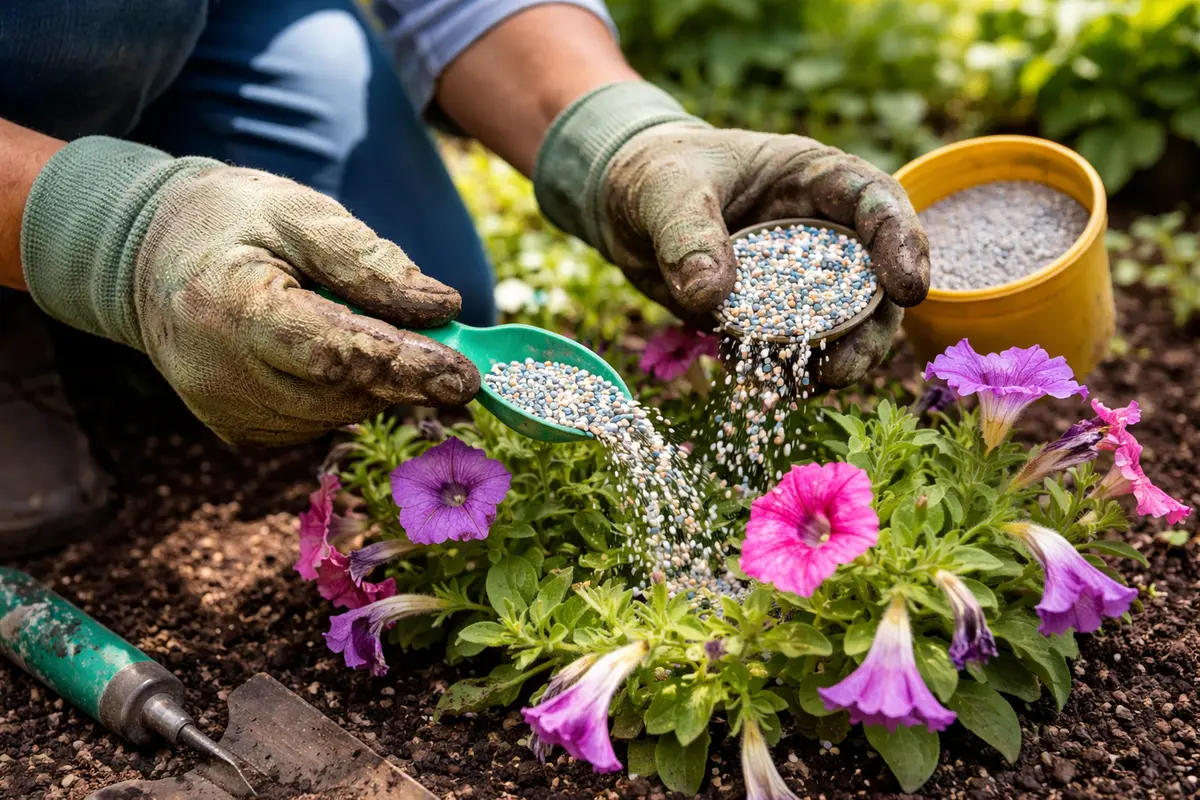
This nourishment is crucial as it replenishes nutrients the plant needs for recovery, especially following a period of stress. Petunias flourish when given adequate phosphorus and potassium, which aid in flowering and overall vigor. Mixing these nutrients with water will ensure a smoother feeding process. During recovery, ensure even distribution when fertilizing to prevent patchy growth, as uneven feeding can intensify stress responses in already wilting leaves. To avoid common mistakes with fertilizer, always dilute according to package instructions before application. If the petunias are in pots, consider fertilizing them with a half-strength solution every two weeks until they fully recover and begin blooming consistently again. A careful balance is vital; if they are not blooming or growth appears stunted, it may indicate a nutrient imbalance that requires evaluation.
Be careful not to over-fertilize, as excessive nutrients can burn the roots, especially during the recovery phase. A typical misstep occurs when gardeners fail to dilute the fertilizer properly; this can lead to rapid growth that the plant’s weakened system is unprepared to support. Observing the leaves provides critical feedback: if they start turning yellow or developing brown tips, it may indicate over-fertilization. A particularly tricky sign is if flowers fail to develop despite proper care, it might suggest a nutrient lockout or an inappropriate fertilizer choice affecting plant health. In such a case, reassess your fertilization schedule and consider switching to a specially formulated flower booster if blooming fails to occur after several treatments.
Step 4 – Check Petunia Leaves for Signs of Recovery
Start by checking the soil moisture level around your petunias. Insert your finger about an inch deep into the soil; if it feels dry, water the plants immediately. After watering, observe how the leaves begin to perk up and regain firmness within a few hours as they start to recover. Keep rechecking the soil moisture every day for the next week to ensure consistent hydration; consistency is key for maintaining a healthy revival. Utilizing a moisture meter can provide a more precise gauge if uncertainties arise with manual checks.
A fully recovered petunia boasts vibrant, upright flowers and lush green leaves, showcasing a healthy texture and a noticeable sheen. If you notice that new flowers are opening, it indicates a return to vitality. In contrast, early signs of the problem may manifest as drooping buds and slightly crispy leaf edges, indicating that stress is returning. If you observe new yellowing leaves while maintaining good moisture, this is a signal to adjust your care routine, as compromised roots might still be causing an issue.
If the wilting returns despite regular watering, consider increasing the frequency of water checks or adjusting your watering method to ensure deep saturation. You might also reassess the plant’s placement to confirm it’s not exposed to too much direct sunlight, which can exacerbate wilting. Pay attention to environmental factors; increased temperatures can change moisture needs. If problems persist, consult a local gardening expert for tailored advice, especially if you suspect a disease affecting your plant’s health.
A fully recovered petunia will display healthy, vibrant foliage, with flowers beginning to open. Look specifically for any signs of yellowing leaves or continued wilting; these could indicate that an issue hasn’t fully resolved or a new one is developing. Persistent drooping may suggest exacerbated watering or drainage problems. At this point, reassessing entire water management strategies becomes crucial, as over-compensating with water can lead back to wilting if drainage remains inadequate, pushing roots towards demise from over-saturation and potential decay. Consider rotation in watering techniques, varying the moisture levels based on weather changes or mulch application to retain ground moisture.
If you find that the plant isn’t adhering to recovery as anticipated after about a week, take time to reevaluate your watering behavior or soil conditions. This would include how often you check in on the moisture level. If issues persist—like stunted growth or continued droopiness—consider transplanting your petunias into fresh soil that is well-aerated to promote optimal growth and drainage. Inadequate drainage can heavily impact recovery; switching to a lightweight potting mix can work wonders if your current soil is too dense, impairing moisture retention or suffocating roots.
FAQ
How long does it take for petunias to recover after missing water?
Petunias typically begin to show signs of recovery within 24 to 48 hours of proper watering. However, complete revitalization may take 1-2 weeks, depending on the severity of dehydration and environmental conditions such as temperature and humidity. If the flowers do not start blooming again after this period, further investigation into soil conditions or potential diseases might be warranted, as continued stress could signal deeper issues. Always keep an eye on the soil moisture and the plant’s leaf responsiveness during this period, as a constant airflow around the petals improves overall plant health.
Should I remove the wilting petunia flowers?
It’s usually unnecessary to remove wilting flowers right away, as they may bounce back after proper care. Monitor closely, and if the flowers remain wilted after a week, it’s best to trim them to promote new growth. Removing them too early might frustrate attempts to regrow since some flowers may surprise you by recovering strength and reopening once they gather enough resources. If you wait and give them sufficient time to gather moisture, they may regain their form and contribute further to your garden’s beauty, enhancing your landscape.
Will my petunias recover if the soil is still compacted?
If the soil remains compacted, recovery will be challenging. Ensure to rework the soil to improve aeration and drainage, as this will assist greatly in root recovery and overall health. Compacted soil restricts air and moisture flow to the roots, jeopardizing long-term growth potential. Regularly monitoring the soil quality is essential; if you notice that drainage remains an ongoing problem, consider changing the pot or location of your petunias to a better-draining environment where the roots can properly expand and establish themselves without hindrance, allowing the petunias to thrive once more.