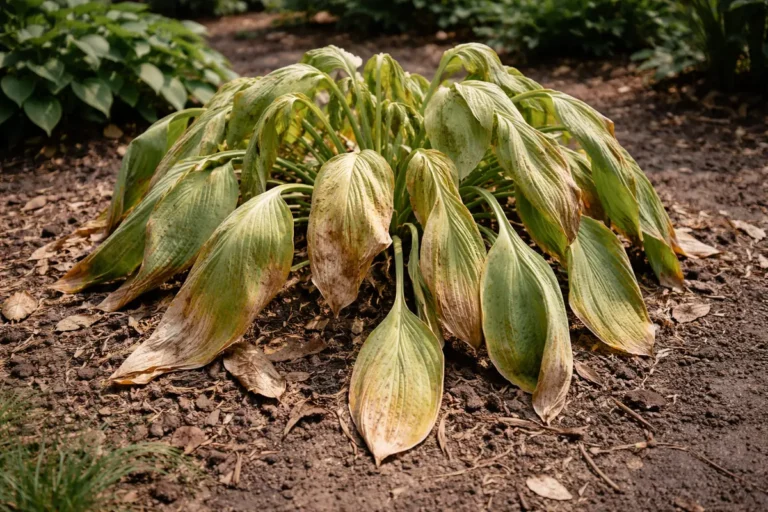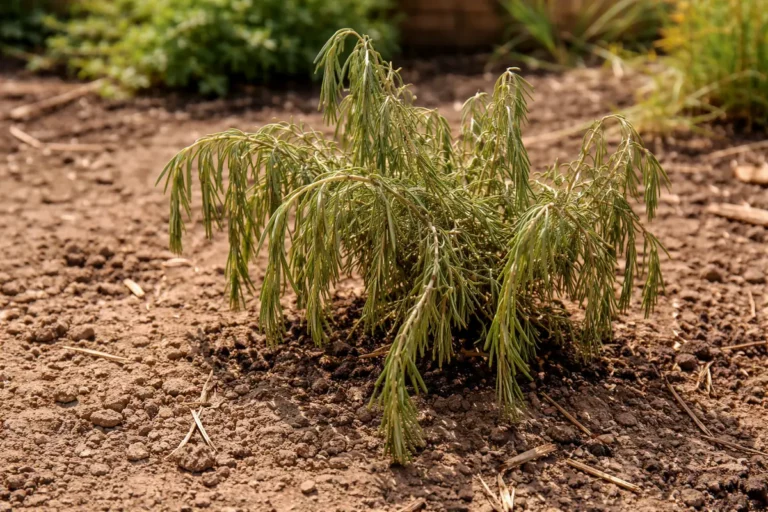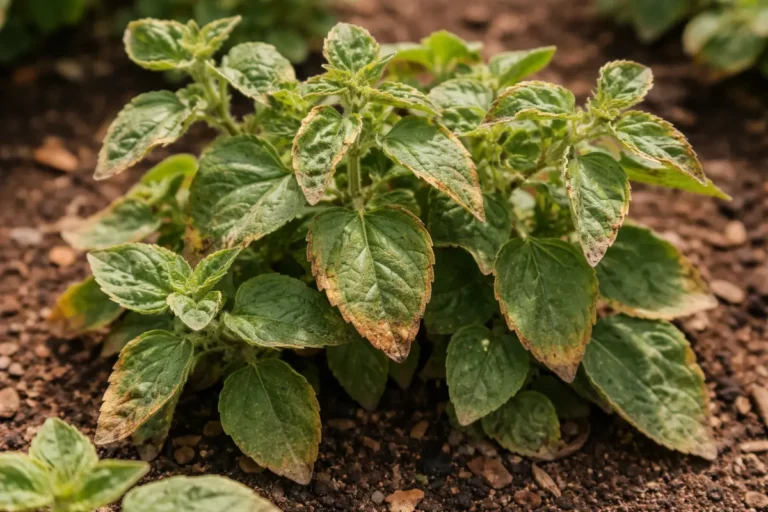
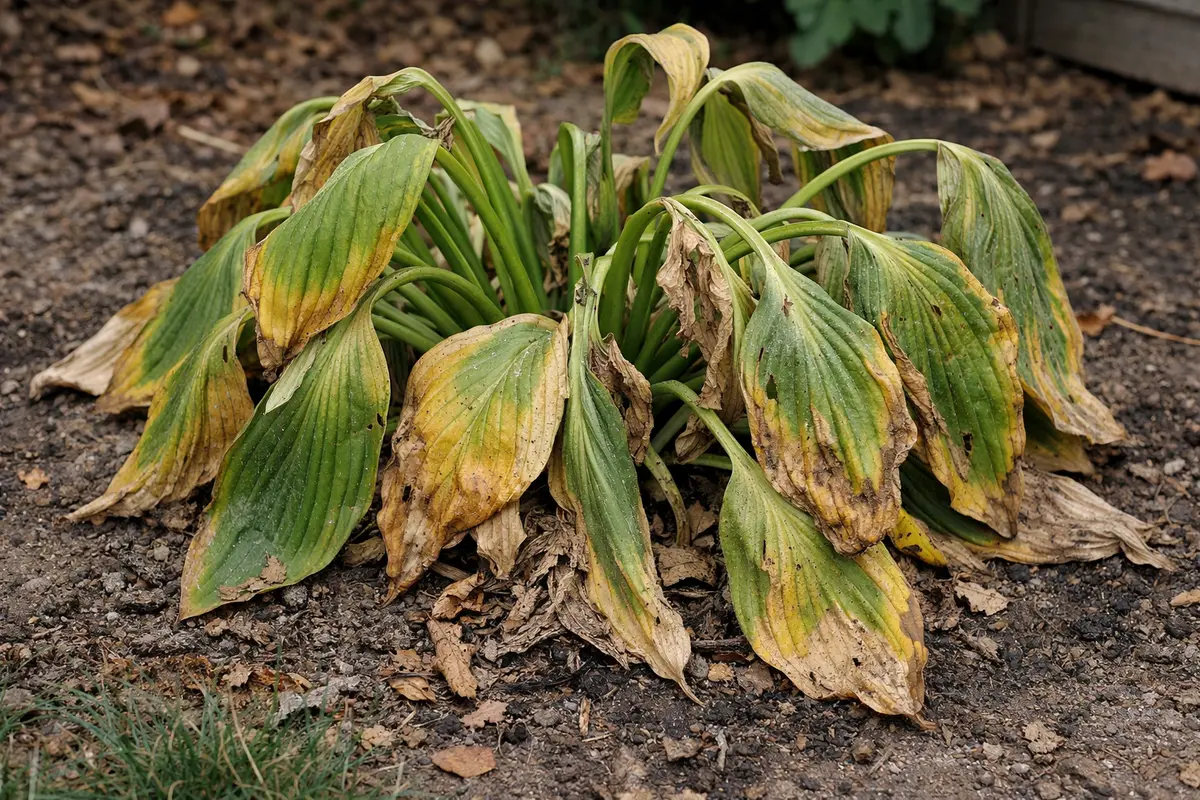
You may notice that your hosta leaves are wilting in summer, especially during a prolonged heatwave, which is why you need to know what to do when hosta leaves are wilting in summer. This wilting is often caused by insufficient water uptake due to extreme heat, leading to drooping leaves that can signal distress. If ignored, the problem can worsen and weaken the plant, making it harder to fix, but you can still improve the situation by checking moisture levels and adjusting your watering schedule.
Step 1 – Water Hosta Immediately to Revive Leaves
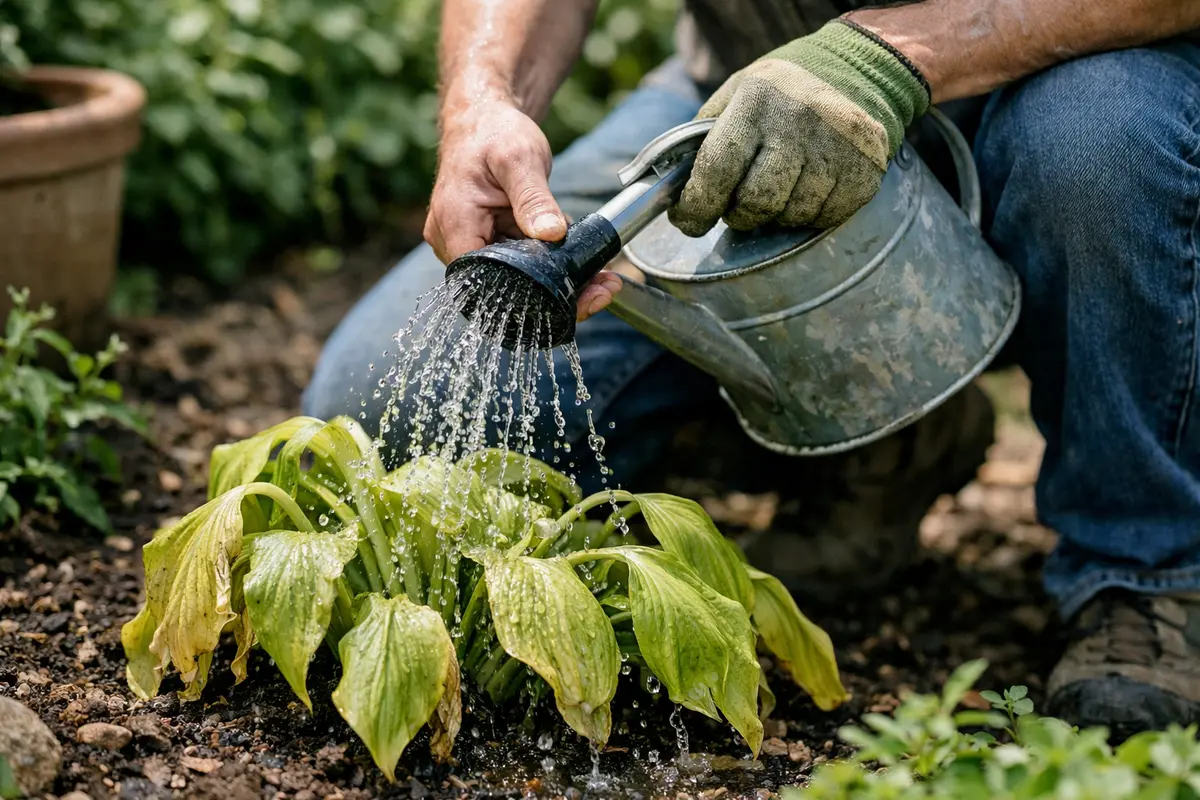
Water the hostas deeply right away. You should aim to deliver at least 1 inch of water to the root zone, and you will start to see the leaves perk up within a few hours as they draw up moisture from the roots. Utilize a soaker hose or a watering can to ensure that the water penetrates deeply into the soil and does not just run off the surface. For optimal results, check the moisture content of the soil using a moisture meter or simply by digging a small hole to gauge how deep the water has reached.
Acting quickly to water your hostas is crucial because wilting occurs during hot conditions when moisture levels drop significantly. This situation can lead to stress in the plant, affecting its ability to photosynthesize properly, which can result in yellowing leaves and potentially stunted growth. For example, if the soil moisture drops below 30% during peak summer heat, hostas can quickly begin to suffer from dehydration. You might notice this become apparent after a week of hot weather, as older leaves begin curling or developing crispy edges. Once this happens, the leaves not only hinder their recovery but can cause permanent leaf damage, and over time, lead to plant death if not addressed. Moving forward, establishing a watering routine that includes frequent checks can help pre-empt this issue, especially during high temperatures, allowing for an early response to any wilting signs.
A common mistake gardeners make at this stage is only giving a light sprinkle to the soil, thinking that will suffice. You may think a quick splash will be enough, but hostas require water to reach at least 6 inches deep in the soil to fully absorb the moisture they need. If your hosta leaves remain wilted after watering, it may indicate that the root system is suffering from deeper issues like rot or compaction, which would warrant a closer examination of the root zone. If the leaves perk up within a few hours, that’s a positive sign; otherwise, consider checking the soil’s drainage properties. It’s critical to monitor the soil for any runoff, as that indicates the watering method may not be effective; allowing moisture to pool can lead to root damage.
Step 2 – Identify Root Issues Affecting Hosta Leaves
Check the soil moisture levels to ensure drainage is adequate. You should notice the soil is saturated if it’s been watered correctly; otherwise, dry soil might lead you to over-amend without addressing the core problem. To do this, insert your index finger into the soil up to the second knuckle; dry soil will typically feel parched, while damp soil will hold together. If you pull your finger out with soil clinging to it, your soil moisture levels are favorable. However, if the soil feels like dust, it’s a telltale sign you need to re-evaluate your watering schedule.
The root cause of wilting often stems from poor drainage or nutrient deficiency, which can lead to problems in the root zone. For instance, if the soil feels overly compacted or lacks aeration, it prevents roots from effectively absorbing both moisture and essential nutrients. If you observe white or black mold on the surface of the soil, this indicates poor aeration and possible root issues. Additionally, this can manifest as stunted growth or continued wilting even after watering. Furthermore, if you detect a sour smell when checking the soil, this indicates root rot from prolonged saturation, requiring immediate action to save the plant. In such cases, it is recommended to carefully remove the hosta from the soil, inspect the roots for damage, and trim away any affected parts. If you find the roots are brown and mushy rather than white and firm, this is a strong indication they are beyond recovery and that the plant cannot be saved through conventional means.
If the soil is too dry, it’s a sign that your watering schedule needs adjusting—perhaps your hostas are in a location with too much sun exposure and not enough moisture retention. A simple test is to measure the surrounding foliage for light exposure; if other mid to tall plants are screening the hostas from direct sun, relocating your hostas to a spot with partial shade for part of the day may assist moisture retention during high temperatures. Conversely, if the soil sags with excess moisture, consider implementing a different watering strategy or exploring soil amendments like perlite or coarse sand that promote drainage. It may help to mix in composted organic matter, which enhances both moisture retention and aeration. Ensure you let the soil dry slightly between waterings if it retains excess moisture, as soggy roots exacerbate the wilting further and could lead to a dramatic decline in overall plant health.
Step 3 – Fertilize Hosta to Aid Leaf Recovery
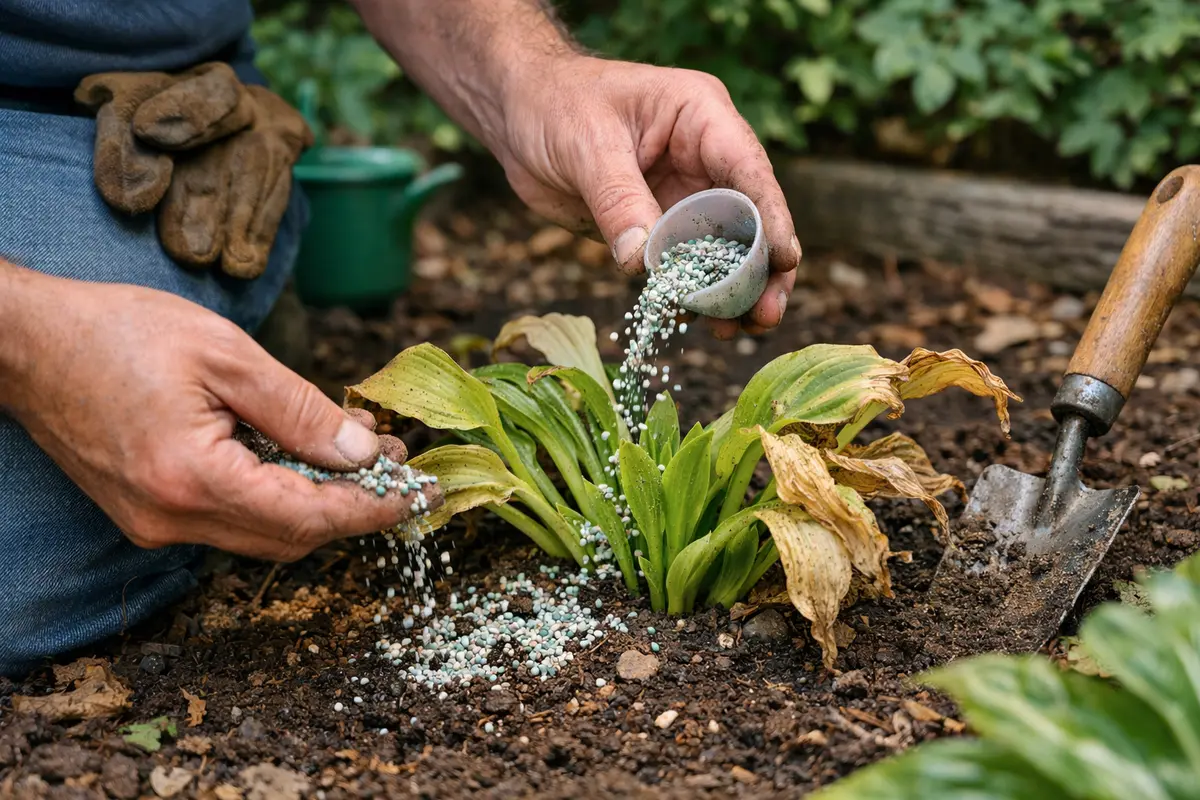
Apply a balanced, slow-release fertilizer designed for leafy plants. You should see signs of recovery, such as returning color and firmness in the leaves, within a week. Look for a fertilizer with equal parts nitrogen, phosphorus, and potassium (such as a 10-10-10 formula) to ensure a comprehensive nutrient profile. It’s essential to mix the fertilizer into the top couple of inches of soil to promote optimal nutrient uptake by the roots. Be sure to follow the package instructions for application rates based on the size of your plants.
Fertilizing helps provide the essential nutrients that hostas need to bounce back from stress. Specifically, nitrogen supports leafy growth, aiding in cell division and chlorophyll production necessary for vibrant green foliage. Phosphorus is vital for root development, which is crucial for absorbing water effectively and fortifying plant resilience. If your hostas are deprived of these critical elements during vital growth periods, their ability to recover is significantly impaired, resulting in prolonged wilting and limited photosynthesis. This is particularly true if you notice stunted growth, which is a clear sign that nutrient uptake is poor.
Establishing a fertilization routine is vital to maintaining soil health and enhancing the aesthetic appeal of your hostas. For instance, applying fertilizer every spring as new growth begins and again midway through the summer if wilting has occurred due to drought can help ensure the plants are supported during stressful periods. Caution is needed, as a common mistake is to fertilize immediately after wilting happens without allowing the plant to stabilize first; this could further stress the plant. If the leaves still wilt post-fertilizing, consider checking drainage again to ensure that water and nutrients can reach the roots effectively. Be aware that excessive fertilization can lead to salt build-up in the soil, which can damage roots further. Regularly flushing the soil with water can help mitigate this and maintain a balanced nutrient profile in the soil.
Step 4 – Inspect Hosta Leaves for Wilting Patterns Regularly
Check your hosta plants every 3 to 4 days for signs of recovery. Look for fresh, green growth at the leaf tips as evidence that the situation is improving. You can also assess the leaves for any new shoots; this typically indicates that the plant is responding well to care efforts. Tracking leaf color can also reveal the plant’s health; if you notice vibrant, lush green hues returning, that’s a solid indicator of positive growth. Conversely, if you note that the leaf edges begin to crisp again, it’s a potential sign that moisture levels are still inadequate.
This ongoing monitoring allows you to distinguish between normal wilting and signs that stress is recurring. Once the plant shows new growth and leaves begin to open outward, it demonstrates that it has absorbed sufficient moisture and nutrients from the soil. An indicator that improvement is underway includes the leaves regaining their firm texture and glossy appearance. Conversely, if you observe brown margins or ongoing droopiness, especially under hot conditions, those are indicators that the root issues have not yet been resolved, and the plants may require further intervention. It might also indicate a deficiency in the nutrients needed to support recovery. In particular, this is crucial during late summer when heat waves can exacerbate existing issues.
If wilting resurfaces, take note of the environmental conditions—such as unusually hot weather or irregular watering patterns. You may need to readjust your care schedule, increasing watering times during higher temperatures or seeking shade for vulnerable plants during peak heat. In some cases, if two or more neighboring plants show similar symptoms, investigate whether soil pH levels may be unbalanced; an ideal pH for hostas typically ranges between 6.0 and 7.0, which can significantly affect moisture absorption. You might also want to take soil samples to a local extension office to accurately determine pH levels and make adjustments as necessary. Failure to address recurring wilting can lead to significant health issues for your hostas and may require more intensive treatments or interventions down the road. If water management remains a challenge, installing moisture meters could prevent fluctuations in soil moisture content, allowing you to keep track of conditions more effectively.
FAQ
How long does it take for wilting hosta leaves to recover?
Typically, if you water your hostas immediately, you can expect to see some recovery within a few hours. However, full recovery can take up to a week, during which you should monitor the leaves for new growth and firmness. If after this period there is no improvement in the firmness and color of the leaves, consider reevaluating soil conditions and root health, possibly seeking professional advice if the roots are indeed compromised.
Can summer heat stress cause wilting to spread to other plants?
Yes, if the hostas are in close proximity to other plants, the stress from one can lead to overcrowding and competition for resources. Conditions that promote wilting in one plant can affect the moisture levels in the surrounding soil, potentially impacting neighboring plants. Always check for signs of stress in other flora nearby; wilting or yellowing foliage in adjacent plants can indicate a broader issue with water or nutrient availability in that area.
Should I remove brown, wilted leaves from my hostas?
Yes, while removing brown, wilted leaves can help improve airflow around the plant, it’s important to do so with care. Cleaning can prevent further issues and encourage the plant to focus its energy on new, healthy growth. Pruning should be done gently; avoid excessive trimming, as it can stress the plant further. Wait until recovery appears to be underway before doing any major leaf cleanup to avoid interrupting the recovery process.