
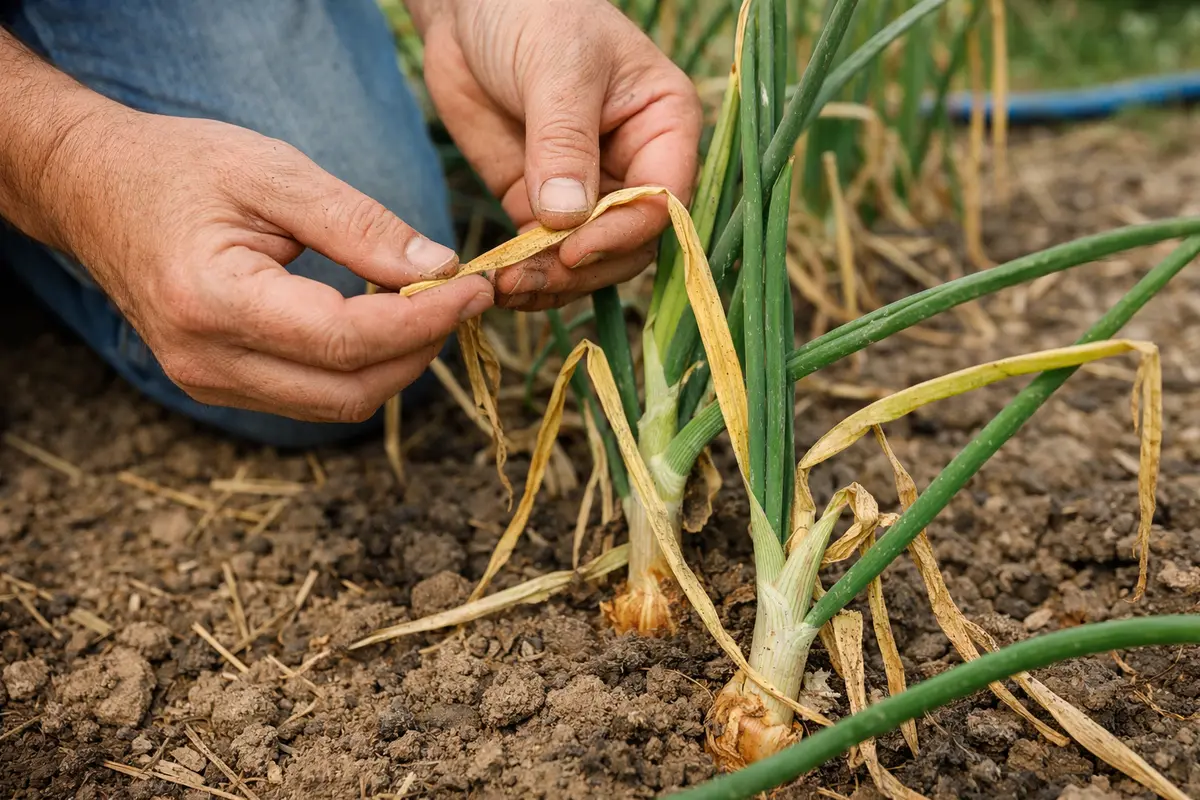
You may notice your onion plants showing alarming yellowing leaves during the hot summer months, which is why you need to know how to treat yellowing leaves on onion plants from drought. This yellowing is a clear indication of stress from insufficient water, leading to wilting and eventual damage to the foliage. If left untreated, the condition only gets worse and can spread to other plants in your garden, making it harder to fix. Fortunately, you can take action now by adjusting your watering schedule and inspecting the soil moisture levels to improve their health.
Step 1 – Water Onion Plants Deeply and Immediately
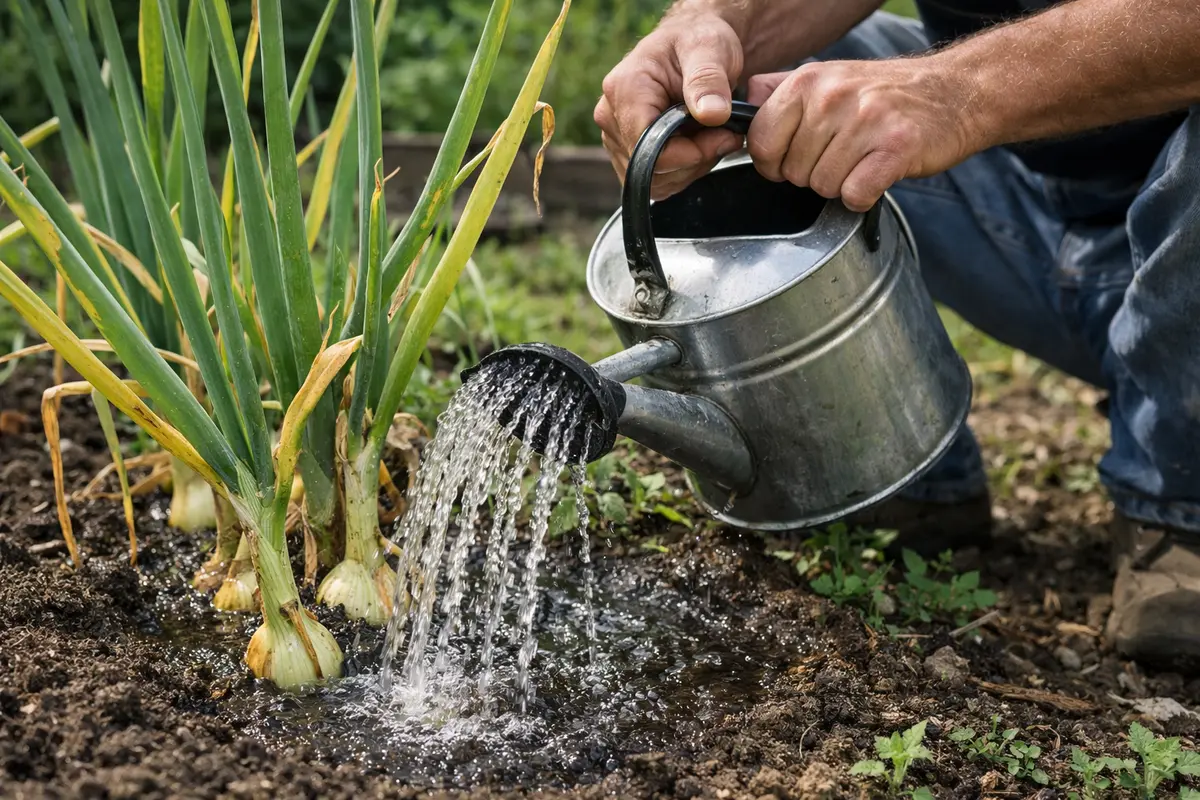
Water the onion plants thoroughly, soaking the soil around their roots to about six inches deep. You will notice the leaves begin to perk up within a few hours, showing signs of revitalization. Aim to apply approximately 1 to 1.5 inches of water during this initial watering to ensure proper soil saturation.
Immediate watering is crucial in restoring moisture levels in the soil, allowing the plants to absorb vital nutrients effectively. Onion plants require a consistent moisture supply, and prolonged drought periods can severely limit nutrient uptake, leading to stress symptoms like yellowing leaves. If you observe leaves drooping in addition to the yellowing, this is a warning sign of extreme water deficiency. Failure to act can lead to wilting and ultimately plant loss, as roots suffer from lack of hydration.
A common mistake gardeners make is to only water superficially, which does not reach the root zone of the plants. It is essential to ensure that water penetrates deeply, especially in lighter soils that drain rapidly. If you notice that the soil remains dry after trying to water, examine the watering technique being used—saturating the area under direct pressure with a hose or soaker can improve moisture absorption significantly. Also, check for any compacted soil layers where water may not penetrate properly; loosening those can facilitate better absorption.
Step 2 – Assess Soil Moisture for Drought Impact
First, check the soil moisture around your onion plants. If the soil feels dry and crumbly, water deeply to ensure the roots are receiving adequate moisture. After watering, monitor the plants for improvements; healthy green leaves should start to reappear within a few days.
Yellowing leaves on onion plants indicate a lack of water, leading to stress in the roots and restricting nutrient uptake. When the soil is dry, essential nutrients like nitrogen become less available, causing leaves to yellow and weaken. In contrast, if you notice dark, mushy leaves, it may indicate overwatering or root rot instead of drought.
If the soil smells sour, indicating poor drainage or anaerobic conditions, avoid using more water and consider amending the soil with organic matter to improve aeration. Alternatively, if the yellowing is accompanied by stunted growth and the soil remains moist, assess if pest issues or nutrient imbalances could be contributing factors instead.
Dry soil prevents adequate water absorption and exacerbates corresponding issues leading to yellowing leaves. Healthy onion plants thrive on consistently moist soil; any significant fluctuations can disrupt their ability to take in nutrients. By assessing the soil moisture, you can better tailor your watering strategy to suit your onions’ needs, ensuring that you provide the right amount of moisture moving forward.
If the soil exhibits signs of compactness, appearing hard and crusty on the surface, this may indicate drainage issues. In these cases, adding organic matter such as compost can significantly improve the soil’s structure and moisture retention abilities. For example, a two to three-inch layer of compost can enhance soil texture and water-holding capacity. Keep a watchful eye on various sections of your garden, as moisture levels can vary widely even within the same planting area—knowing how much moisture is present in different parts will guide your irrigation adjustments.
Step 3 – Test Soil Moisture Before Treating for Drought
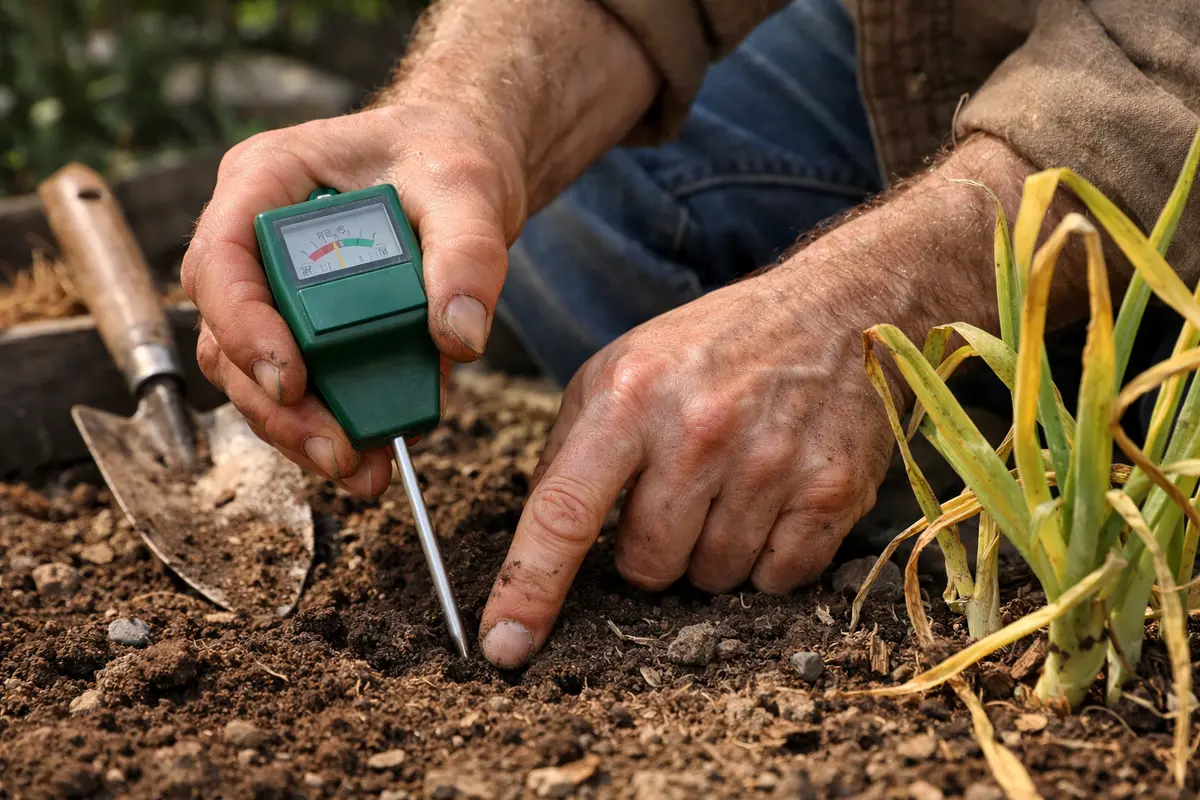
Inspect the soil around your onion plants for moisture levels. If you find that the soil is dry and the onion roots are not receiving adequate water, it confirms that the drought stress is indeed the cause of the yellowing leaves. If the soil appears wet yet the leaves continue to yellow, prepare to check for root rot as an indication of excess moisture.
If you see dry, crumbly soil and your plant leaves are yellowing, you are likely dealing with a moisture deficit. In contrast, if the soil is muddy and the yellowing persists, it could indicate overwatering and subsequent root rot. This critical step will help verify the stressors affecting your plants and will help avoid unnecessary treatments. Monitor the size and color of the root system; crisp, white roots signify health, while brown or mushy roots indicate decay.
When checking for root health, it’s crucial to be thorough. If roots are soft or mushy, they are likely exhibiting signs of rot due to excessive moisture. Conversely, a firm root system indicates a healthy plant struggling with lack of water. Make it a habit to evaluate the plant health regularly, especially following instances of environmental stress, as swift corrections provide the best chance for recovery. If you need to intervene, consider gently loosening the soil around the roots to facilitate access to air and water.
Step 4 – Apply Organic Fertilizer to Revive Onions
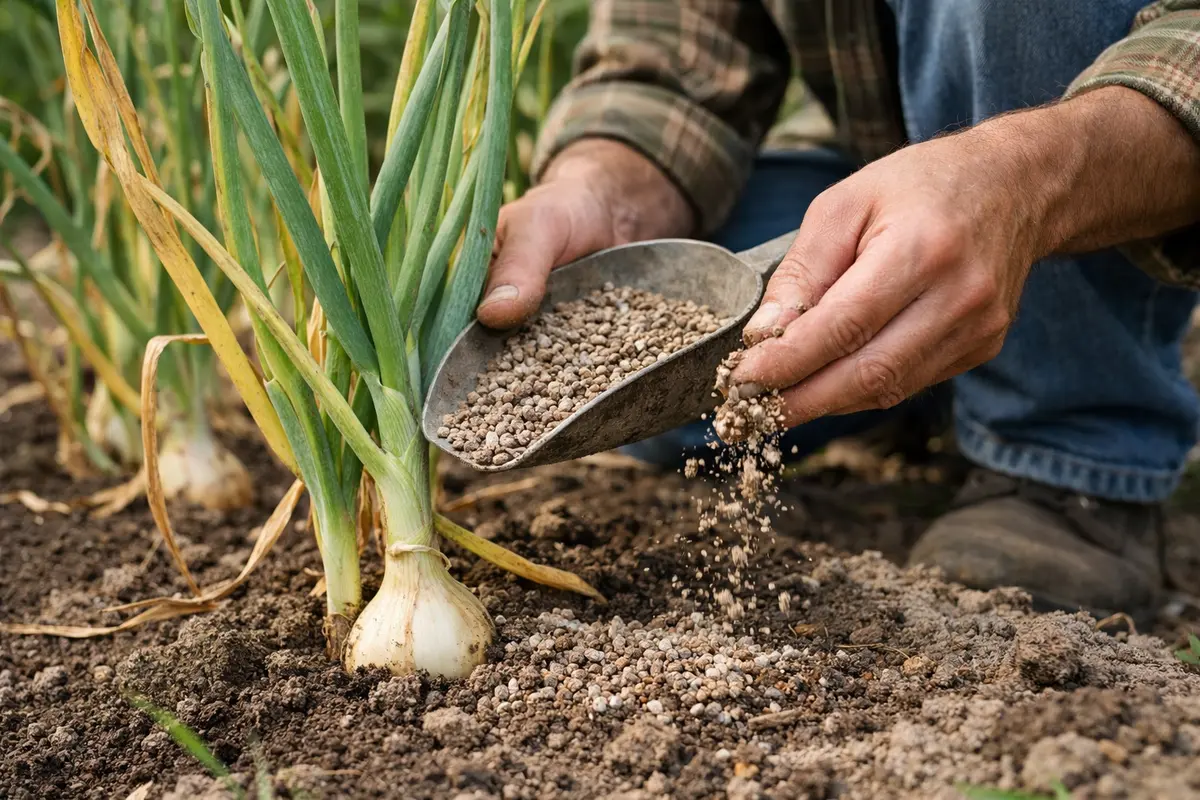
Once you’ve established moisture levels, apply a balanced organic fertilizer to the base of your onion plants. You should notice new green growth emerging within about a week as nutrients become available. Depending on the type of fertilizer, you may want to apply between half an ounce to one ounce per square foot.
Incorporating a nutrient-rich organic fertilizer encourages recovery from drought stress, particularly by supplying nitrogen, which is essential for chlorophyll production. This nutrient aid helps onions bounce back by allowing them to absorb moisture more effectively and regain lost vigor. You can expect to see visible changes in leaf color and growth volume, typically observable within a week under good conditions. Watch for a shift from yellow to a rich green, signaling that the nutrient uptake is improving.
However, be cautious of over-fertilization, as it can burn the plants and exacerbate their stress. Always adhere to recommended application rates specific to your type of soil and onion variety. For example, younger onions might need less fertilizer than mature ones to avoid overwhelming them. If applying dry fertilizer, mix it into the top layer of soil to prevent salt buildup, which can harm the roots. Additionally, avoid applying fertilizer directly onto dry soil, since concentrated salts could damage delicate root systems when they’re already compromised; ensure the soil is adequately moist before feeding.
Step 5 – Water Onion Plants Consistently During Dry Spells
Start by ensuring your onion plants receive at least one inch of water per week, either through rainfall or irrigation. By maintaining consistent moisture levels, you will see a reduction in yellowing leaves and promote healthier growth patterns in your onions.
Drought stress causes onion leaves to yellow as they struggle to access the necessary nutrients and hydration. When the soil is allowed to dry out, the plant’s ability to transport water diminishes, leading to visible symptoms like wilting and discoloration. Implementing a regular watering schedule directly addresses these issues, allowing the plant’s roots to absorb adequate moisture and nutrients more effectively. If the leaves start to show yellowing despite watering, check for signs of compacted soil, which can restrict root development.
In addition to regular watering, consider using organic mulch around your onion plants, particularly during hotter summer months. This helps retain soil moisture and provides temperature regulation, further protecting the plants from extreme environmental conditions. If you notice severe heatwaves in your area, increase the mulch depth for enhanced soil moisture retention.
Maintaining regular watering schedules during dry spells helps to ensure that the onion plants receive the moisture they need for optimal growth. With onions having relatively shallow root systems, they are particularly sensitive to drought stress. A consistent watering routine will not only alleviate immediate stress but also promote healthier growth in the long run. Utilizing mulch around the base of your onion plants can also help retain moisture and regulate soil temperature, making moisture available for longer periods.
Implementing a drip irrigation system could be particularly beneficial for maintaining consistent soil moisture; this setup allows for slow, steady water delivery directly to the root zone, minimizing water loss through evaporation, particularly in hotter months. Monitor soil moisture using a soil moisture meter for best results. Additionally, adjust your watering habits according to seasonal changes—less frequent watering may be appropriate during cooler, wetter months, while more frequent attention is necessary during peak heat. Remember that the goal is to keep the soil consistently moist, not soggy; overwatering can lead to further issues like rot and yellowing.
Step 6 – Check Onion Leaves for New Yellowing Post-Care
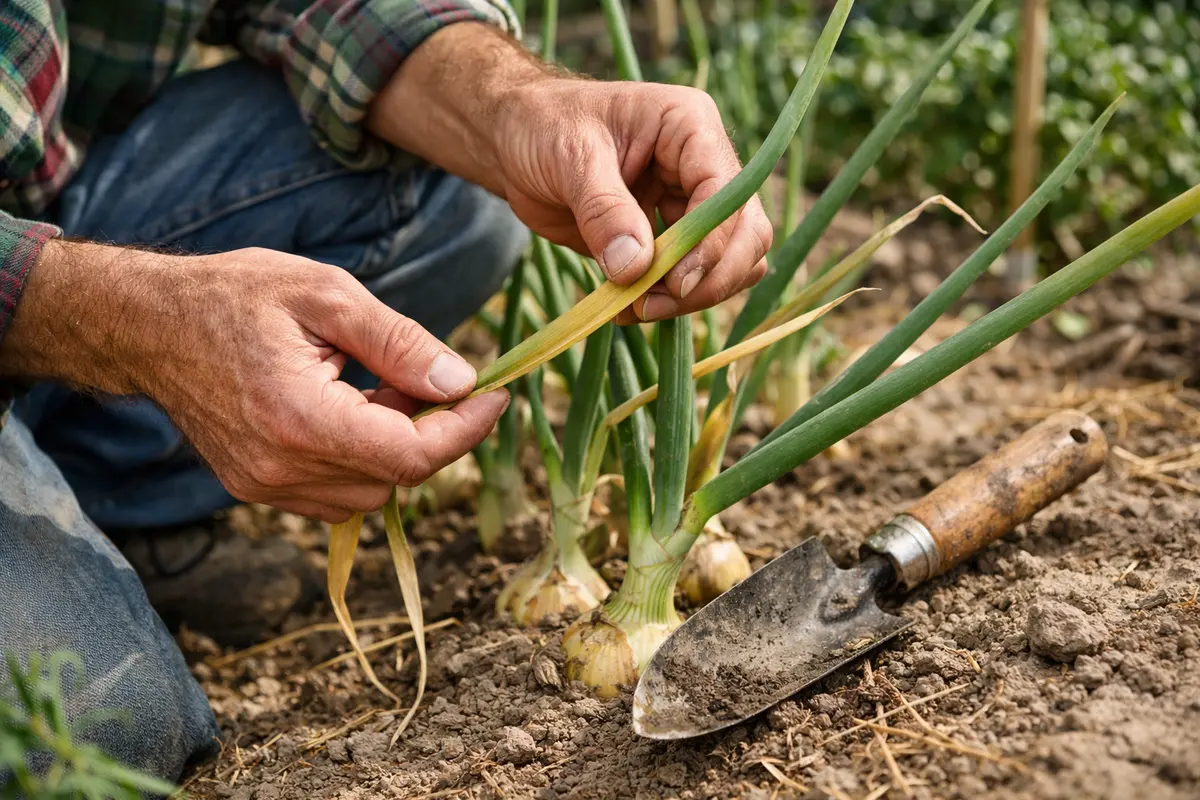
Start by checking the soil moisture level around your onion plants, ensuring it is adequately hydrated. Observe the leaf color and texture; leaves should be a vibrant green and firm to the touch rather than limp and yellowing. Recheck soil moisture levels every few days to ensure it remains consistent, especially during dry spells.
A fully recovered onion plant displays rich green leaves that stand upright, indicating robust growth, while the initial signs of returning issues may show as drooping or a shift back to yellow. If the leaves start developing a wilted texture or uneven color patterns, these can be indicators of drought stress returning. If the plant appears soft and droopy at the tips or exhibits a light green hue instead of a healthy dark green, it may be time to reassess watering practices.
If the yellowing persists despite applying consistent moisture, consider applying a balanced liquid fertilizer to boost nutrient uptake. In severe cases, if the yellowing leaves do not improve, examine root systems for signs of rot or compacted soil, which may require replanting or amending the soil for better drainage.
After implementing your care plan, pay attention to signs of recovery such as new growth or a return of color in the leaves. If the leaves appear limp and yellowing persists despite ongoing care, it could indicate unresolved stress or another underlying issue demanding further assessment. Regular checks will help identify new symptoms early, allowing for quick interventions to bolster plant health. Document any changes or recurring problems to develop a better understanding of your onion plants’ responses.
If yellowing symptoms return, reassess the watering schedule, fertilizer amounts, and soil conditions once again. Contemplate whether additional stressors, such as pests or diseases, are affecting your plants. For example, check for aphids or onion flies that might be compromising plant health. By ensuring proactive monitoring, which may include adjusting your strategy based on fellow gardeners’ insights or ongoing research, you can better manage onion health and promptly address challenges before they escalate into larger problems. Look for signs such as budding green shoots emerging from the base, as this typically indicates that the onions are on the road to recovery.
FAQ
How long does it take for onion plants to recover from drought stress?
Recovery from drought stress can take anywhere from a few days to a couple of weeks, depending on conditions and care. Regular deep watering and good nutrition will expedite the recovery process, with signs of improvement often appearing within a week. However, if stress continues to occur, recovery may take longer.
Can yellowing leaves spread to healthy onion plants?
Yes, yellowing leaves can indicate environmental or nutritional issues that could potentially affect nearby healthy onion plants. It’s crucial to address the underlying cause to prevent stress from spreading, including maintaining proper watering and soil conditions, preventing the risk of cross-contamination among plants.
Should I remove yellowing leaves from my onion plants?
Removing yellowing leaves is beneficial, as it helps to redirect energy toward healthy growth. However, do this sparingly; only remove leaves that are severely damaged while ensuring that the plant still retains some green foliage for photosynthesis. Striking this balance aids further recovery while managing the appearance of the plant.