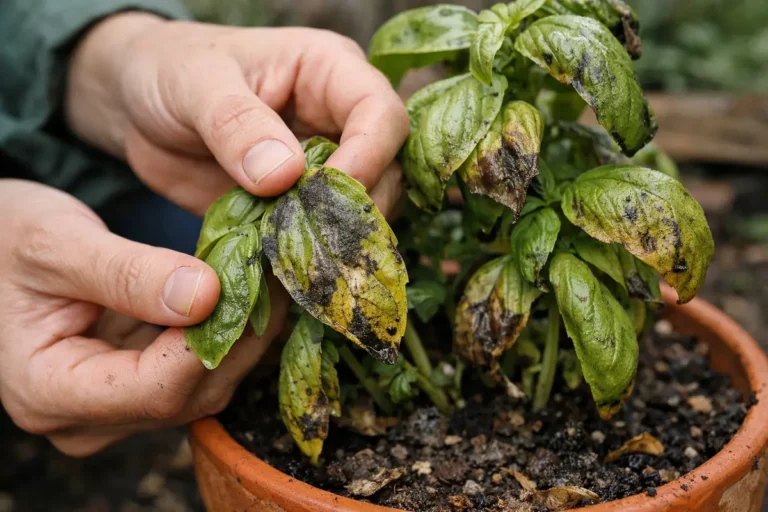
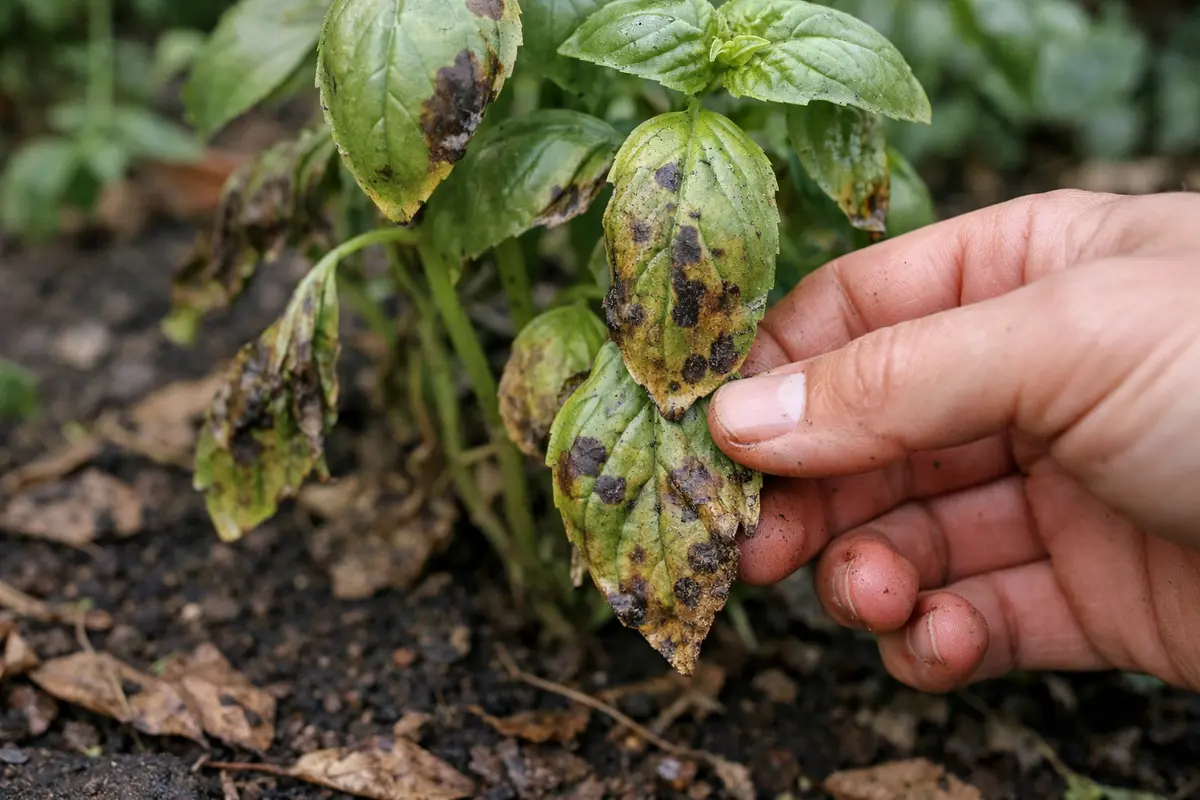
You may notice your basil plants struggling with unusual black spots on the leaves after watering, which is why you need to know how to prevent fungal growth on basil after watering. This issue arises when moisture lingers on the foliage, creating an ideal environment for fungal spores to thrive, leading to unsightly damage and potential leaf drop. If left unaddressed, the problem can worsen, weakening the plant and making it harder to fix, but you can improve the situation by adjusting your watering routine and inspecting your plants regularly.
Step 1 – Prune Affected Basil Leaves Immediately
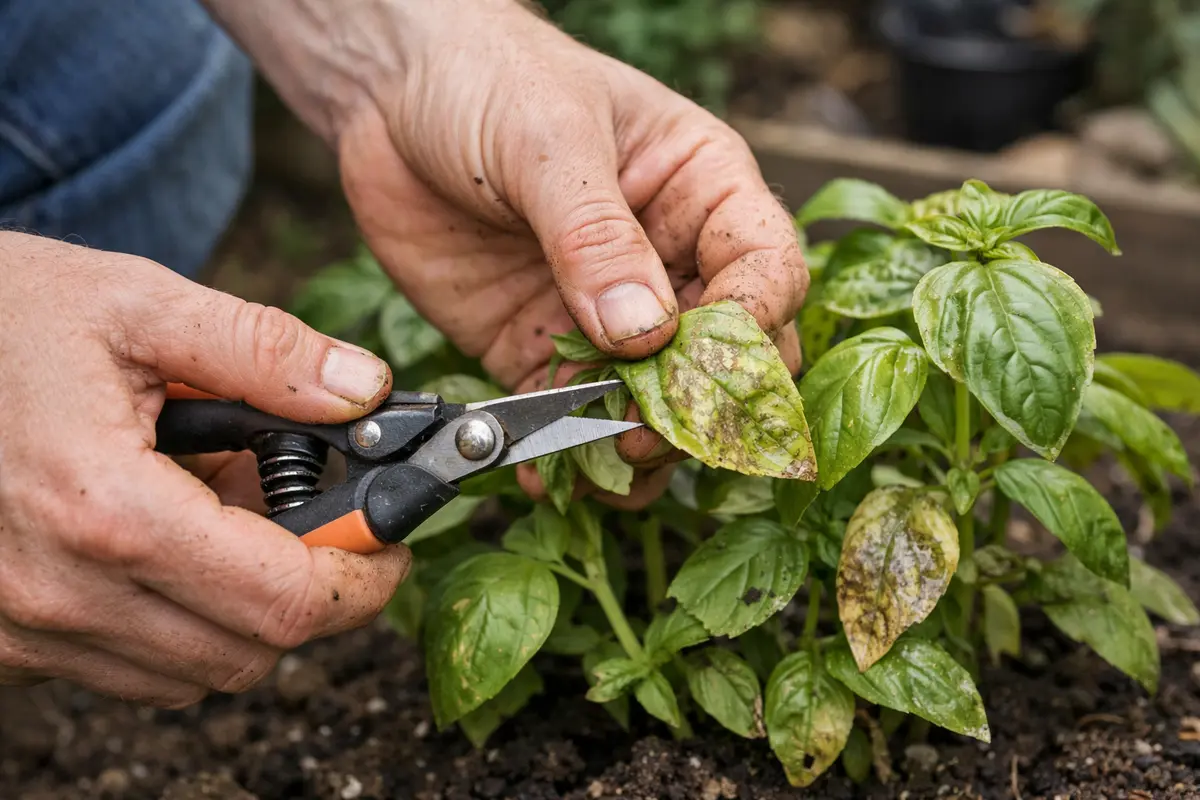
Start by removing any visibly infected basil leaves at the base. You should see a significant reduction in visible fungal spots on the remaining healthy leaves shortly after the trim. When you prune, it’s crucial to use clean, sharp scissors to avoid contaminating healthy areas and to make clean cuts that promote healing. Immediately after pruning, sanitizing the scissors with rubbing alcohol can further prevent cross-contamination with remaining healthy shoots.
Pruning immediately limits the spread of fungal spores to adjacent leaves and helps the plant focus its energy on healthy regrowth. Fungal infections thrive in the moisture found on leaves that don’t dry out quickly, especially when conditions are humid. By cutting away infected parts, you allow air to circulate, significantly reducing the likelihood of further fungal outbreaks. Monitor the environment closely; if humidity levels remain high, consider using a fan or dehumidifier to assist in drying. In environments with high humidity, ensuring airflow is a crucial step—pinching back any overcrowded growth encourages better circulation among leaves.
Many gardeners mistakenly think they can simply wait for the fungus to go away; however, delaying action often results in a larger infestation, making recovery more difficult. For example, in high humidity climates, if you don’t prune those infected leaves promptly, the fungus can spread within a matter of days, effectively compromising your entire plant. If the entire plant seems affected, it may even be beneficial to remove the most severely compromised plant altogether to prevent cross-contamination to nearby healthy plants. Implementing a ‘hygiene’ routine in your gardening practice can mitigate issues—make it a habit to inspect plants regularly and act at the first sign of trouble.
Step 2 – Check for Overwatering Issues in Basil
Inspect your basil plants closely for signs of overwatering. You will notice the soil remains soggy, which is a leading cause of fungal infections. If the top few inches of soil stay damp four days after watering, that’s a glaring sign that water retention is an issue. To verify, dig your finger beneath the surface and assess the moisture level; if it feels saturated and cold, adjust your watering schedule without delay.
Overwatering prevents the soil from drying out, creating a perfect breeding ground for fungi. Healthy basil roots need oxygen, and when they are submerged in water for prolonged periods, they become weakened or rot completely. This poor root condition can lead to yellowing leaves and stunted growth as the plant struggles to take up nutrients. If roots have started to rot, you may notice a foul odor; this comes from anaerobic bacteria thriving in overly saturated soil. To manage this, ensure pots have adequate drainage holes and consider elevating them slightly on pot feet to promote airflow underneath.
If the soil smells sour or seems compacted, it is an immediate indicator that you need to improve drainage or cut back on watering. Switching to a pot with drainage holes can facilitate better moisture control. If you notice persistent issues, test the soil for proper aeration; using a blend of potting soil and perlite can improve drainage. In a contrasting situation, if the potting medium feels dry to the touch but your basil still appears wilted, that might indicate root damage from previous overwatering during a heat wave. In such cases, allowing the soil to dry out slightly before watering again will provide the roots time to recover, and applying a diluted rooting hormone can stimulate new root development. Assess the moisture levels regularly; the gauge at which water should be applied depends on climate conditions and indoor vs. outdoor placement.
Step 3 – Repot Basil in Fresh, Dry Soil
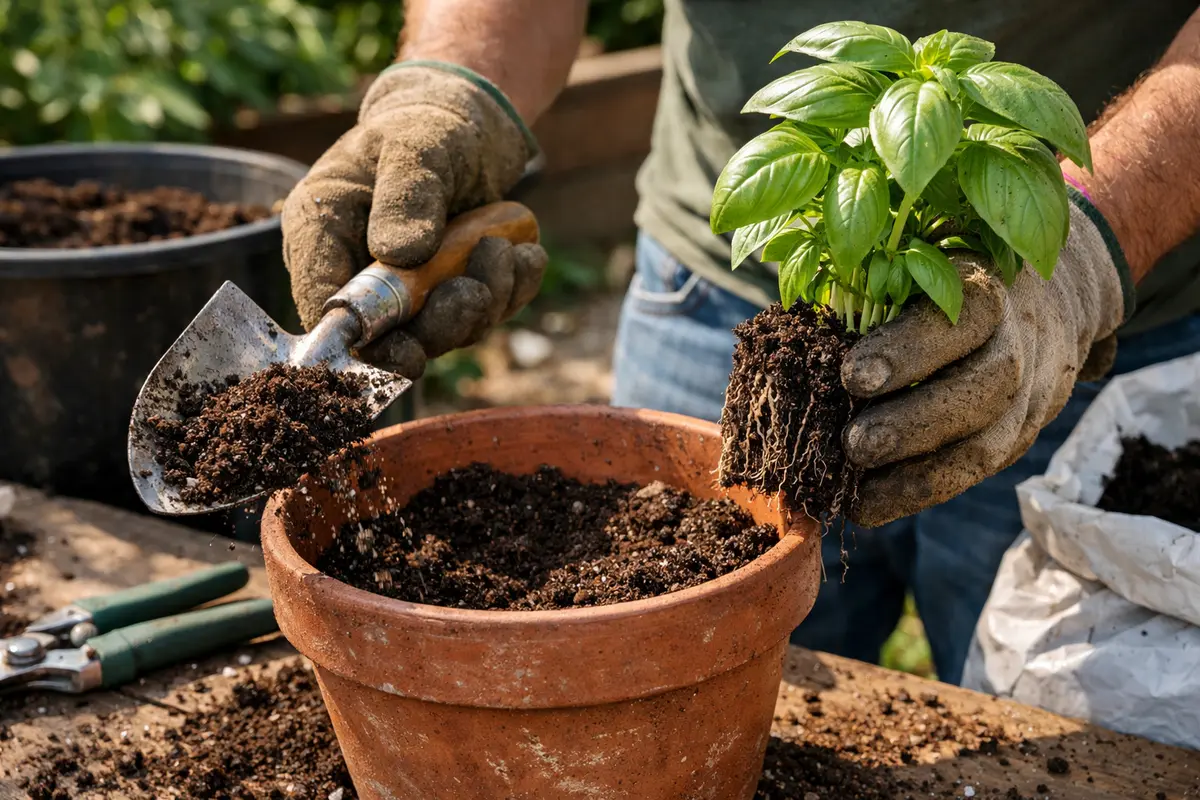
Start by removing any affected leaves from your basil plant and ensuring the soil is well-drained. Water the basil less frequently, allowing the top inch of soil to dry out between waterings. Within a week, you should observe new growth emerging from healthy nodes as the plant recovers.
The recovery timeline for your basil may vary, but typically, noticeable regrowth can occur within two to three weeks under optimal conditions. Ensure the plant receives adequate light and maintain airflow around the leaves; both will encourage vigorous regrowth. If the basil looks wilted and discolored, check for fungal spores on the soil surface, as they can hinder recovery.
Avoid the mistake of overwatering during the recovery phase; doing so can lead to further fungal growth instead of combating it. Instead, focus on consistent, moderate watering until the plant shows new signs of life. If the leaves remain yellow and droopy after watering, check the drainage of the pot, as inadequate drainage may be exacerbating the problem. Wet feet over time may coincide with discover why your succulent is turning.
Fresh soil provides improved drainage, which is essential for a plant prone to fungal issues. When you repot, you’re not only giving the roots new nutrients but also removing any remaining spores from previous infections. Carefully inspect the roots for any signs of rot; healthy roots should be firm and white. If you find soggy, brown roots, trim them back before transferring to new soil to promote better growth. After repotting, applying a thin layer of mulch to the surface can help retain moisture without applying excess water at the start of recovery.
A common mistake during this recovery phase is to overcompensate by watering too frequently; this can undo your efforts. Tracking the watering schedule closely is vital. If the top inch feels dry, that’s the right cue to water. During recovery, incorporating a moisture meter can be a wise investment. This tool provides a quick reference to soil saturation levels, which is especially helpful in avoiding overwatering. Additionally, if your new soil contains slow-release fertilizer, be cautious not to fertilize too soon after repotting to prevent root burn. Waiting at least four weeks after repotting ensures that the roots have settled into their new environment and can absorb nutrients effectively.
Step 4 – Water Basil Only at Root Level
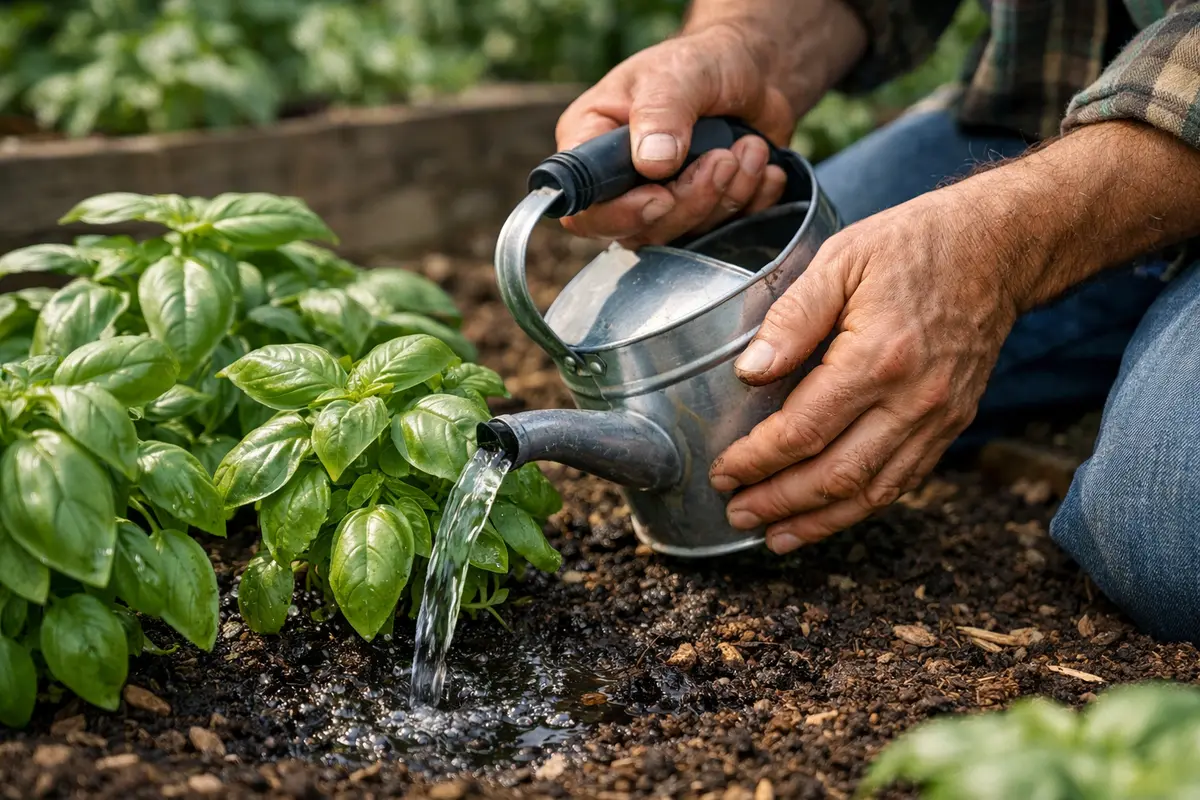
Water your basil at the root level only, avoiding the leaves entirely. This change in watering routine should result in drier foliage and less fungal activity. Implementing a drip irrigation system or using a watering can with a narrow spout can ensure water is delivered precisely to the roots without splashing on the leaves. Aim to water deeply, saturating the root zone without allowing standing water to persist.
By providing water directly to the roots, you minimize moisture accumulation on the leaves. Fungal spores flourish in wet conditions, especially when they’re sitting on foliage, leading to infections that can spread rapidly. Implementing this routine means less evaporation from the leaves, thus giving them a better chance to dry off quickly. Consider applying mulch around the base of the plant to help retain soil moisture further while preventing splash-back during watering. A well-rounded approach includes both watering techniques and environmental adjustments to mitigate humidity levels.
In warm months, consider adopting an additional measure of watering in the early morning. This will further reduce humidity levels around your plants since the morning sun helps dry off excess moisture before evening. Failing to adjust your watering schedule could perpetuate the growth of fungi, causing recurring problems despite your previous efforts. Conversely, in cooler weather, reducing the frequency of watering is essential as lower temperatures often slow down plant metabolism and reduce the amount of water the roots can absorb effectively. It’s also helpful to stay aware of seasonal changes and adjust accordingly. If the forecast predicts rain, modifying your watering habits in advance can save your plants from potential overwatering.
Step 5 – Inspect Basil Leaves for New Spore Growth
Examine your basil leaves every few days for any signs of returning fungal growth. You should notice healthier leaves and no new spots indicating a fungal return. Keep a checklist during inspections to log observations, such as leaf color, texture, and any signs of regrowth. Pay attention to any signs of white powdery residue or discoloration that may signal fungal action rapidly progressing.
Regular inspections will help you catch any new infections before they escalate. A fully recovered plant will have stable foliage without discoloration or fuzziness. Compare new growth with the leaves that previously showed signs of infection; new leaves should have a vibrant green appearance indicating the plant’s recovery. If you notice a return of previous fungal spots, it’s imperative to act quickly—your checklist will help you correlate observation types to revisit specific management practices.
If you observe new spots appearing despite previous procedures, take immediate action by repeating the first steps: prune affected areas and reassess your watering schedule. It may also be helpful to note that if new fungal growth appears in just a few days post-pruning, this indicates a serious underlying issue such as persistent excessive moisture or previous damage to the stem that is affecting the plant’s recovery. Ignoring these signs can lead to reestablishment of the fungus, countering all efforts to restore your plant’s health. If this pattern repeats multiple times, you can consider rotating the plant to a different location temporarily to reduce contact with humidity sources, such as a nearby moisture-retaining potted plant. Continuous learning about your plant’s responses is key to becoming a more effective gardener.
FAQ
How long does it take for basil to recover after pruning?
Typically, you can expect your basil to show signs of recovery within 1-2 weeks after you prune away infected leaves. New growth often appears, and the ratio of healthy to infected leaves will improve. However, be aware that recovery can vary based on environmental conditions, including light exposure and temperature. In optimal conditions, healthy new leaves will emerge in clusters, signaling vigorous recovery.
Can fungi spread from one basil plant to another?
Yes, fungal spores can easily spread between plants, particularly through water droplets or physical contact. Removing infected leaves and maintaining cleanliness can greatly reduce this risk. Also, ensure that any tools or hands that have come in contact with infected plants are cleaned to prevent unintentional spread. Regularly sterilizing gardening tools and using gloves can also prevent cross-contamination, especially in a garden with multiple potted plants.
What should I do if the problem persists?
If fungal growth continues despite your efforts to manage watering and prune, consider re-evaluating the soil quality or investigating for pests that may be contributing to the problem. A complete repotting with new, disease-free soil may be necessary to eradicate persistent fungal issues. Following this, monitoring for changes and making necessary adjustments will help ensure the health of your basil plants. Trying a non-toxic fungicide may also be beneficial in managing persistent fungal outbreaks while maintaining environmental safety.