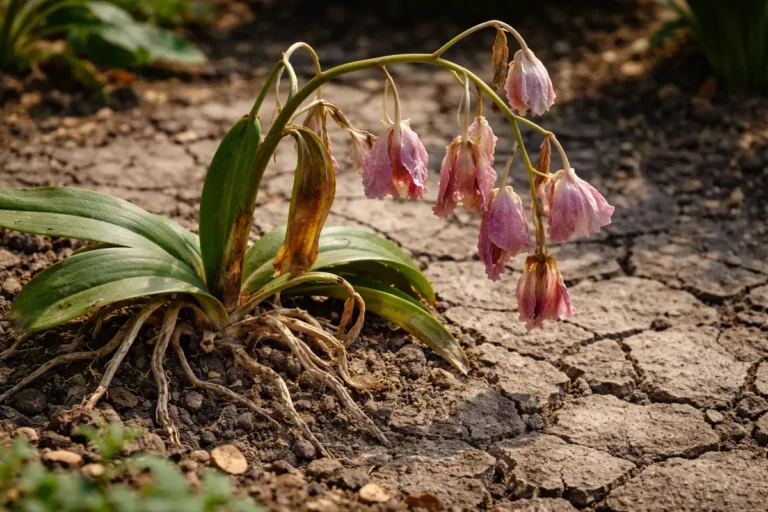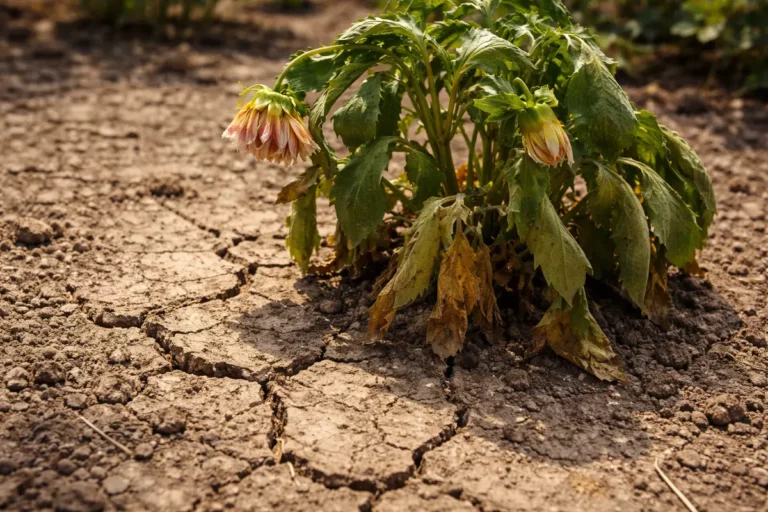
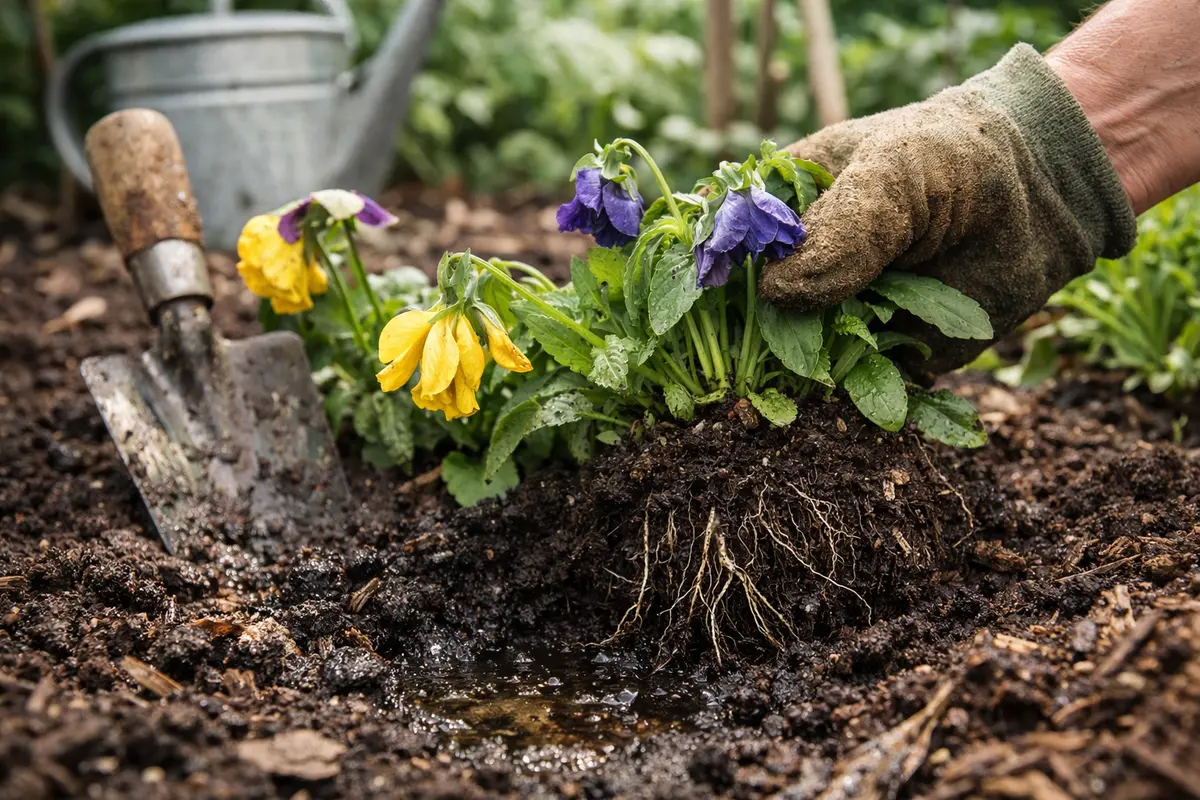
You may notice your pansy flowers drooping under the harsh summer sun, which is why you need to know what to do when pansy flowers are wilting in the sun. This wilting can occur due to inadequate water or extreme heat, causing the leaves to yellow and the blooms to decline. If left unchecked, this issue can worsen and weaken the plant, leading to more damage in the long run. The immediate step involves checking soil moisture and adjusting your watering habits, which can significantly mitigate the risks posed by high temperatures. With diligent monitoring and tailored care, you can restore your pansies to their vibrant state.
Step 1 – Water Pansy Flowers Immediately in Heat
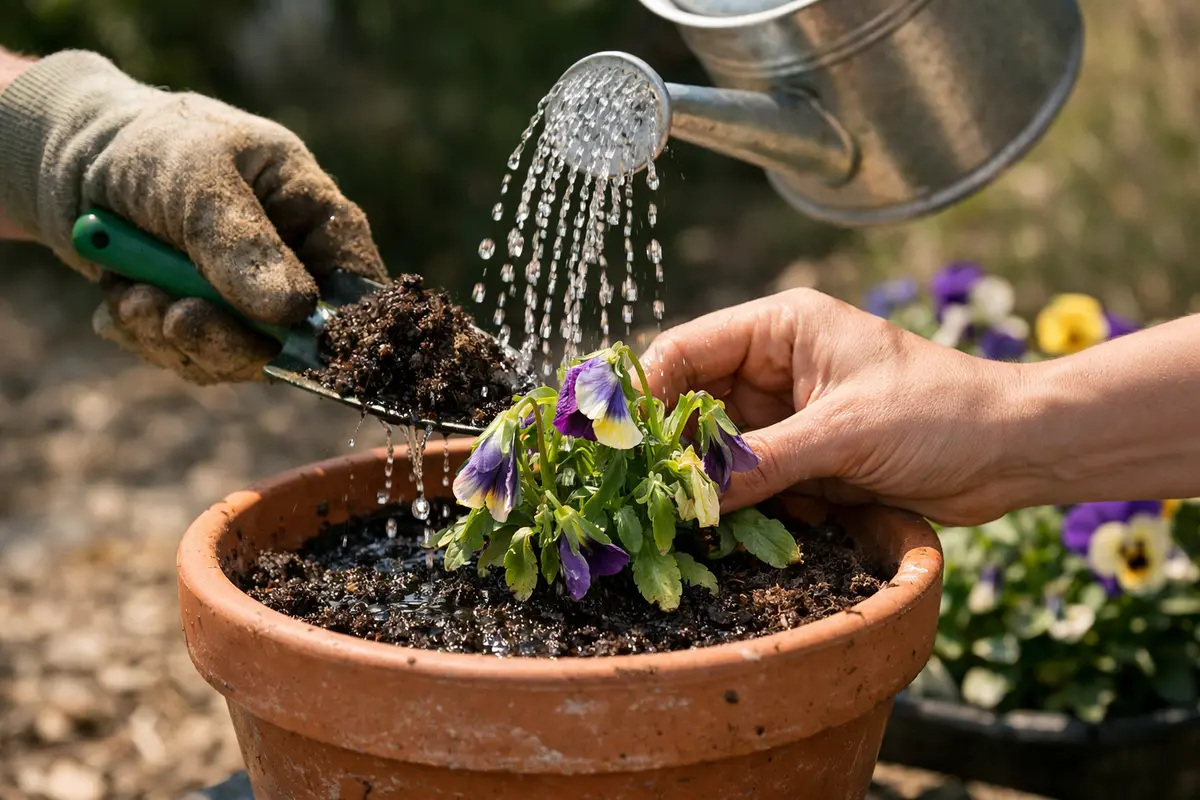
Water the pansy flowers deeply right away, ensuring the soil absorbs at least one inch of water. Within a few hours, you’ll notice the soil darkening and the leaves perking up, indicating that the plant is rehydrating properly. This immediate response can prevent the plant from entering a severe stress cycle. To verify that your pansies are receiving sufficient moisture, observe how quickly the surface dries out; a crusty surface may signal deeper watering is required. If you find the top layer dry, stick your finger two inches into the soil; if it feels dry at that depth, it’s essential to water again. If the soil temperature feels warm to the touch, consider watering in the evening to reduce evaporation and enhance rehydration, further ensuring moisture reaches the roots more effectively.
Pansies predominantly thrive in cooler climates and can quickly become stressed in extreme heat, which can lead to wilting. If watering does not result in immediate hydration, it may be necessary to adjust your approach based on soil conditions. Be aware that heavy clay soils absorb water less effectively, leading to runoff or pooling. By delivering adequate water promptly, you significantly enhance the moisture available for vital metabolic processes within the plant. If the soil takes too long to absorb water or appears crusty, this may indicate a hydrophobic condition, meaning the soil is repelling water. In such cases, you may need to water multiple times, allowing the soil to gradually soak up moisture. Aim for deep watering techniques that ensure water penetrates at least 6 inches deep to reach the roots effectively, promoting healthier growth. If you are dealing with a related issue, drooping leaves watering covers a similar problem in detail.
Many gardeners mistakenly believe that occasional rainfall is sufficient, overlooking the rapid evaporation caused by intense sunlight, particularly in pots or sandy soil. This misconception frequently results in drought stress, manifesting as wilting. Regularly check the soil moisture; if it feels dry when you insert your finger, that’s a clear sign to water. Further, if wilting persists post-watering, inspect the drainage of the pots or garden beds to guarantee water isn’t pooling or being repelled, which can create anaerobic conditions harmful to root health over time. Consider amending compacted soil or pots with coarse sand or perlite to enhance drainage and retention. If water collects on the surface, consider replacing the soil or potting mix with a moisture-retentive option. Recognizing the need for mindful irrigation can revolutionize your care routine and simplify your watering schedule as conditions shift with the weather.
Step 2 – Determine Sun Exposure Issues Affecting Pansies
Begin by inspecting the leaves of your pansies for signs of sunburn or excessive sun exposure, evidenced by bleached or crispy edges. If you see wilting alongside these symptoms, immediate action is essential to prevent worsening conditions. Understand that pansies typically prefer partial to full shade, especially during peak daylight hours. If they are in full, unfiltered sunlight during the hottest parts of the day, this exposure can lead to leaf scorch and increased wilting. Consider the specific orientation of light in your garden; areas that previously provided adequate shade may now be overwhelmingly sunny due to neighboring plant growth, shifting structures, or seasonal sunlight patterns.
To correct sun exposure issues, provide immediate shade to your pansies by using shade cloth or temporarily relocating them to a more appropriate, shadier spot. Even though relocation might stress the plants, the short-term benefit outweighs the risk from continued sun exposure. Monitor the pansies closely after you provide shade; a sudden drop in temperature can aid in recovery and reduce the risk of shock. If wilting persists despite the shade, you may need to adjust your watering frequency; plants in high sun exposure may require more water to combat evaporation. In this scenario, regular checks for soil moisture are vital, as excess water can lead to further complications, such as root suffocation if not managed properly. A related fix is explained in petunia plants turn if you want to compare approaches.
If relocating your pansies is not feasible, consider implementing companion plants that can provide shade during peak sun hours. This strategy not only helps shield the pansies but also promotes biodiversity in your garden. Conversely, if your pansies continue wilting even in partial shade, you may need to evaluate the soil drainage. Compacted soils that retain excessive moisture can trap heat and suffocate roots, exacerbating wilting. If you encounter such conditions, aerate the soil or add organic matter like compost to improve drainage and temperature control. When implementing drainage strategies, remember that the quality of the soil can significantly impact heat retention; opting for lighter, airy mixes will help moderate root temperatures effectively. Ultimately, if drainage problems persist, consider transitioning your pansies to a raised bed in a warmer climate to enhance airflow—this adjustment can significantly lead to reduced soil temperatures and minimized plant stress.
Step 3 – Fertilize Wilting Pansies to Boost Recovery
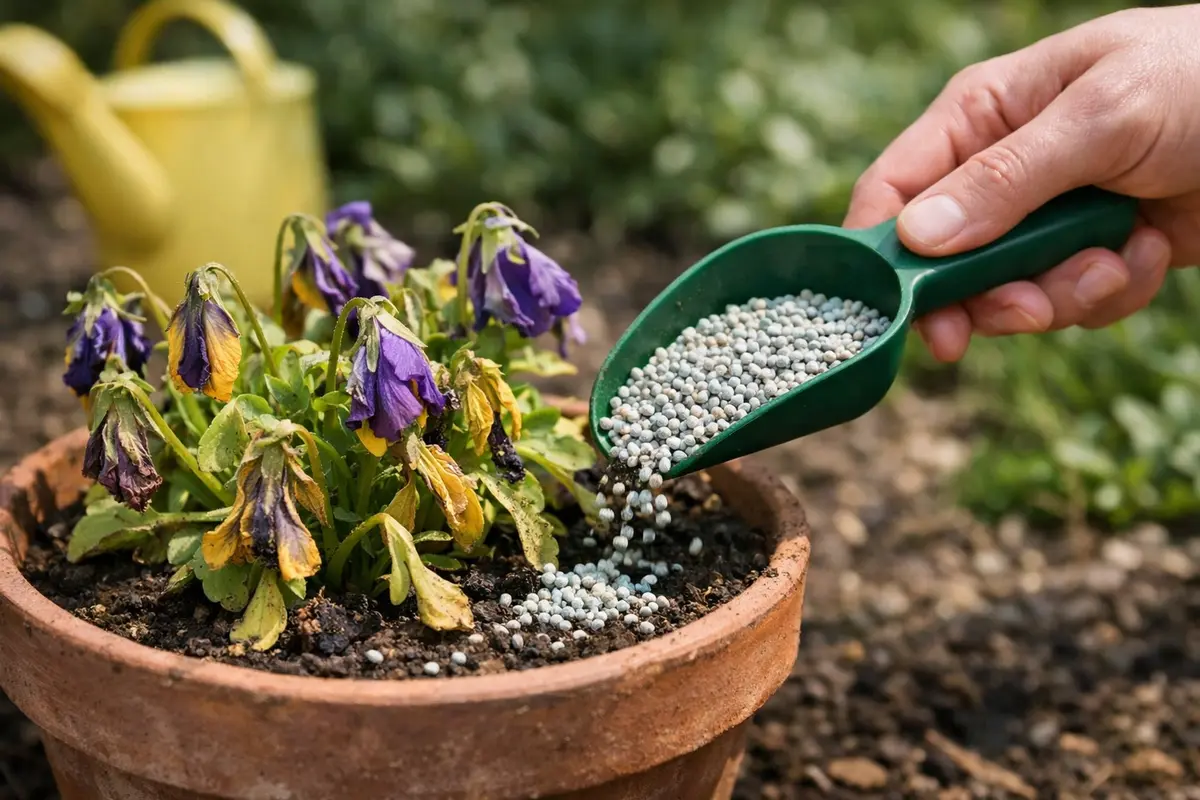
Begin by applying a balanced, water-soluble fertilizer to the pansies immediately to help boost their recovery. You should see firmer leaves and new blooms emerging within a week. Follow the manufacturer’s instructions for dilution, using an initial application at half strength to avoid shock; stressed pansies are particularly sensitive to fertilizer burn. After applying the fertilizer, check the leaves for noticeable changes; a deepening color and a return to turgidity signal effective nutrient uptake. If you notice leaf tips turning brown, this typically indicates excess fertilizer, necessitating a thorough flushing of the soil with clean water to remove any buildup and mitigate potential damage.
By fertilizing, you deliver essential nutrients that accelerate recovery, especially if prior nutrient deficiencies contributed to their wilting. A lack of nitrogen can notably hinder leaf growth and flower production, affecting the plant’s overall vitality. Introducing a balanced nutrient solution, typically a formulation like 10-10-10 or 20-20-20, diluted to half strength, ensures metabolic processes stimulate growth and restore health. Additionally, if your pansies show signs of nutrient insufficiency before applying the fertilizer, such as yellowing leaves, a slow response might indicate deeper soil issues. Slow-release fertilizer options are particularly advantageous, as they help prevent nutrient leaching during heavier watering that often accompanies heat stress, ensuring your pansies receive consistent nourishment over time.
If you observe browning at the leaf tips or edges post-fertilization, this is a clear signal of misapplication, compelling you to flush the soil with water to mitigate damage. Timing is crucial when fertilizing during heat stress; applying during the hottest part of the day can exacerbate root burn risks. Optimize your fertilizer schedule by applying in early morning or late afternoon, maximizing nutrient absorption while decreasing the likelihood of harm. If your pansies appear to decline further despite fertilizer use, consider adjusting the product or application method, as this could indicate either over-fertilization or misuse. In such instances, reduce or suspend further applications until the plants seem stable, allowing the soil’s nutrient balance to reset for a few days. For ongoing support, consider bi-weekly applications throughout the growing season, while critically observing for signs of nutrient burn, such as browning leaf tips. These symptoms necessitate immediate action, potentially requiring a complete soil flush to counteract unnecessary accumulation. Keeping a log of fertilizer applications will assist in long-term management and help you identify how different formulations affect your pansies’ recovery. For a closely related scenario, see afternoon heatwave containers.
Step 4 – Inspect Pansy Foliage for Signs of Stress
Check your pansies every few days to evaluate their recovery and identify any new issues. Observe for indicators like firm leaf turgidity, vibrant flower colors, and the emergence of new blooms to confirm that plants are on the mend. Firm foliage accompanied by new growth signals successful rehydration and may indicate that your care strategy has been effective.
A fully recovered pansy showcases firm, upright leaves with a rich green hue and healthy flowers. In contrast, early signs of wilting may present as drooping leaves and faded colors or a papery texture. If wilting symptoms return and are accompanied by discolored flowers, this suggests that the problem may still persist despite prior adjustments. Meanwhile, if you notice crisp leaves but vibrant blooms, the plant is likely stressed but not in immediate danger. Should this be the case, identify whether the drooping leaves correlate with periods of extreme heat exposure or prolonged dry spells to pinpoint necessary adjustments.
If wilting recurs despite previous corrective actions, re-assess your watering approach by implementing deeper, less frequent watering to promote wider root expansion. Additionally, if excessive sun exposure seems to be an issue, consider providing afternoon shade to alleviate stress effectively. If these modifications fall short, take time to investigate potential pests or diseases impacting your pansies; this may involve examining neighboring plants that could introduce diseases as well.
During your leaf inspections, ensure they maintain a firm texture; limp or crispy leaves, despite adequate care, can indicate ongoing issues with sun exposure or hydration. Persistent wilting may also hint at an underlying disease if regular corrective measures yield no improvement. Observe the number of new buds developing; a successful increase indicates the plant’s recovery, whereas stunted or distorted growth usually indicates the stress threshold has been exceeded. Checking surrounding soil color is also imperative; persistently dark and overly wet soil can signal drainage problems that need addressing. Assessing moisture retention practices continually leads to healthier pansies.
Should wilting reoccur despite maintaining best care practices, revise your care strategy and consider relocating them for better shade or altering the soil composition for optimal moisture retention. Checking for earthworms regularly helps gauge soil health, as their presence implies good aeration. If you suspect pest problems, scrutinize both the upper and undersides of leaves for aphids or spider mites that threaten your plants’ strength. Ensure consistent moisture delivery during the growing season by modifying your watering schedule; if wilting remains a concern, check root health for underlying diseases that exhibit similar wilting traits. Lastly, applying an organic pesticide may become essential if pests are discovered, alongside removing any affected leaves to curtail further damage. Finally, regularly adjust care routines in response to sudden environmental changes, including fluctuations in temperature and humidity, which can significantly affect your recovery efforts.
FAQ
How long does it take for pansies to recover after wilting?
Pansies generally start showing signs of recovery within 24-48 hours after being properly watered and fertilized. However, full recovery can take 1 to 2 weeks, depending on the severity of stress they experienced and the surrounding environmental conditions. Keep monitoring for ongoing improvements; if heat stress reoccurs without adjustment to care strategies, recovery could slow down significantly.
Can wilting pansies spread their issues to nearby plants?
While wilting itself is not contagious, if the cause is related to pests or diseases, it can spread to nearby plants. Preventing a larger infection is crucial by maintaining good garden hygiene and promptly addressing any pest-specific issues. If you notice infestations on the wilting pansies, taking quick action to treat them can help prevent the problem from spreading further into neighboring plants.
Should I remove wilted blooms or leaves from my pansies?
Yes, removing wilted or dead blooms encourages the plant to redirect energy into new growth and promotes overall flowering health. Be sure to use clean, sharp pruning tools to prevent any potential pathogens from entering the plant. Regularly deadheading can significantly improve the duration and health of flowering, resulting in a boost for overall vitality. Keep a close eye on your pansies for signs of new growth following this process and repeat as necessary throughout the growing season.