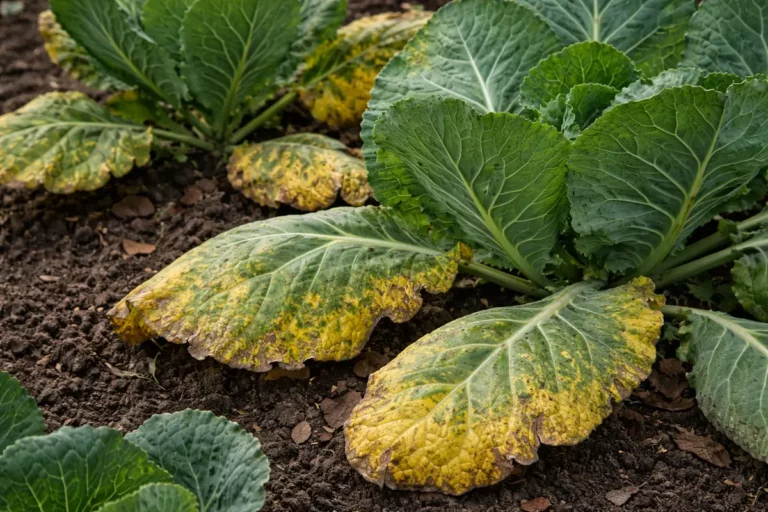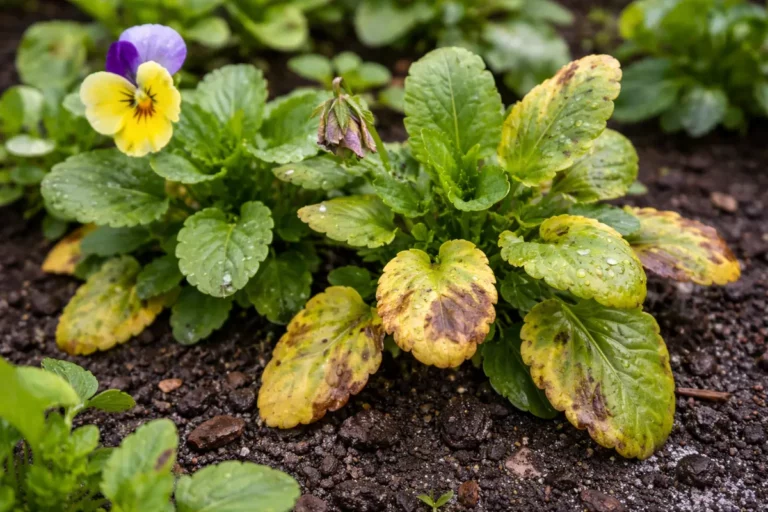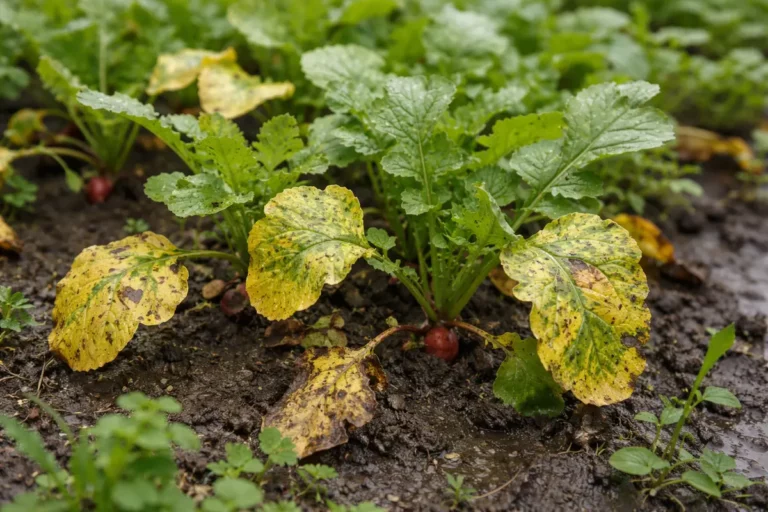
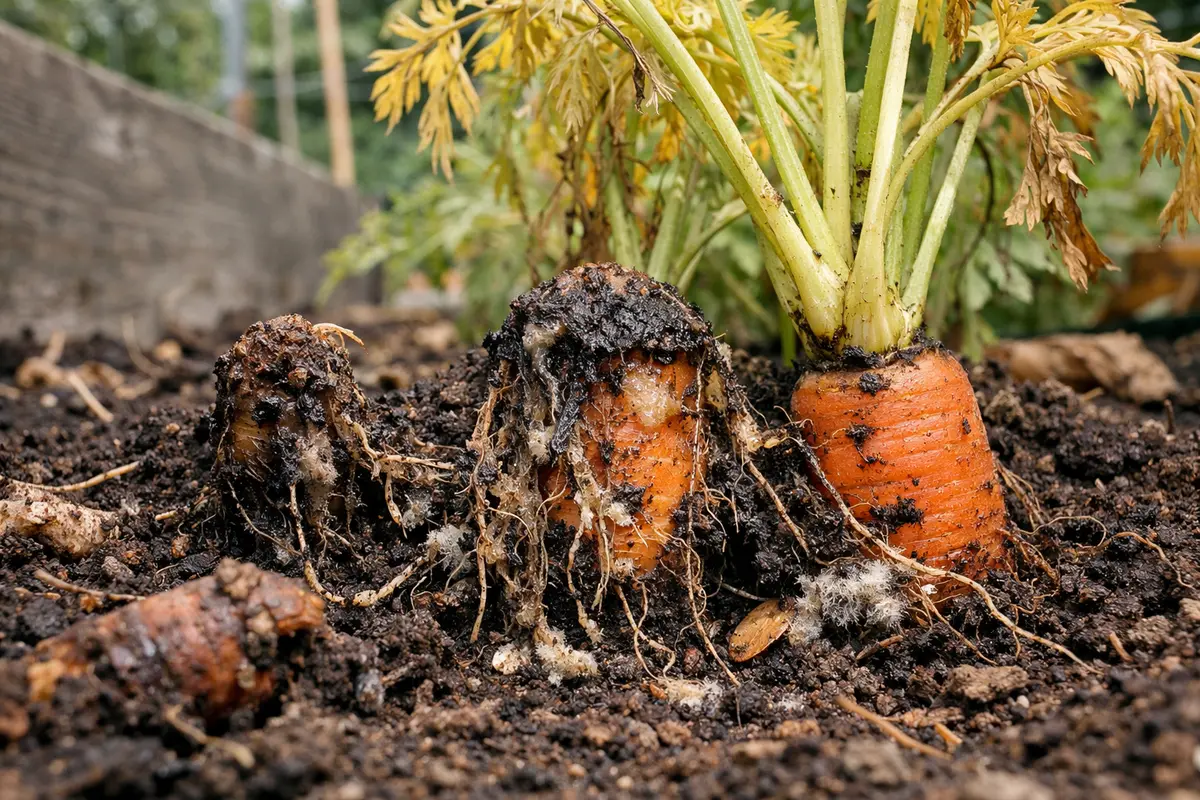
You may notice the vibrant green tops of your carrots turning a concerning shade of yellow during the heat of summer, which is why you need to know what to do when carrot tops turn yellow in raised beds. This yellowing can indicate a problem with nutrient deficiency or improper watering, leading to damage that could hinder your plants’ growth. If left unaddressed, this issue gets worse and can spread to other nearby plants, making it crucial to inspect your carrots and adjust their care by watering and fertilizing appropriately.
Step 1 – Inspect Carrot Tops for Signs of Pests
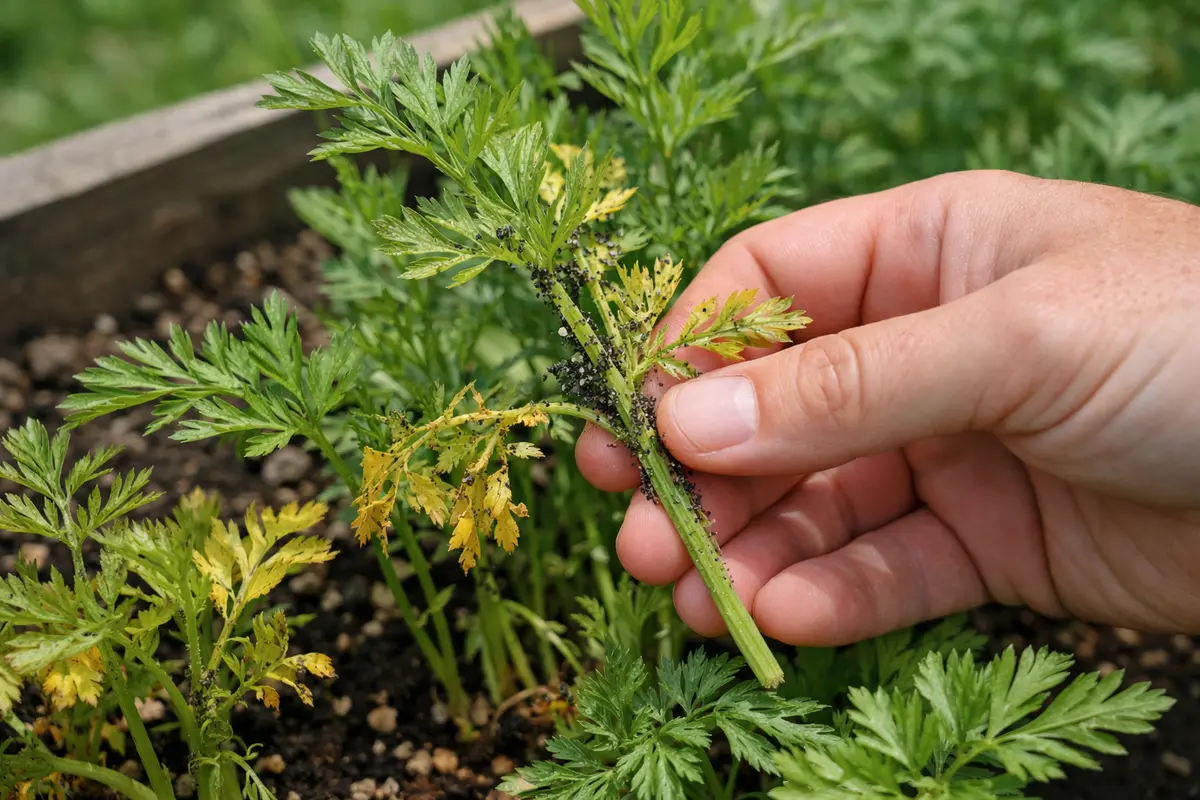
Inspect your carrot tops closely for any visible pests, focusing specifically on the undersides of the leaves where insects often hide. Look for pests such as aphids, carrot rust flies, or even spider mites. Within a few minutes of checking, you should see signs of infestations like tiny black spots or webbing, which indicate the presence of these pests. Identifying these pests promptly is crucial because they typically multiply quickly, leading to severe damage that can affect both foliage and roots. Consider using a flashlight or a smartphone’s flashlight feature to illuminate the undersides of leaves effectively.
Carrot leaves turning yellow is often a direct response to pest infestations, which cause feeding damage that reduces the plant’s ability to photosynthesize effectively. If left unchecked, the pests can quickly overwhelm the plant, further impairing its growth and potentially leading to rotting or other diseases. Early detection enables you to minimize the extent of the infestation, which increases the chance of successfully reviving your plants before major damage occurs. Use a magnifying glass if necessary; many pests are small and hard to spot with the naked eye. Look for droppings or a sticky residue on leaves, which can signal aphid presence.
For example, if you discover aphids clustering on the leaves and miss addressing this, the situation can escalate from light yellowing to serious defoliation and drastically reduced yields. A common mistake gardeners make at this stage is assuming that yellow leaves are merely a sign of aging or nutrient loss when, in fact, a pest issue might be the underlying cause. Additionally, resist the urge to spray pesticides immediately after spotting pests; first, determine the type and severity of the infestation, as a weak treatment may not be effective. If you see a high number of pests, consider using insecticidal soap or a strong stream of water to dislodge them. Reacting quickly is essential; healthy carrot tops can rebound within days of introducing effective preventative measures or treatments, provided you address the infestation while it’s still manageable.
Step 2 – Analyze Soil Nutrients for Yellowing Causes
Start by checking the soil moisture to determine if overwatering is causing your carrot tops to turn yellow. If the soil feels overly wet, remove excess water by improving drainage or adjusting your watering schedule; you should see a gradual green-up in the foliage within a week. In poor drainage conditions, plants may also develop lawn yellow spots overwatering.
Overwatering leads to root rot, which prevents roots from effectively absorbing nutrients and water. As a result, the leaves turn yellow due to lack of sufficient nourishment. In contrast, if the soil is dry and cracked, this indicates underwatering, causing similar yellowing but stemming from dehydration rather than root rot.
If the soil smells sour, this indicates anaerobic conditions from excessive water buildup, so immediately address the drainage issue by amending the soil with sand or compost. Alternatively, yellowing caused by nutrient deficiencies may require specific fertilization according to soil test results, so check for signs of other deficiencies if drainage seems adequate.
Yellowing tops often indicate that the plant is not receiving adequate water, which leads to stress in the carrot’s root system. When roots are deprived of moisture, they are unable to uptake essential nutrients, causing leaves to lose their vibrant color. For instance, if the soil crumbles and feels dry to the touch, it confirms the need for increased watering. Conversely, if the soil sticks to your hand and feels overly saturated, that indicates your watering practices need adjustment to avoid root rot. Excess moisture often leads to problems like jasmine droop after overwatering.
If the soil smells sour or has a very wet texture, this suggests overwatering instead, which can lead to root rot. In this case, improve drainage by amending the soil with organic matter or moving the carrots to a better-draining location, such as raised beds that allow for improved water passage. Besides moisture balance, monitor nutrient levels in the soil as well. If your soil test reveals a nitrogen deficiency, take prompt action. For instance, a nitrogen deficit can often be rectified by adding a nitrogen-rich organic fertilizer like blood meal or composted manure at a rate of 1 pound per 100 square feet, applied according to the manufacturer’s recommendations or based on soil test results. Conversely, if your soil test shows an adequate nutrient profile but the yellowing persists, this might point to other underlying issues such as soil compaction or past pest damage that also need attention.
Step 3 – Water Carrots Deeply for Quick Recovery
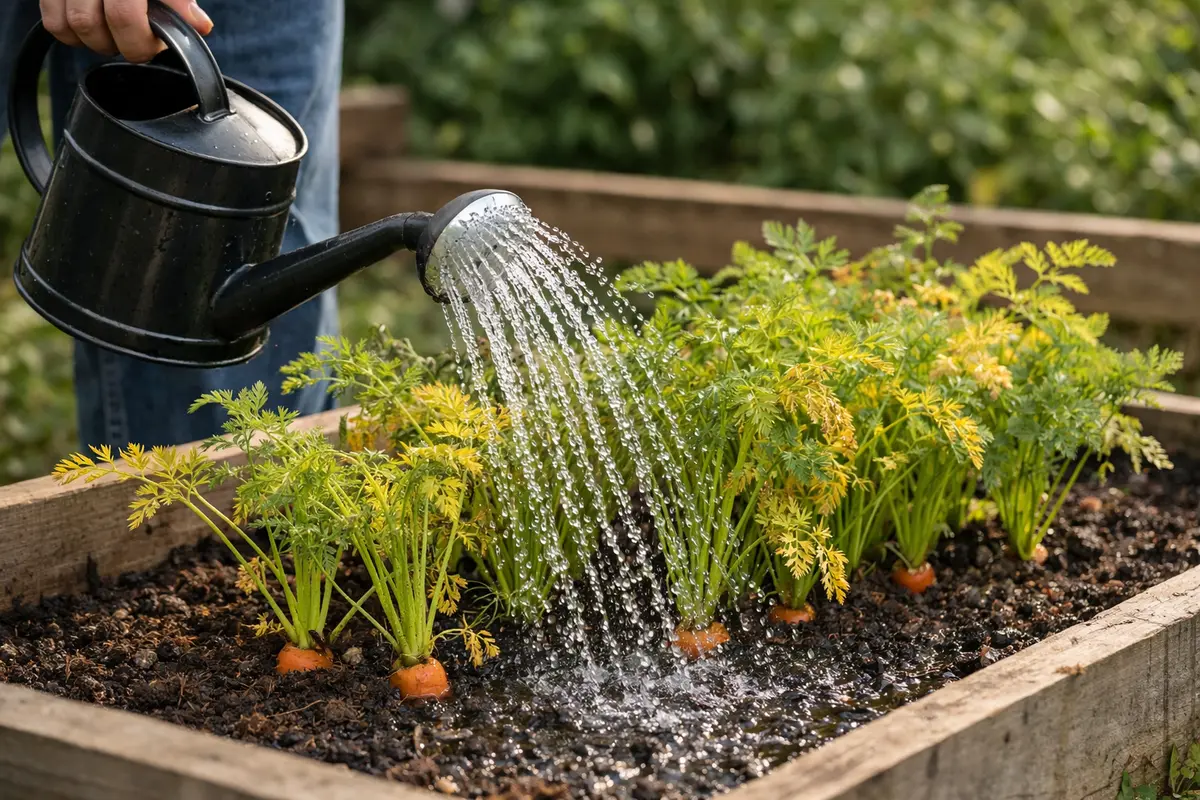
Water your carrot bed deeply, ensuring moisture reaches at least six inches below the soil surface. After initial watering, you should notice the soil feels softer and more pliable within a few days, encouraging root growth and improving nutrient uptake. Proper watering is essential for aiding the recovery of any stressed plant, as it not only replenishes moisture but also supports the absorption of nutrients from the soil. Check the moisture levels daily after watering; if the top two inches of soil dry out consistently, it indicates you may need to water more frequently.
Consistent watering helps to alleviate stress on carrots, particularly if they are showing yellow foliage due to drought conditions. Carrots require a steady supply of moisture to thrive; fluctuations in soil moisture can cause nutrient uptake problems, which ultimately leads to the yellowing of leaves. Deep watering encourages roots to grow deeper into the soil, improving drought resistance and promoting overall growth. It can also help prevent cracking as the roots expand, keeping them tender and marketable. As a general rule, your carrots should receive about 1 inch of water per week, factoring in rainfall. Prolonged dryness commonly leads to yellow leaves eggplant drought.
Avoid the temptation to overwater immediately after noticing yellowing; this could lead to waterlogged conditions and root rot, apparent when the soil begins to emit a sour odor or if leaves become mushy. Instead, monitor soil moisture levels using your finger or a moisture meter, prioritizing deep, infrequent watering over frequent surface watering, which can encourage shallow root systems. If your carrots begin to perk up within a week, it is a good sign that you are on the right path. However, if they show no improvement after consistent watering, it might be time to revisit previous steps like soil nutrient analysis or pest inspection, ensuring no underlying issues hinder recovery.
Step 4 – Control Watering Frequency to Prevent Yellow Tops
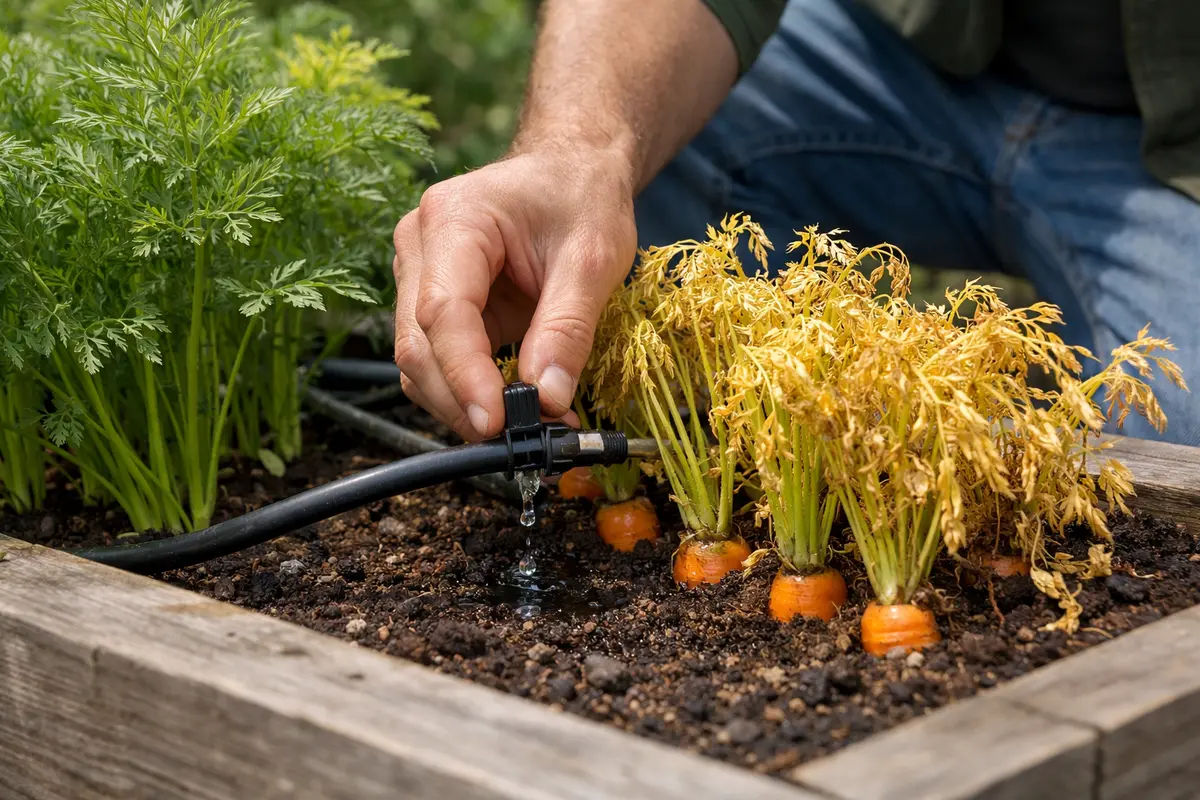
Start by ensuring your raised beds have well-draining soil rich in organic matter and consistent moisture levels. This action will prevent the yellowing of carrot tops, allowing your plants to thrive and display vibrant green foliage.
Excessive waterlogging or drought can lead to nutrient deficiencies, resulting in yellowing leaves. When soil retains moisture and drains well, it fosters strong root development and nutrient uptake, minimizing stress on the carrot plants. If you see yellowing, check if the soil is overly dry or waterlogged to determine the root cause of the problem. Excess moisture often leads to problems like root rot in potted cacti.
During particularly hot or dry periods, apply mulch around your carrot beds to retain moisture and regulate soil temperature. Additionally, implement a weekly deep watering schedule to ensure consistent hydration, preventing stress from fluctuating conditions while promoting healthy growth.
Yellowing of carrot tops often results from overwatering or nutrient deficiencies, particularly nitrogen. Excess moisture can lead to root rot, while inadequate nitrogen supply can stunt growth, resulting in a pale appearance. By honing your watering schedule and enriching the soil with compost or a balanced fertilizer, you tackle the underlying issues that trigger yellowing effectively. Introduce organic mulch about two inches thick around the base of each carrot plant; this helps retain moisture while reducing soil temperature fluctuations. In poor drainage conditions, plants may also develop is chinese evergreen wilting after.
During the warmer months, adjust your watering routine based on rainfall—if there hasn’t been significant rain, increase your watering frequency to counteract drying soil. Alternatively, if there has been heavy rain, check for drainage issues to prevent waterlogging, which can deprive the roots of oxygen. Remember, maintaining consistent moisture levels also requires you to be attuned to changes in heat and humidity; a hot, dry spell may require more frequent watering versus cooler, overcast days.
Watering frequency can have lasting effects on carrot health; too little moisture will lead to drought stress, while overwatering may suffocate roots by depriving them of oxygen and increasing the risk of fungal diseases. A balanced watering routine locks in vital moisture levels, promoting healthy growth while minimizing stressors that might lead to yellow tops. In the event that you overcompensate for previous dry spells, expect yellowing to initially worsen before conditions stabilize. Regularly assessing soil moisture each week or using a soil moisture meter will help you maintain this balance, ultimately reducing the likelihood of future yellowing in your carrot tops. Remember, understanding different moisture needs based on seasonal changes is part of effective garden management.
Step 5 – Check Carrot Foliage Weekly for New Yellowing
Start by checking the soil moisture level in your raised beds and observe if the carrot tops’ color improves. Look for a transition from yellowing to vibrant green within a week after adjusting watering practices. Maintain this monitoring schedule by rechecking every few days to ensure that the soil doesn’t become either too dry or overly saturated.
A fully recovered carrot plant will have lush, deep green tops that stand upright, indicating strong growth. In contrast, early signs of trouble returning include a pale yellowing hue or drooping leaves, which suggest underlying stress. If you see yellowing reappear, examine the texture: healthy leaves feel firm and smooth, while recently stressed leaves may appear soft or mushy.
If the yellowing persists after implementing the changes, consider reinforcing soil nutrients with a balanced fertilizer to address potential deficiencies. If you’ve already done that and the problem continues, it’s time to escalate the issue by consulting local agricultural extensions or community gardening resources for specific soil tests and further advice.
A fully recovered plant displays vibrant green tops with sturdy, upright leaves that feel firm to the touch. In contrast, early signs of a recurring problem include a dull yellowing and drooping foliage that feels soft and limp. If you notice that the yellowing returns despite your care, it indicates that the underlying stressor may still be present in the environment.
If the yellowing persists despite following your watering and nutrient adjustments, consider inspecting for pests or diseases that could be affecting the carrot tops. If not this, check the air circulation around the plants, as poor airflow can lead to issues like fungal infections. In severe cases, remove affected plants to prevent disease spread and consider replanting in fresh soil.
A well-recovered carrot plant will show darker green foliage, firm leaves, and an overall healthy appearance within a few weeks following your corrective actions. Conversely, if yellowing reappears or spreads, it often suggests repeated vulnerabilities or inadequate adjustments to your previous watering or nutrient routines. If you notice new yellow leaves developing even after implementing changes, consider examining not just pests, but also soil compaction or an imbalance in nutrient levels that might necessitate further amendments.
If yellowing persists despite your interventions, it may indicate deeper issues, such as compacted soil or a consistent lack of nutrients that might necessitate professional consultation. Keeping track of visual cues and maintaining a detailed gardening log will help inform your next steps. Common mistakes include overlooking minor signs of distress or failing to monitor environmental changes; both can delay ultimate recovery. If you observe problem recurrence over time, a proactive adjustment to your care strategy can substantially enhance the health and vitality of your carrot tops, fostering better conditions for growth.
FAQ
Can yellowing carrot tops recover?
Yes, yellowing carrot tops can recover if addressed promptly by identifying the cause, whether it’s pests or nutrient deficiency. Streamlined corrective action, including proper watering and nutrient management, can show visible improvement within one to two weeks, leading to a more robust plant. Continued observation is key to maintaining recovery momentum.
How often should I check for pests on my carrots?
Check your carrot foliage for pests every week, particularly during the warmer months when pest activity increases. Consistent monitoring aids in early detection, which is key to preventing severe damage to your plants from infestations, ensuring that your carrots remain healthy. Be vigilant after rainstorms when pests may emerge from hiding.
What is the best fertilizer for yellowing carrots?
Organic fertilizers high in nitrogen, such as alfalfa meal or fish emulsion, are often the best for yellowing carrots because they effectively address nutrient deficiencies. Apply these fertilizers according to soil test results, and ensure you monitor the impact on foliage color over the following weeks to assess improvements in plant health. A balanced fertilization strategy tailored to your specific soil needs can make a significant difference.