If your pansy flowers starting to droop after a week, you’ll usually notice that everything looked fine for the first few days, and then almost overnight the stems lose their strength and the blooms start leaning. The soil might not seem completely dry, and nothing obvious looks wrong, which is why this problem often catches people off guard.
When pansy flowers starting to droop after a week, the real issue is almost always happening below the surface. The roots are still adjusting, and even a small imbalance in water, soil structure, or temperature can interrupt how the plant takes in moisture. Once that happens, the stems lose internal pressure and the flowers begin to collapse.
Step 1 – Check what the soil feels like below the surface
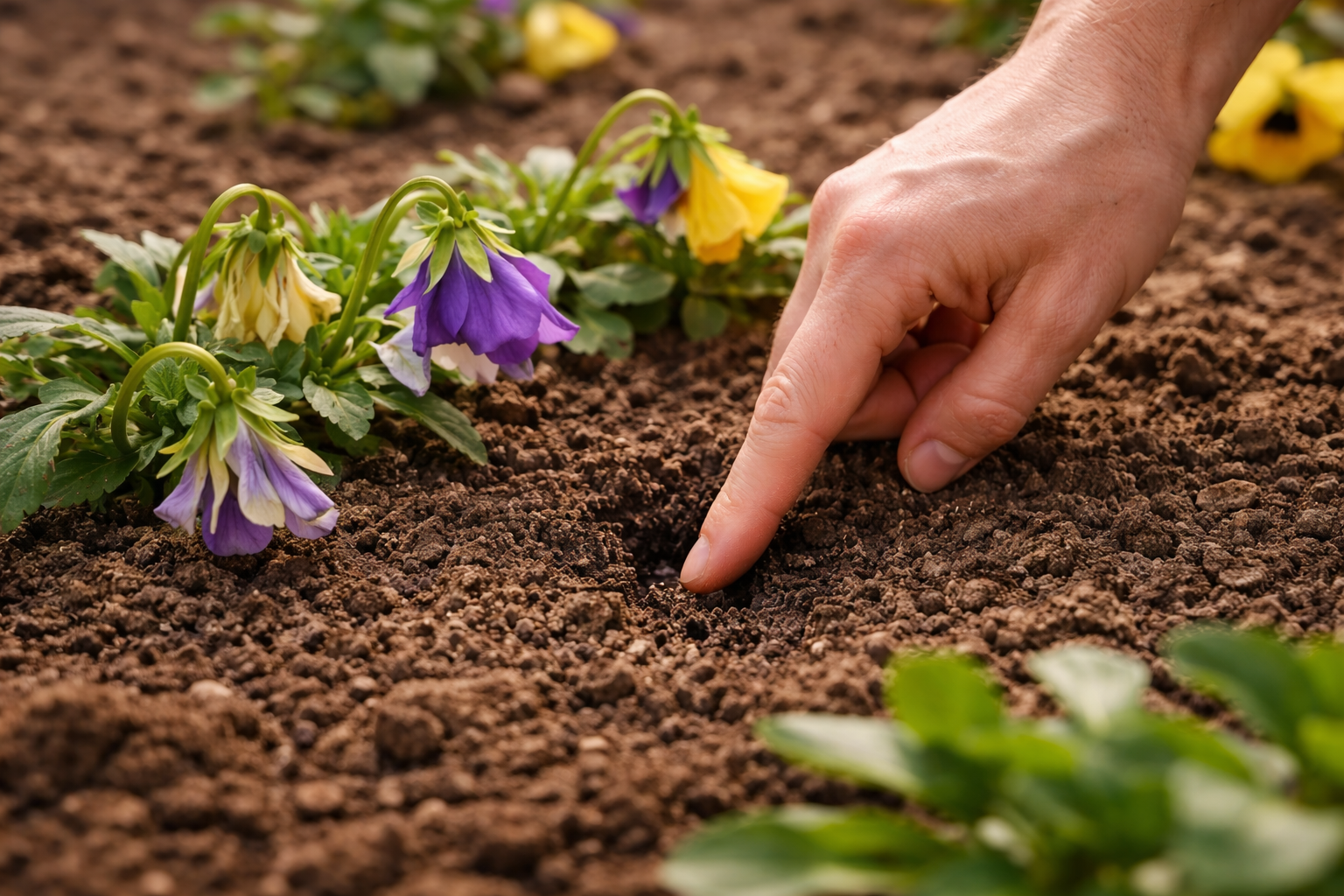
Start by ignoring the top layer completely and focus on the root zone. Push your finger a few centimeters into the soil and feel whether it is dry, evenly moist, or heavy and wet. In many cases, the surface dries quickly from sun or wind, but underneath it stays wet. If you water again in that situation, the roots end up sitting in dense, airless soil, which weakens them further. In other situations, the top looks fine, but the deeper soil is dry. This usually happens when water never reaches the roots properly, especially if watering is done too quickly or lightly.
When you check properly, you will often find that the issue is not simply “needs more water” but rather that the water is not reaching or not leaving the root zone in the right way. Water slowly only if it is dry below the surface. If it feels wet, give it time to balance instead of adding more.
Step 2 – Observe how water behaves when you water
The way water moves through the soil tells you more than how often you water. If you notice that water stays on the surface for a few seconds or moves slowly downward, the soil is compacted. In this condition, roots do not get enough airflow, which affects how they function. Even with enough moisture present, the plant begins to weaken and droop.
If the water disappears immediately or runs off to the sides, it means it is not soaking into the root zone properly. The roots remain dry even though you are watering, which leads to the same drooping effect. This is especially common in newly planted pansies where the surrounding soil and the original root ball behave differently. Water may flow around the roots instead of through them.
Loosening the soil slightly around the plant can help improve both drainage and absorption. In containers, make sure excess water is able to drain out freely and is not collecting at the bottom.
Step 3 – Pay attention to when the drooping happens
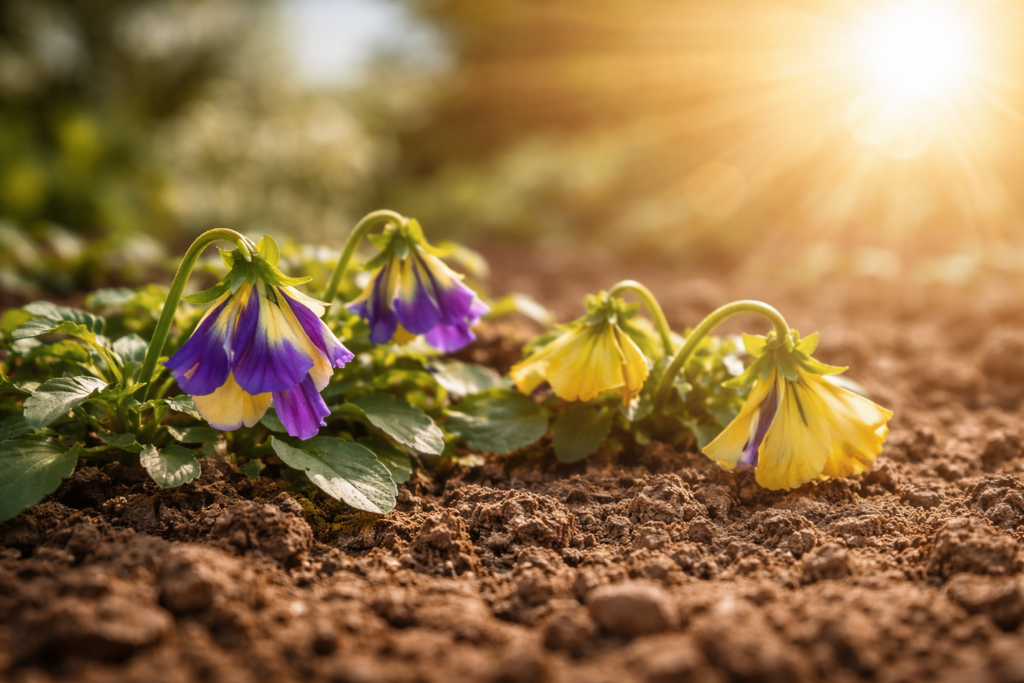
Timing is one of the clearest signals of what is going wrong. If the plant looks worse in the middle of the day and slightly better in the evening, the problem is often related to heat and sun exposure. Pansies prefer cooler conditions, and sudden exposure to strong sunlight can cause them to lose water faster than the roots can replace it. In that situation, the drooping is not because the plant is completely dry, but because the balance between water loss and water intake is off.
If the plant stays drooped even during cooler parts of the day, then the issue is more likely in the soil or roots rather than just temperature. Moving the plant to partial shade or protecting it during peak sun hours can quickly reduce stress. Even a small change in exposure can make a noticeable difference.
Step 4 – Check if the root ball is still isolated
A common issue after planting is that the root ball never fully connects with the surrounding soil. You might have soil around the plant that feels moist, but the actual root ball in the center remains dry. This happens when water flows around it instead of through it. Another sign is when the plant feels slightly loose or unstable, meaning the roots have not anchored properly yet.
When this happens, the plant cannot take in water efficiently, even if you are watering correctly. The result is drooping that does not improve easily. Gently press the soil around the base so the plant is stable, but avoid packing it too tightly. The goal is to remove air gaps without creating compacted conditions. Keeping moisture consistent for a few days helps the roots expand outward and connect with the surrounding soil.
Step 5 – Avoid stressing the plant while it is adjusting

When the plant is already struggling, adding more stress can slow down recovery. Fertilizing at this stage is one of the most common mistakes. It may seem like a good idea to “help” the plant, but it actually forces growth before the roots are ready. Frequent moving or replanting also adds stress. Once you make adjustments, it is better to leave the plant in place and let it stabilize.
Strong wind, sudden temperature changes, and inconsistent watering can all keep the plant in a stressed state longer than necessary. The focus during this period should be stability — consistent moisture, moderate light, and minimal disturbance.
Step 6 – Watch how the plant responds over the next 48 to 72 hours
After correcting the main factors, the plant should begin to show small signs of recovery. The stems may start to feel firmer, and the flowers stop collapsing further. Full recovery may not happen immediately, but the key is that the condition stops getting worse. If the plant improves slightly during cooler periods but struggles again in heat, continue adjusting light exposure.
If there is no improvement at all, go back and recheck the soil and root zone. In most cases, the issue is still there but was not fully corrected. Pansies respond relatively quickly once conditions are right, so early changes are usually noticeable within a few days.
Step 7 – Adjust watering pattern going forward
Once the plant begins to recover, it is important to avoid repeating the same mistake. Instead of watering on a fixed schedule, base watering on how the soil actually feels. This prevents both overwatering and underwatering. Water deeply but less frequently, allowing the soil to dry slightly between watering. This encourages roots to grow stronger and more resilient.
Shallow, frequent watering keeps roots near the surface, making the plant more sensitive to heat and drying. By adjusting how you water going forward, you reduce the chances of the same issue happening again.
FAQ
Why do pansy flowers droop after a week even if they were fine at first?
This usually happens because the roots have not fully adjusted yet. The plant may look stable at first, but small imbalances in soil, water, or temperature build up and become visible after a few days.
Can pansies recover after drooping like this?
In most cases, yes. Once the root conditions are corrected, the plant can regain firmness relatively quickly.
Is drooping always caused by lack of water?
No. Overwatering, poor drainage, and compact soil can cause the same symptoms. That is why checking the soil below the surface is important.
How can I tell if heat is the main problem?
If the plant droops during the hottest part of the day and improves later, heat is likely a major factor.
Should I water more when I see drooping?
Not immediately. Always check the soil first. Adding water when the soil is already wet can make the problem worse.