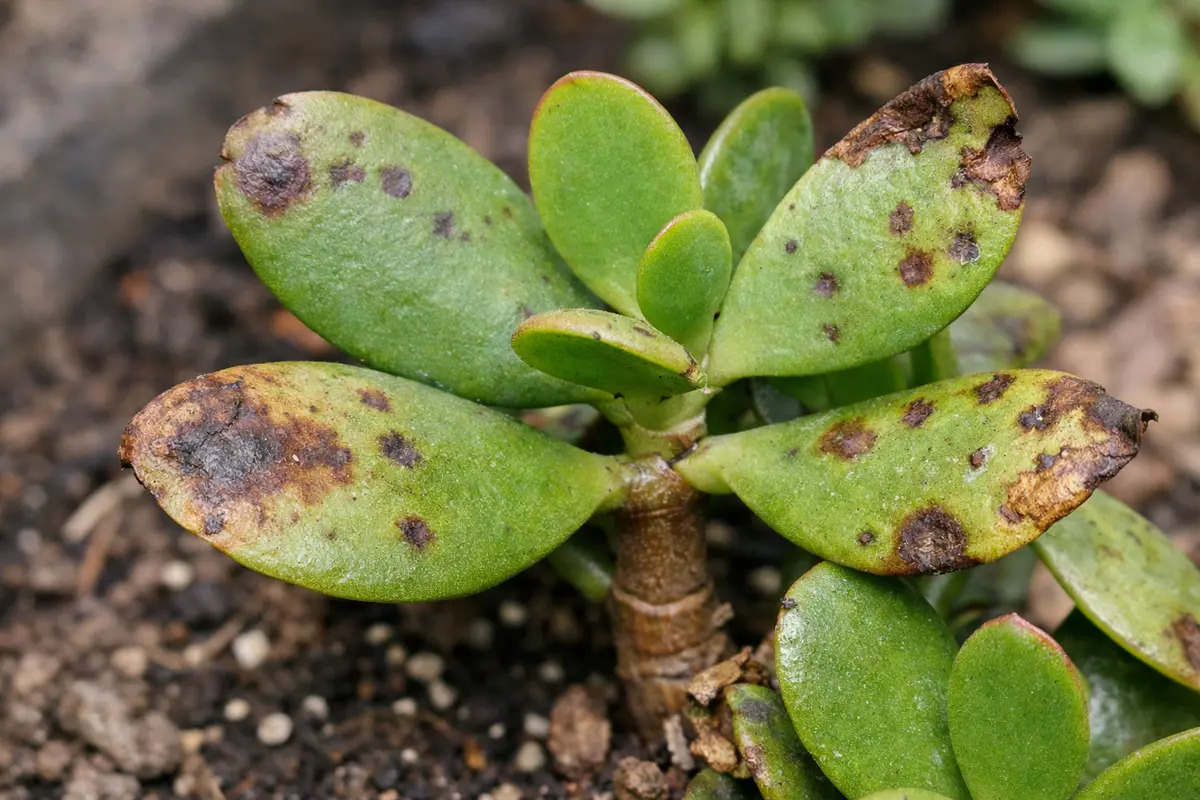
You may notice brown spots appearing on your jade plant, particularly after watering, which is why you need to know why does my jade plant have brown spots after watering. This discoloration often occurs due to overwatering, leading to spots and potential damage on the leaves. If left unaddressed, the condition can worsen, weakens the plant, and leads to more damage, but you can fix it now by adjusting your watering schedule and inspecting the soil moisture levels regularly.
Step 1 – Inspect Jade Leaves for Brown Spots
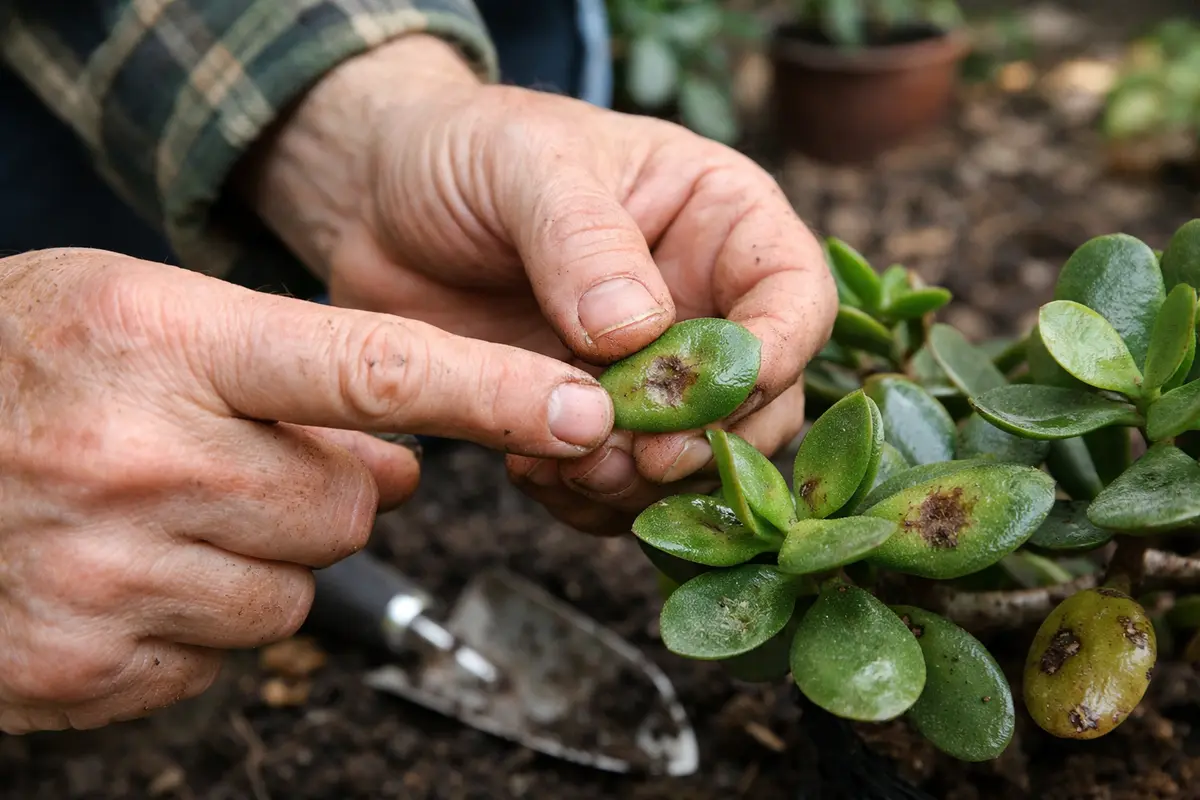
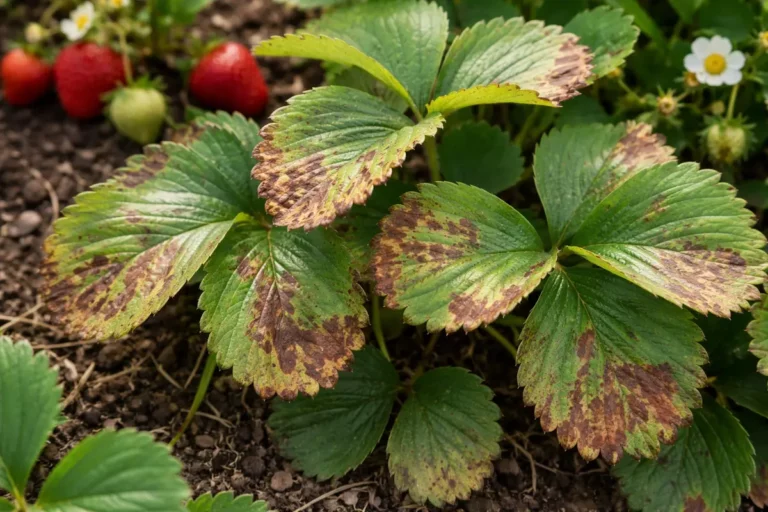
Begin by inspecting the leaves of your jade plant closely for any brown spots. Look closely to determine whether the spots are small and dry, indicating potential sunburn or larger and mushy, which signifies overwatering damage. The texture and firmness of the impacted leaves offer crucial clues about the plant’s condition. If you find that some of the brown spots are surrounded by yellowing leaves, this further suggests an issue with moisture levels, as yellowing often comes from stress related to improper watering.
Acting quickly to identify the type of brown spots is crucial because differentiation allows you to choose the right solution. If the spots appear after watering, the plant may be experiencing overwatering or poor drainage, leading to root problems. Conversely, if you’re finding that brown spotting follows a period of excessive sun exposure, then sunburn or leaf scorch may be to blame, especially if there are no signs of moisture-related issues. A common mistake gardeners make is overlooking leaf texture; if a leaf feels mushy along with brown spots, it must be addressed almost immediately to prevent further damage.
Many gardeners mistakenly assume that brown spots are purely cosmetic and delay taking action. If left unchecked after just a few days, areas with mushy spots can worsen, leading to leaf drop and even death of the plant. Understanding this can motivate early intervention. For example, if you notice the brown spots on a younger leaf versus an older, hardier leaf, focusing on immediate care for younger leaves can help maintain overall plant health. A definitive sign of distress is when you observe that new growth is halted, indicating the plant is not in a stable condition.
Step 2 – Evaluate Watering Practices for Jade Plant
Check your watering practices to see how much and how often you’re watering your jade plant. If you’re using a pot without drainage holes, you will likely notice excess moisture accumulating at the bottom of the pot. This kind of environment is detrimental, as jade plants thrive on dry conditions between waterings. If you find the potting medium remains wet weeks after watering, it’s a sure sign that your plant’s roots are at risk of decay due to lack of oxygen.
Overwatering is the primary cause of brown spots on jade plants. If the soil feels saturated more than a couple of inches below the surface, that means the roots cannot absorb enough oxygen, leading to root rot, beneficial bacteria dying, and poor nutrient absorption. This is particularly prominent during cooler, less sunny months when jade plants go dormant and therefore require significantly less water. If you routinely water without checking the moisture balance, you could mistakenly water even when the topsoil appears dry, leading to accumulated moisture deeper in the pot.
If you find that your watering routine is indeed too frequent, reassess your schedule. For example, if you’re watering every week regardless of weather conditions, that’s too often if the soil stays wet longer than is healthy. Alternatively, consider letting the soil dry out fully before watering again to avoid prolonged conditions that foster decay. Many gardeners forget to check the moisture level two inches deep, where the soil may still be soggy even if the surface appears dry. Ensure you create a habit of checking the soil moisture using your finger or a moisture meter. If it feels damp at a depth of two inches, delay watering for another week.
Step 3 – Provide Nutrients to Help Jade Recover
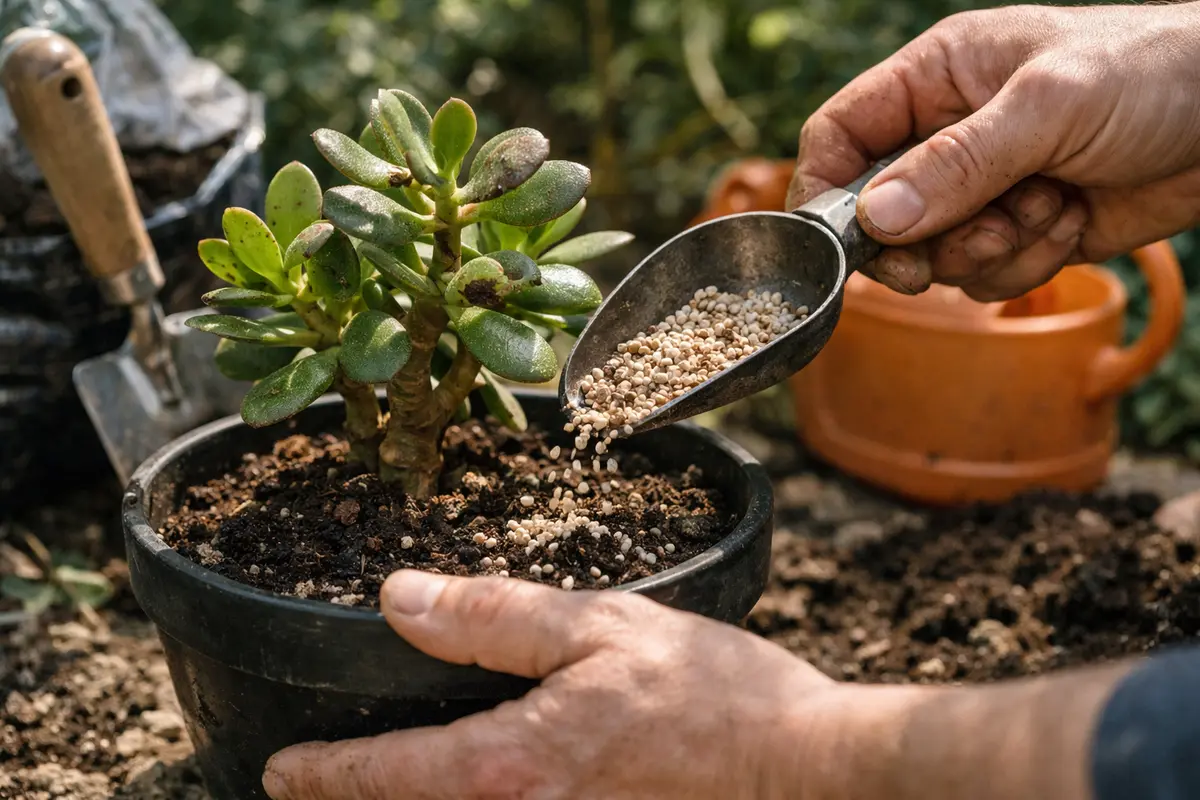
Start by reducing the frequency of watering your jade plant, allowing the soil to dry out completely between waterings. Within a few weeks, you should notice that the brown spots begin to fade, and new, healthy green leaves may emerge as the plant starts to recover.
The recovery timeline for a jade plant can vary; typically, you should see signs of improvement within three to four weeks in optimal conditions, while slower recovery might indicate ongoing issues such as root rot or prolonged overwatering. As the plant rejuvenates, look for thick, firm leaves and healthy branching as indicators of successful regrowth. If the plant still appears wilted or the leaves remain discolored after this period, check for pests or inadequate light.
Avoid overcompensating with additional water or fertilizer during recovery, as this can exacerbate existing issues. Jade plants thrive on minimal fertilization, and excessive nutrients can lead to further stress. If you notice that the browning worsens after fertilizing, reevaluate your soil and watering schedule to ensure the plant receives the right conditions.
After correcting the watering issue, supplying adequate nutrients supports recovery since jade plants need nourishment to thrive. Fertilizing gives plants the essential macronutrients they might lack due to overwatering or depleted soil. Verify that the fertilizer has a balanced N-P-K ratio and contains slow-release compounds to prevent fertilizer burn, which would exacerbate stress on your jade plant. A frequent misstep is using high-concentration fertilizers without dilution; ensure that the fertilizer is mixed according to the manufacturer’s recommendations, as too strong a mix can damage already stressed roots.
While feeding your jade plant, take care not to overcompensate with too much fertilizer. Excessive feeding can lead to root and leaf damage as plants struggle to intake nutrients they cannot balance. Monitor changes in plant health closely during the recovery period. If you observe leaf curling or browning at the tips shortly after fertilization, it signals that you might have overdone the application, warranting an immediate halt to fertilization and a re-evaluation of soil moisture levels. If your jade plant doesn’t respond well to fertilizer, it may be a good idea to check for pests or other diseases that could be contributing to signs of distress.
Step 4 – Avoid Overwatering to Prevent Future Spots
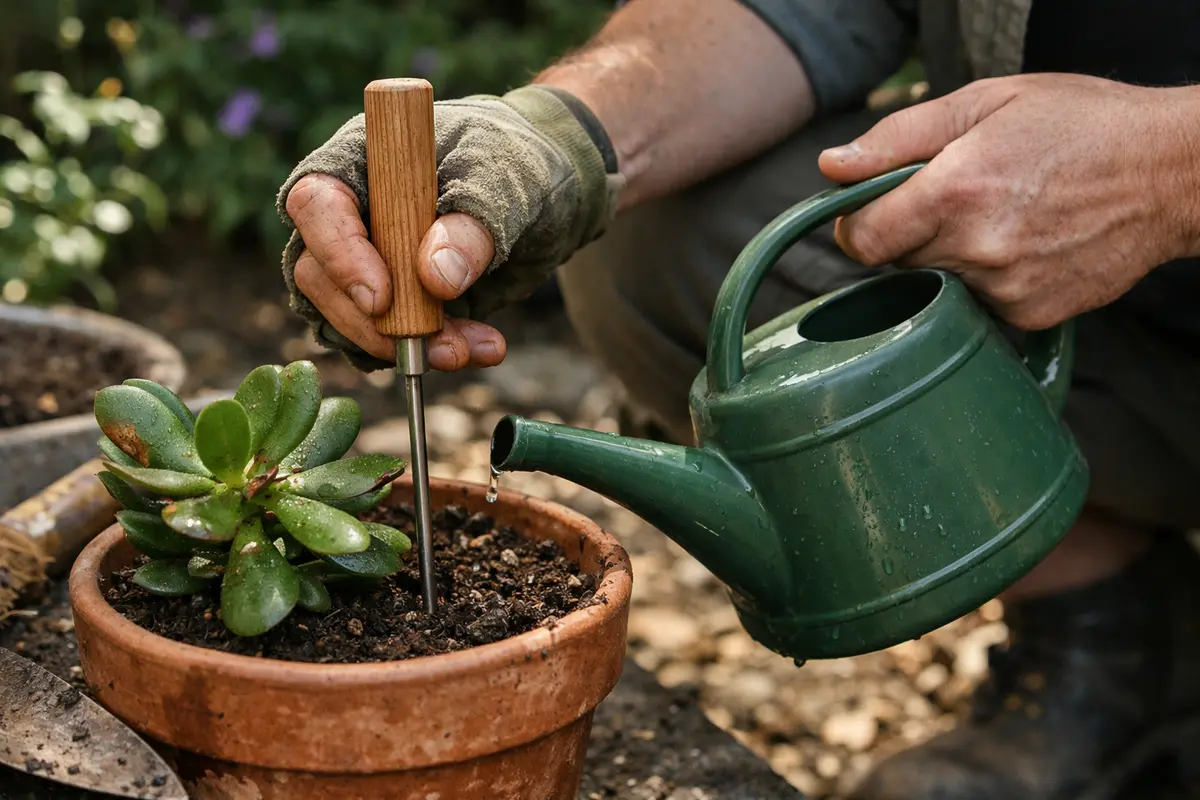
Start by ensuring that you are using well-draining soil and a pot with drainage holes to prevent water from pooling. This will reduce the risk of brown spots caused by excess moisture, allowing your jade plant to thrive consistently with a healthy appearance.
Brown spots often result from overwatering or poor air circulation, leading to root rot or fungal infections. By allowing the soil to dry out completely before the next watering, you address the root cause of these issues, promoting a resilient jade plant. If your jade plant is still developing brown spots in dry air, check if there’s adequate airflow around it, as lack of ventilation can exacerbate moisture retention.
In the winter months, you may need to adjust your watering routine due to lower humidity levels and reduced light. During this time, monitor the soil moisture level more closely, as jade plants require less water in cooler conditions. If you notice persistent issues, consider placing a small humidifier nearby to bolster humidity without risking overwatering.
Understanding the historical context of overwatering is essential in preventing future occurrences. Jade plants thrive in well-draining soil; thus, creating a routine to check soil conditions regularly prevents recurrence of sogginess that leads to brown spots. Factors such as season, humidity, and temperature significantly alter watering needs, making adaptability key to long-term care. An approach to remember is the “soak and dry” method, where you provide a thorough watering until excess runs out of the drainage holes, then wait until the soil has completely dried out before watering again.
In different seasonal conditions, planting your jade in outdoor containers may require more frequent checks to adapt to temperature changes. For example, during spring and summer, higher temperatures can lead to increased evaporation, requiring potentially more frequent watering checks. Conversely, in the fall and winter months, reducing watering frequency is critical to avoid excess moisture accumulation. Many growers find themselves watering the same amount year-round, leading to unnecessary stress on the plant during dormant months. If your jade plant is exhibiting wrinkled leaves in winter, it’s a strong indicator to cut back drastically on watering.
Step 5 – Check for New Brown Spots Each Week
Start by checking the drainage of your jade plant’s pot immediately after watering. Observe the soil moisture and ensure excess water is escaping through the drainage holes; if it’s trapped, brown spots may develop. Recheck the soil moisture within a week to determine if your adjustments are effective and if the plant begins to show signs of improvement, such as a reduction in new brown spots.
A fully recovered jade plant displays vibrant, intact green leaves with a smooth texture, while early signs of the problem returning present as new brown or dark spots, alongside a wrinkled or shriveled leaf texture. If the plant is thriving, leaves will be plump and firm, contrasting sharply with the previously distressed, discolored leaves that indicate overwatering issues. If you notice new brown spots, check the potting mix to see if it has become compacted or waterlogged.
If the brown spots reappear despite your care, consider repotting the jade plant into fresh, well-draining soil to further reduce moisture retention. Escalate the situation by observing environmental factors such as humidity and light conditions that may be affecting the plant’s health; if necessary, adjust the placement or watering schedule accordingly to prevent recurrence. Also, examine for pests that could be contributing to leaf damage.
Consider a fully recovered jade plant to have vibrant, healthy green leaves, free of any new brown spots, and showing a steady increase in new growth over time. Leaves should feel firm to the touch, as opposed to wilting or mushiness, which indicates the potential return of the issue. If leaves begin to drop after applying fertilizers, it could be due to a nutrient imbalance or residual waterlogged conditions still in the soil. Be informed that climbing humidity can sometimes mask poor watering practices; regularly checking leaf conditions should become a crucial part of maintenance.
If new brown spots return despite your care, this suggests that the original problems such as overwatering or nutrient imbalance persist. It’s time to reassess the conditions in which you’ve placed the jade plant, including verifying the soil’s drainage capability. Additionally, investigate external conditions like sunlight exposure. For example, if your plant suddenly starts receiving direct sunlight after being in a shaded area, it could still struggle regardless of drainage if the shift is too sudden. Keep an eye on changes in the immediate environmental factors such as temperature and humidity, as these could exacerbate existing issues.
FAQ
How can I tell if my jade plant is recovering?
You can determine recovery by observing new leaf growth, a lack of new brown spots, and firm leaves regaining their turgor. This typically happens within a few weeks after correcting watering practices and adding appropriate fertilizer. If new, vibrant leaves are emerging without any wilting, your plant is on the road to recovery. Additionally, monitoring soil moisture closely during this period will ensure that overwatering does not reoccur.
Can overwatering spread brown spots to other plants?
Yes, if your jade plant is infected with root rot due to overwatering, it can introduce pathogens to the surrounding soil. These pathogens may affect neighboring plants if they share the same soil or potting medium. Prevent this by isolating the affected plant and ensuring proper drainage practices are in place. If in doubt, consider repotting both the affected pot and any nearby plants into fresh soil to eliminate potential cross-contamination.
Should I remove the affected leaves to help my jade plant recover?
Yes, it is advisable to remove severely damaged leaves to prevent further stress on the plant. This action can help redirect energy towards healthier growth and improve airflow around the remaining leaves, thereby reducing the risk of fungal infections. Ensure that the tools used for trimming are clean to avoid introducing new pathogens. Additionally, consider keeping a close watch on what healthy leaves are left; noticing any leaves softening may indicate that the plant is still under stress.