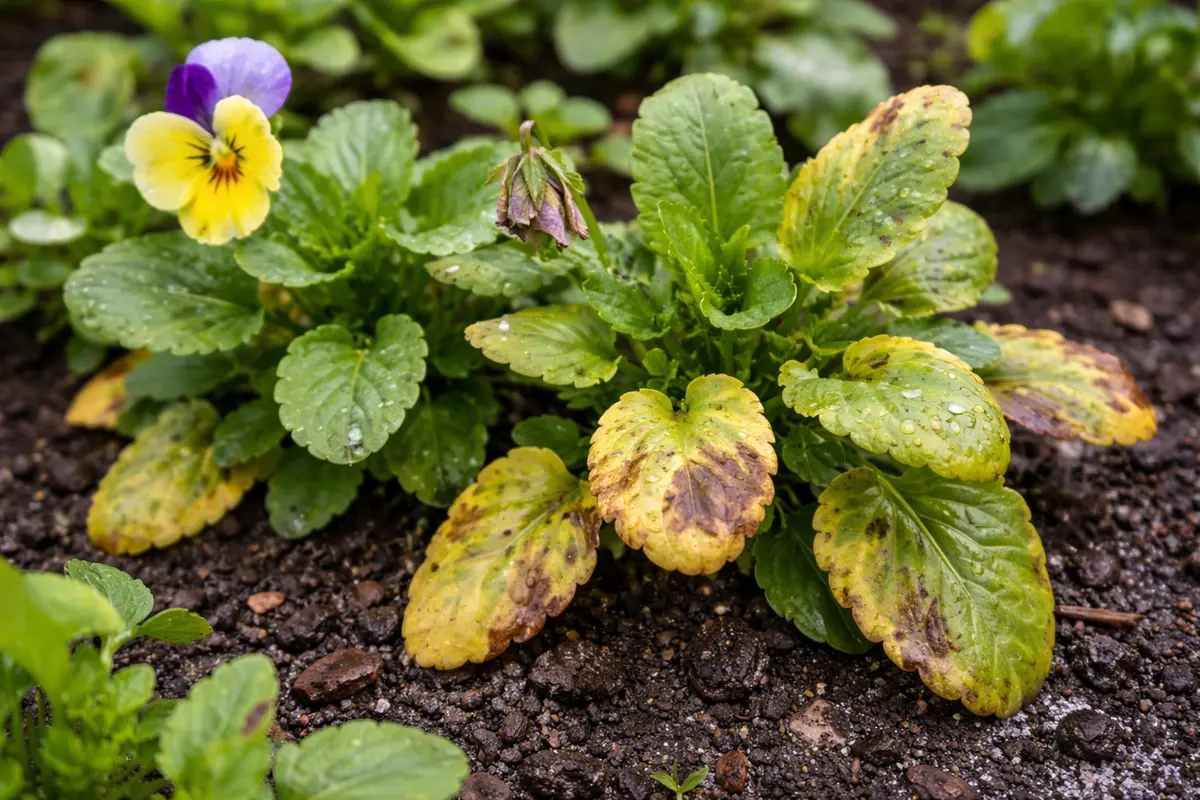
You may notice your once vibrant pansy leaves turning yellow after heavy rain, which is why you need to know why are my pansy leaves turning yellow after heavy rain. This yellowing is often caused by excess moisture that can lead to root rot or nutrient leaching, ultimately stressing the plants. If left unchecked, this issue can spread, weakening the plant and stalling its growth, but fixing it is possible now; just inspect your soil moisture levels and improve drainage. By adjusting your watering practices and monitoring the plants closely, you can help restore their health.
Step 1 – Inspect Pansy Leaves for Signs of Wilt
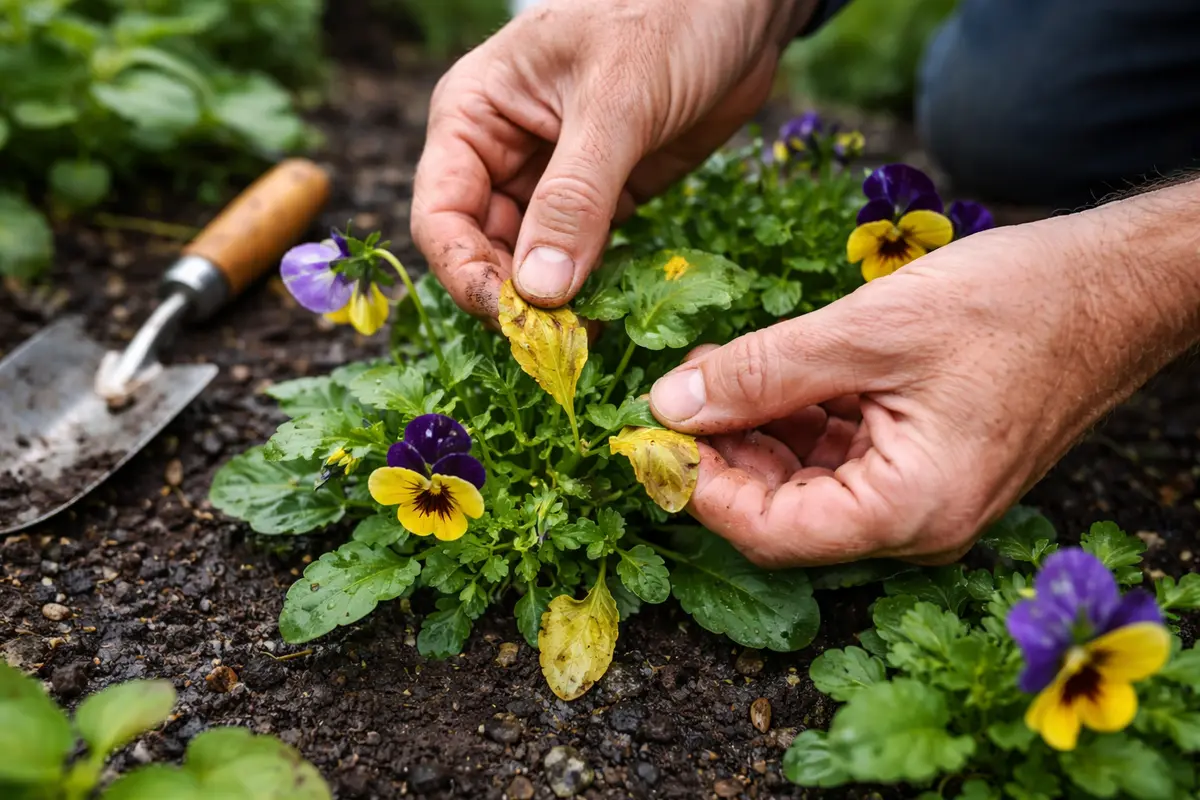
Inspect the pansy leaves closely for any signs of wilt or discoloration. You should observe any leaves that appear droopy or slimy, indicating they may be suffering from excess moisture. Addressing this wilting promptly can help limit damage and prevent disease spread. Look for dark, mushy spots that may signal early stages of rot, which can lead to more extensive damage if not treated early. Notably, observe for any leaves that might be entirely yellowing, as this could indicate a more severe systemic issue.
Acting quickly is crucial, as yellowing can be a sign of stress on the plant. When moisture levels in the soil rise due to heavy rain, the roots may become overwhelmed, leading to a reduced oxygen supply. If the roots are not getting enough air, the plant’s overall health is compromised, and yellowing leaves can escalate into further issues such as stunted growth or even death. The longer the issue remains unaddressed, the more likely your pansies are to develop additional symptoms like root rot or fungal issues. Regularly assess your pansies during and after significant rain — this is where many gardeners see signs of trouble for the first time, often too late.
A common mistake gardeners make is overlooking the early signs of excess moisture. If you notice wilting leaves but delay action, your pansies might succumb to diseases before realizing the severity of the situation. When yellowing occurs alongside droopiness, it becomes imperative to implement immediate inspection strategies to catch the problem early. If the wilting persists for more than a day, consider that the plants might be in serious danger. If roots feel mushy upon closer inspection, consider gently removing some of the topsoil to ease water accumulation and promote better air flow to the roots. Also, avoid heavy foot traffic around the plants after rain, as compacted soil can further inhibit root health.
Step 2 – Check Soil Saturation After Heavy Rain
Check the soil saturation levels around your pansies to assess drainage quality. You should see whether the soil feels muddy or overly damp when you probe it with your finger. If the soil clings to your fingers or forms a ball when squeezed, this indicates excessive moisture. This immediate assessment will determine if excess water is the root of the issue, as waterlogged conditions can lead to detrimental long-term effects on your plants. Note that if the surface soil is wet but the lower layers remain dry, the plant may be suffering from a shallow watering issue.
Soil that remains saturated for extended periods prevents roots from absorbing vital nutrients and oxygen. If the soil holds too much water, you’ll witness the yellowing leaves worsening over time, culminating in potential plant death. Moreover, poorly draining soils—like clay—especially compound these effects as they hold water longer than sandy or loamy soils. If you can sink your finger into the soil several inches and feel wet, then drainage is likely inadequate, creating a hostile environment for root development. Different types of soil breakdown may also influence how long you should wait before considering replanting or restructuring.
If excessive water is detected, allow the soil to drain before taking further measures. The ideal course is to wait until the top few inches of soil feel dry to the touch before watering again. Conversely, if the soil feels moist but not saturated, you may still proceed with a planned fertilization to encourage recovery. If drainage appears adequate, but leaves still yellow, it may indicate nutrient deficiency due to the heavy rain’s leaching effect. In such cases, consider testing your soil for pH and nutrient levels to identify the underlying issue accurately, and remember that active root development often hinges on the right moisture balance. Regular inspections of soil texture, especially after heavy rainfall, can guide your care process, ensuring it stays healthy.
Step 3 – Fertilize Pansies to Encourage New Growth
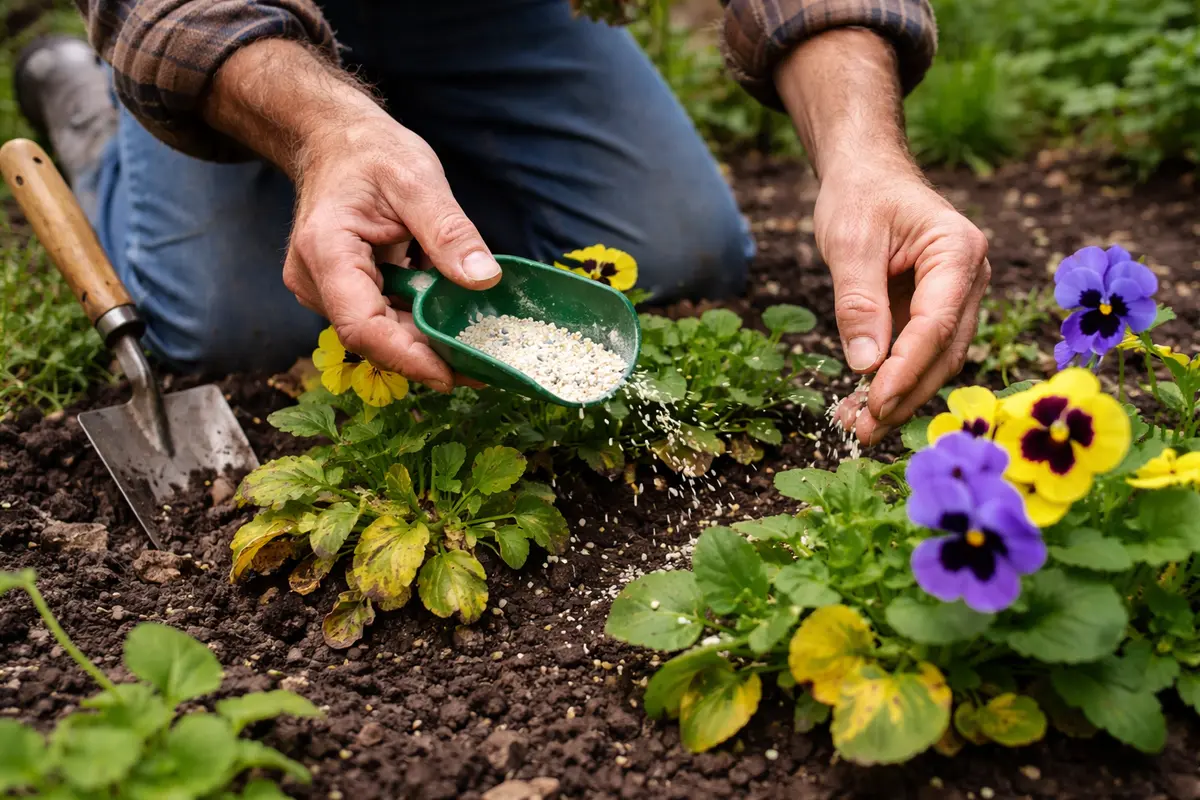
Apply a balanced fertilizer to the soil around your pansies to promote new growth. Aim for a slow-release fertilizer with a balanced NPK ratio, such as 10-10-10, applying it at the manufacturer’s recommended rate. You should begin to see improvements, such as greener leaves and increased fresh shoots, in about a week following application. As a general rule, the earlier you fertilize after heavy rain, the quicker the recovery process. Look for changes in leaf color and structure as indicators of recovery; however, recognize that too little or too much fertilizer can hinder growth rather than help it.
Fertilizing provides essential nutrients that bolster the plants’ vitality. Nitrogen, in particular, is vital for leaf growth, and replenishing it can result in noticeable improvements in leaf color and vigor. Make sure the soil is moist before applying the fertilizer, as dry soil might prevent proper nutrient uptake. Additionally, consider the timing of your fertilization: applying it immediately after rain can enhance absorption, leading to better overall results. Consistent feeding will ensure the pansies get a steady stream of nutrients to recover from the stress caused by heavy rain, allowing them to grow lush foliage.
However, be cautious not to over-fertilize, as this can stress the plants further by causing a nitrogen burn, resulting in scorched leaf tips. Adding too much fertilizer may lead to burning leaves or a rapid lack of green foliage, countering your recovery efforts. Typically, if you notice browning tips or edges on new growth, it’s a sign the plants are experiencing stress from excessive fertilizer. Monitor the moisture levels in the soil after applying fertilizer, ensuring the soil is damp but not saturated to prevent overwhelming the plants again. If your pansies remain unresponsive, consider flushing the soil with water to help leach out any excess nutrients and alleviate plant stress.
Step 4 – Water Pansies Sparingly in Wet Conditions
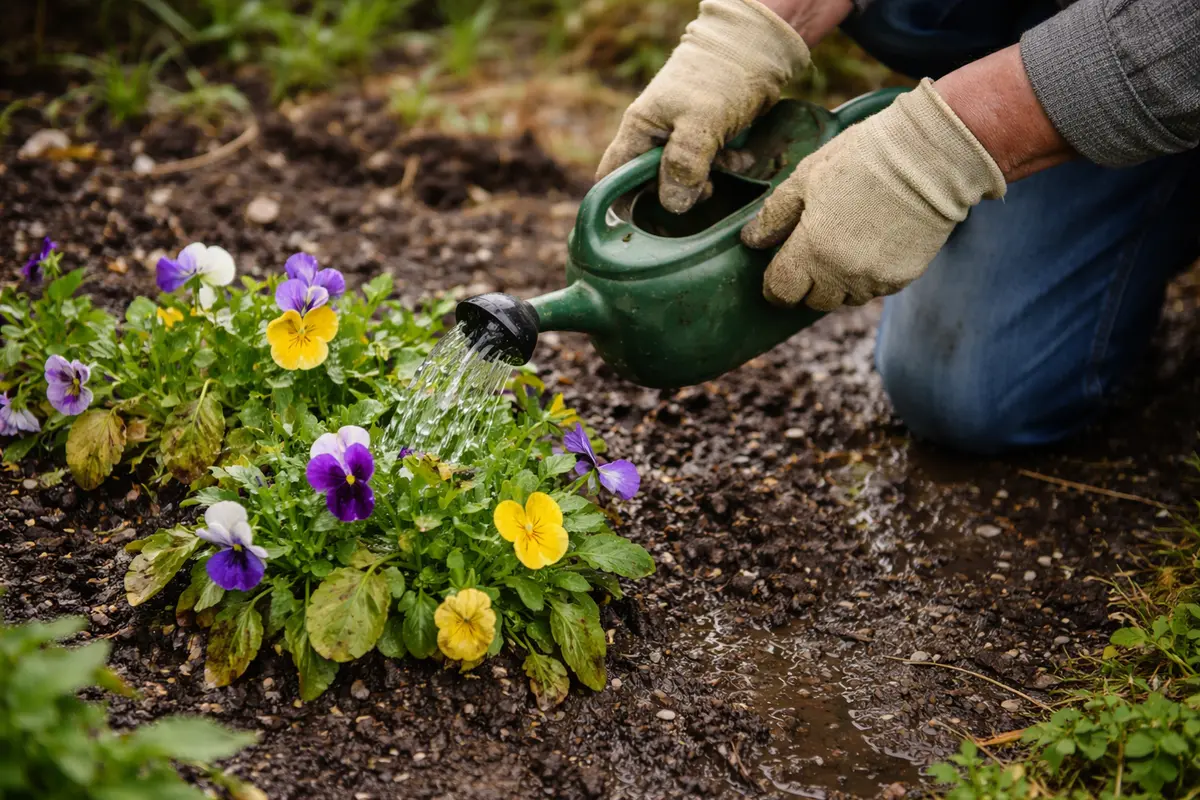
Water your pansies sparingly if your area remains wet or if there is forecasted rain. This adjustment will help prevent the recurrence of the previous issues related to excess moisture. Establishing a routine of limited watering aids in controlling soil moisture levels while maintaining an ideal environment for your pansies. Check the moisture by sticking your finger into the soil—if it’s damp at a depth of two inches, hold off on watering. Understanding this balance is crucial; excessive watering will only exacerbate the problem.
Understanding your local weather conditions can guide your watering habits and habits. During wet weather, existing moisture in the soil typically suffices, reducing the need for additional watering. By closely monitoring rainfall and soil moisture, you can fine-tune your watering habits, ensuring your pansies remain well-hydrated without becoming over-saturated. If rain accumulates significantly, consider erasing your scheduled waterings for that week to avoid unnecessary exposure, which could further stress your plants. In situations where the weather remains unpredictable, a moisture meter can provide accurate readings on soil saturation levels.
Seasonal changes can also influence your watering routine. For instance, heavier rainfall expected during spring may require less frequent watering compared to a dry summer. Monitor how long the soil stays damp after rain; this will help inform how often you should check back for moisture. Adjust your watering schedule based on current weather reports and soil condition indicators to optimize the health of your plants and minimize future damage. Additionally, remember to assess the evaporation rate during hot days to determine when your pansies may again require a drink without over-compensating for previous rain levels. This consistent assessment is key to preventing future yellowing and maintaining vigorous growth.
Step 5 – Look for Fresh Yellowing on Pansy Leaves
Start by checking the soil moisture in the days following heavy rain; the pansies’ leaves may appear yellow due to waterlogged roots. Observe if the soil is drenched or if excess water is pooling around the plant. Recheck the soil every few days to see if it begins to dry out; recovery signs include a shift in leaf color from yellow back to green.
A fully recovered pansy displays vibrant green leaves that are firm and healthy, contrasting the limp, yellowing foliage of a plant under stress. If you notice dark spots or mushy textures returning, this suggests root rot or ongoing water issues; healthy plants should feel resilient to the touch, while struggling ones will have a soft, wilted appearance. If the leaves do not regain their green hue after a week, make a note of the changes in your watering habits.
If the yellowing persists despite following these steps, consider reducing watering further to allow the roots to regain strength. As a fallback action, check for pests or diseases, which may require isolating the affected pansies to prevent spread. Should these issues arise, escalate by consulting a local garden center for specific treatments applicable to pansies.
A fully recovered pansy will sport vibrant green foliage with sturdy leaves that feel smooth and firm to the touch. In contrast, returning issues might present as new yellow leaves that have a slightly wilting appearance or feel limp; these are indicators that the plants are still stressed. If the leaves exhibit dark spots or a concentrated yellowing pattern instead of uniform yellowing, this suggests a potential fungal issue requiring immediate attention. If you see brown patches between the yellowing, assess for additional conditions that may resist progress.
If the yellowing persists despite monitoring and adjusting watering practices, implement a fungal treatment specifically aimed at pansies, or consider relocating the plants to a better-drained area. Furthermore, assessing the environmental proximity is critical; if too much moisture is retained within surrounding plants, that can also aggravate the problem. If problems continue despite intervention, contact a local extension service for advice tailored to your specific environmental conditions, as they can provide additional insights based on regional wetness. Ensuring proper airflow around your pansies will also help minimize moisture retention, thereby fostering improved growth conditions.
FAQ
How long does it take for pansies to recover from yellowing leaves?
Generally, pansies can start showing signs of recovery within a week after addressing issues like overwatering and fertilizing. Progress can be indicated by greener foliage and the emergence of new shoots during this time, but full recovery may take up to three weeks, depending on how severe the damage was initially. It’s crucial to stay vigilant during this period as monitoring can help you adjust your care routine appropriately for sustained health.
Can yellowing leaves spread to other plants?
Yes, yellowing leaves can indicate disease or pests affecting other nearby plants. Monitoring your pansies closely and separating any affected plants is crucial to avoiding a broader issue in your garden. Keeping a close eye on the surrounding environment can also help prevent spreading if diseases are present. Always remove any diseased leaves from the area immediately and compost them away from healthy plants, as this preventive measure can significantly enhance the health of the rest of your garden.
Should I remove yellowing leaves from my pansies?
Yes, actively removing yellowing leaves can help focus the plant’s energy on new growth. However, avoid excessive pruning; only remove leaves that are severely affected to prevent stressing the plant further. If you consistently find yellow leaves amidst your daily checks, this may indicate either a water issue or further disease that needs addressing first. Make it a habit to promptly dispose of the removed leaves, as this will help mitigate potential spread from pathogens back to other parts of your garden.