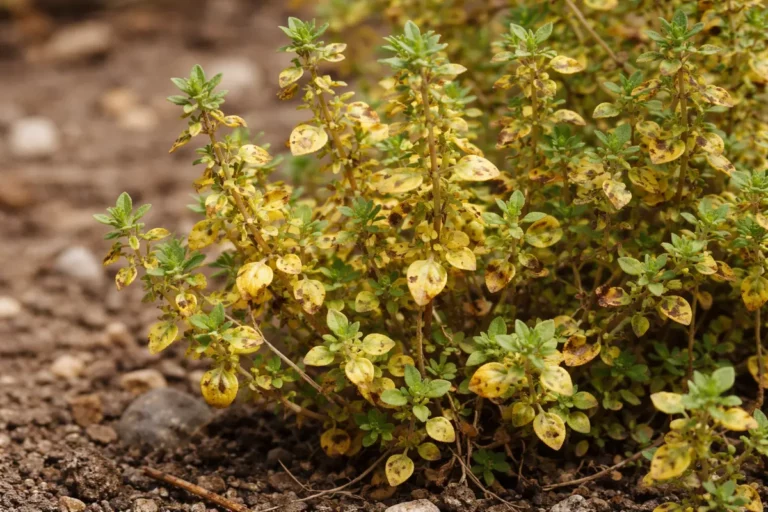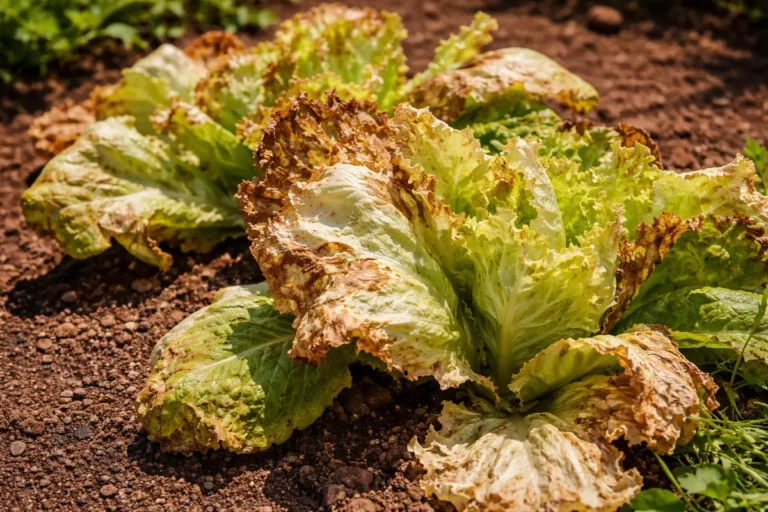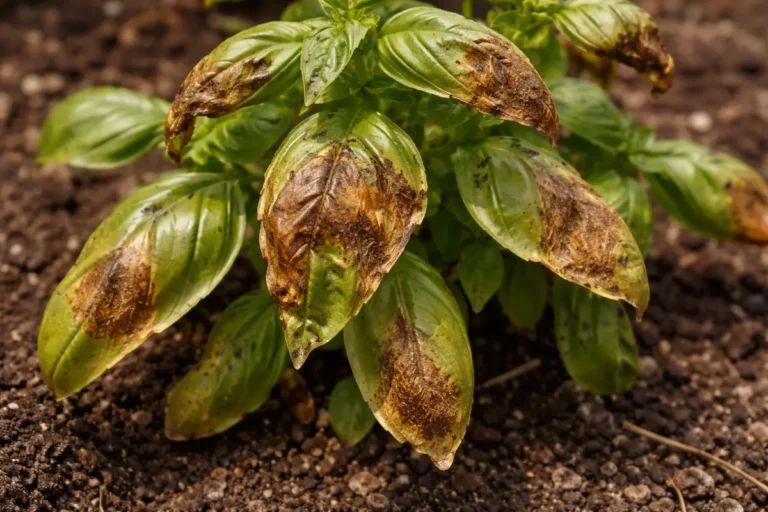
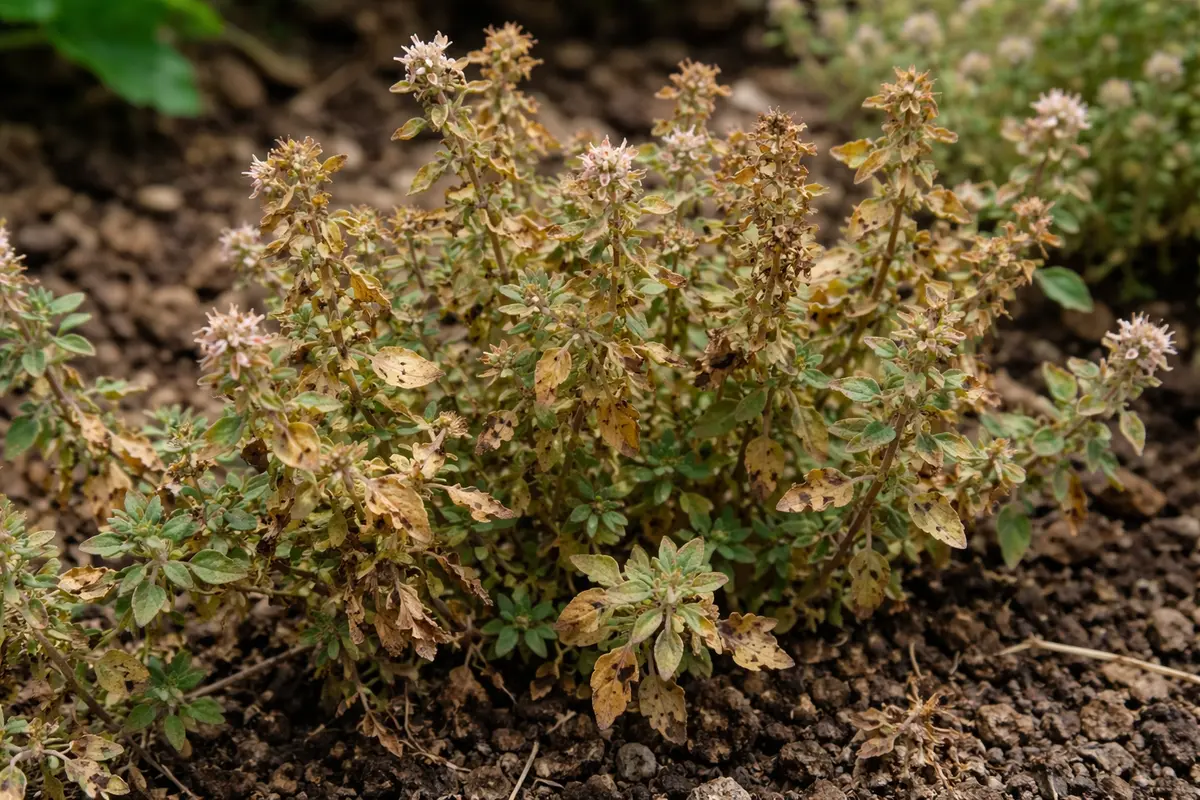
You may notice your flowering thyme turning brown after a heatwave, which is why you need to know what to do when flowering thyme turns brown after heat. This browning is often caused by excessive heat leading to wilting and leaf drop, signaling a decline in your plant’s health. If ignored, this issue can spread and weaken the plant, making recovery harder, but addressing it now can improve the situation; you can check the soil moisture, adjust watering practices, and trim back any damaged growth.
Step 1 – Prune Brown Thyme Stems Immediately
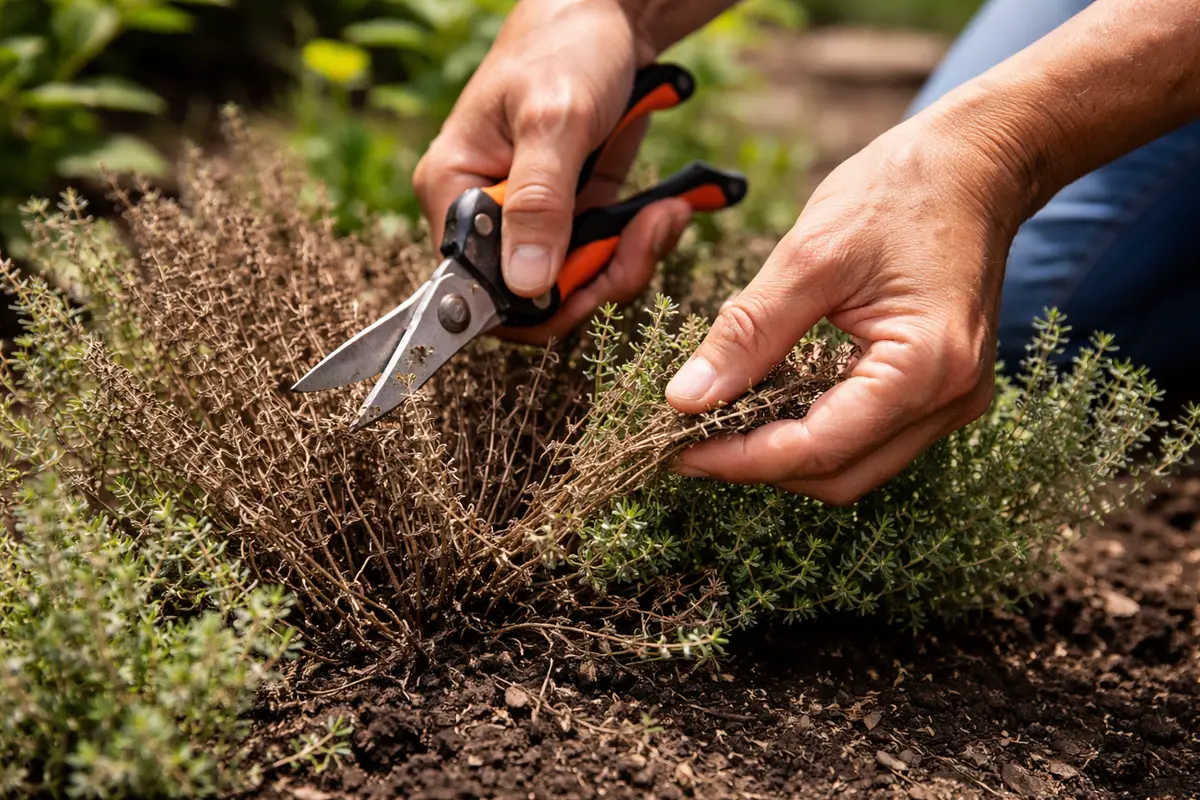
Begin by cutting away any brown or shriveled stems immediately. Within a day, you should notice that the remaining healthy parts of the plant appear more vibrant and invigorated, with fresh green leaves signaling recovery. Inspect each stem carefully; look for areas where the plant feels limp or shows discoloration. For example, if a stem feels mushy to the touch or exhibits a blackened tone, it has likely succumbed to damage and should be removed. These sections will not recover and can hinder the overall health of the thriving parts.
Pruning damaged stems allows the plant to redirect its energy towards the healthier portions, maximizing recovery potential. This technique is pivotal, as damaged stems can attract pests and harbor rot, exacerbating the plant’s deteriorating condition. This often occurs when moisture accumulates in dead stems, creating an environment conducive to disease. Perform pruning at an angle approximately a quarter inch above a viable green leaf to encourage new growth; ensuring cuts are clean can help avoid injury to nearby healthy stems.
Remember, timing is crucial; many gardeners overlook that damage spreads quickly in hot, humid conditions. If you hesitate and don’t address the brown stems promptly, the disease or heat stress can propagate to the surrounding healthy leaves. A common mistake includes trimming without checking for hidden damage; doing so could leave unhealthy sections untouched, which hinders the plant’s recovery. Make sure to carefully inspect the stem and nearby foliage for any signs of browning below the surface or even at the crown. If you neglect to prune, you may very well find thriving sections of the plant exhibiting unexpected wilting and decay within a week.
Step 2 – Diagnose Heat Stress in Thyme Plants
Inspect the soil moisture levels to confirm the cause of the browning. If the soil feels completely dry to the touch, you likely need to adjust your watering schedule to alleviate the heat stress. A simple test involves using your finger to probe the soil about an inch deep; dryness can often be masked by surface moisture in hot weather. If your finger feels dry and crumbly at this depth, the plant is not receiving sufficient hydration. In contrast, if it feels cool and consistent with moisture, further investigation into other stressors may be needed.
When thyme plants become heat-stressed, they struggle to maintain their moisture balance. The combination of high heat and inadequate watering can lead to wilting and browning due to cellular dehydration. Checking soil moisture effectively informs your next steps, ensuring your thyme can regain vigor with proper hydration. If the soil does feel moist but the plant is still brown, it suggests other issues may be at play, like root problems or pest infestations, that require immediate attention to prevent lingering damage.
If you find your thyme in a yellow, limp condition but detect adequate soil moisture, consider making a quick examination for root rot or pest issues. A telltale sign of root rot is a sour smell emanating from the soil; if the soil feels waterlogged, it’s imperative to repot the plant to improve drainage. Observe closely; if you notice a specific portion of the plant wilting while others remain firm, it can signify localized heat exposure or pest pressure. A quick inspection for pests like aphids or spider mites is essential; these issues often proliferate in heat and can amplify the plant’s distress if not addressed immediately. If you spot pests, act quickly by treating with insecticidal soap under the leaves where they often hide.
Step 3 – Water Thyme to Aid Recovery from Heat
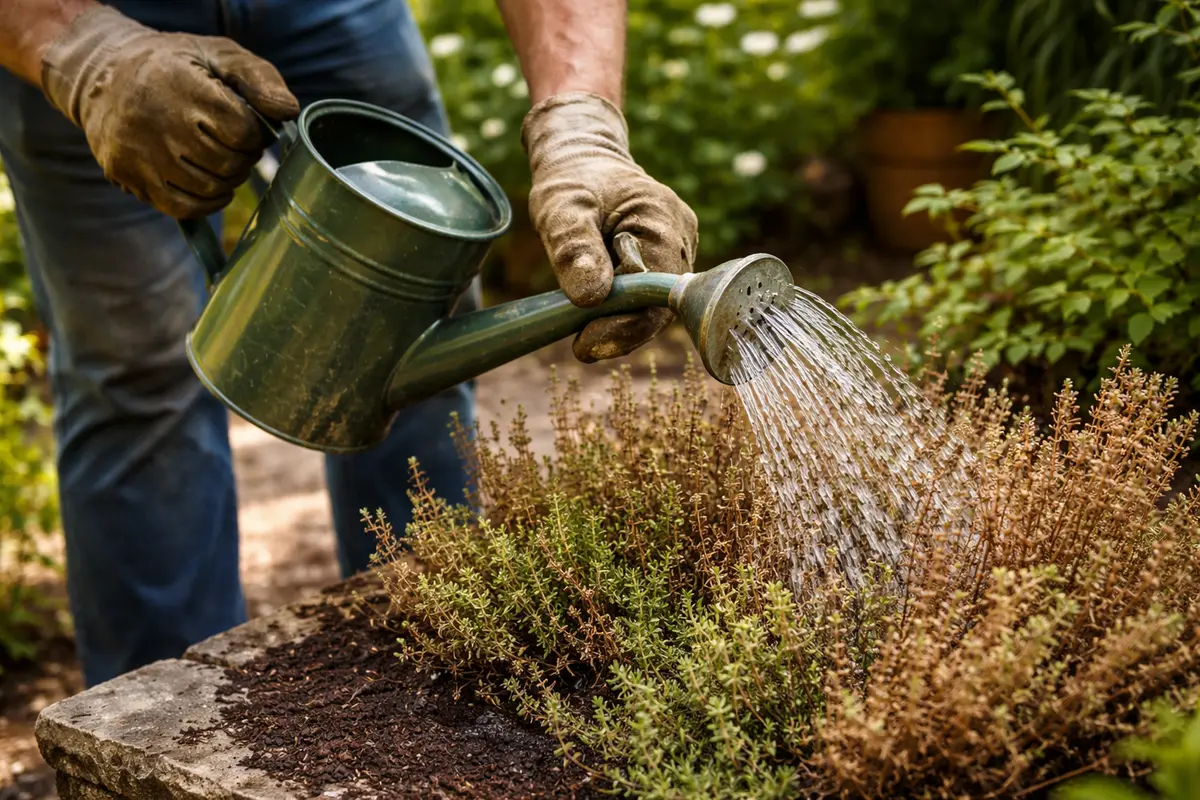
Water the thyme thoroughly, ensuring the moisture penetrates down to at least 6 inches deep. This gives the roots access to hydration they desperately need. Within a few hours, the remaining healthy leaves should begin to perk up, displaying renewed vitality and improved color. Observe the soil; dampness should be consistent through the top inch down to a depth of 6 inches to ensure proper hydration reaches the roots. If water runs straight through without soaking, it can mean compacted soil needs addressing, so you may need to aerate lightly.
Proper watering restores necessary moisture to the plant roots, allowing thyme to absorb vital nutrients for recovery. This restoration is crucial, as thyme can endure brief dry periods, but prolonged drought can result in irreversible damage—especially after experiencing heat stress. Regular watering during high temperatures is crucial for enhancing recovery efforts. Always ensure you are using tempered water, as water that is too cold can shock the roots, leading to further complications. Waiting about an hour after watering can provide insight into how quickly the soil retains moisture and whether adjustments to your watering frequency are necessary.
A common mistake during recovery is over-watering. This could lead to root rot, something that is very dangerous for thyme. Pay attention to how quickly the soil drains after watering; monitoring drainage is necessary, as consistently soggy soil can sabotage recovery efforts. If the top layer dries out completely within a day, this indicates a probable need for more frequent watering in the future. In contrast, if the soil takes several days to dry out, cutting back on watering may be necessary to prevent drowning the roots. Furthermore, adjust your regimen based on external temperature and humidity; continue without fertilizing immediately after heat stress, as the plant won’t effectively utilize added nutrients without sufficient moisture in its system. Wait at least a week after re-establishing your watering routine before applying any fertilizers.
Step 4 – Protect Thyme from Heat in Future
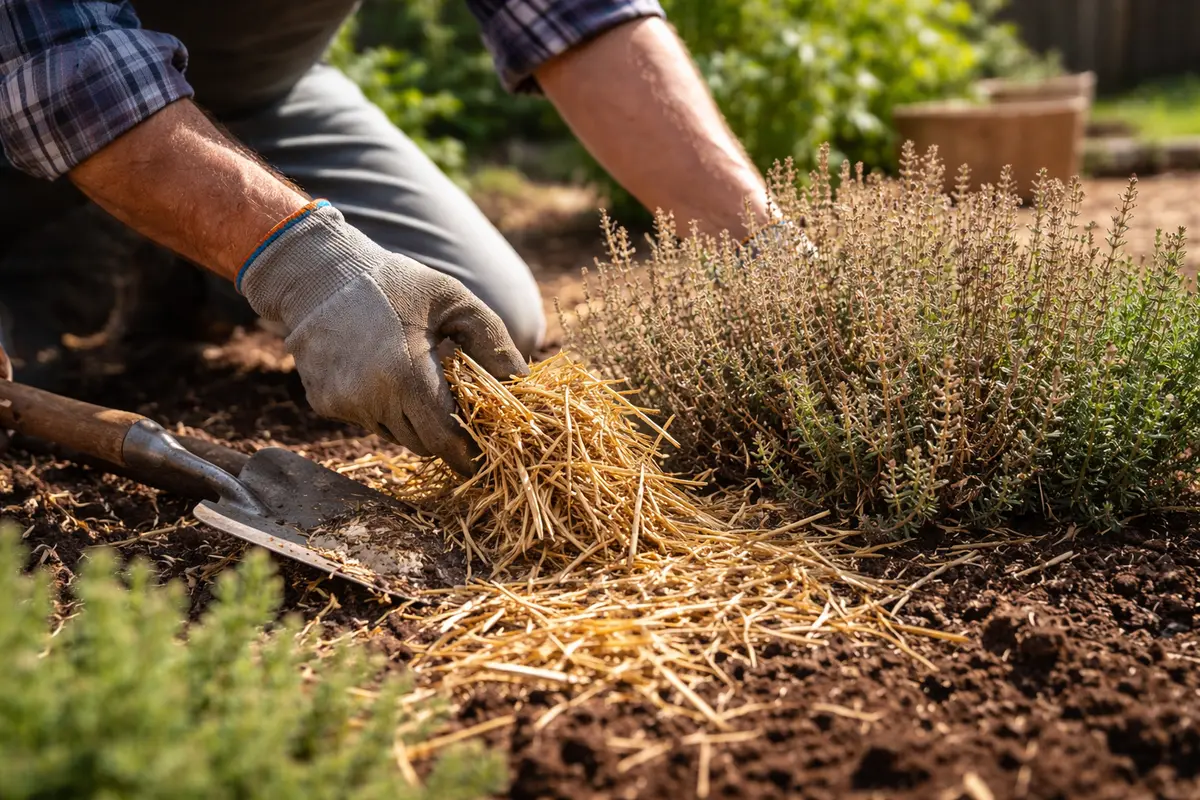
Start by providing your flowering thyme with a steady supply of moisture, ensuring the soil is consistently damp but not waterlogged. This action not only prevents further browning but also promotes the plant’s recovery as its leaves revive in a hydrated environment. Too often, gardeners overlook consistent hydration in extreme weather conditions, leading to cyclical stress that weakens the plant over time.
Hot, dry conditions can rapidly desiccate thyme leaves, leading to browning. Establishing a regular watering routine addresses the root cause of dehydration, as thyme prefers slightly moist soil, especially during heat waves. If your thyme wilts even after watering, check for compacted soil that can inhibit moisture absorption. Additionally, people often miss that container-grown thyme can dry out faster than ground-planted varieties; take care to adjust watering practices accordingly.
During the hottest months, a layer of mulch can be extremely helpful in retaining soil moisture and reducing evaporation. If rainfall is scarce, modify your routine to water twice a week or every few days, depending on the severity of the dry conditions. When applying mulch, use materials like shredded leaves or straw, ideally placing a layer of approximately 2–4 inches deep; this will help buffer the plant against the hottest temperatures and maintain soil integrity. Regularly check local weather conditions and adjust your protective strategies during unusual heatwaves or prolonged exposure, as such situations can exceed typical hot-weather precautions. This vigilance fosters a habit of proactively managing plant health in fluctuating climates. Additionally, consider creating shade structures during intense midday sun; simply placing a lightweight cloth overhead can drastically reduce leaf temperature.
Step 5 – Check Thyme for New Brown Leaves Often
Monitor your thyme at least every 2–3 days for any signs of new brown leaves. Ideally, you should see healthy, green growth returning within a week or two of your recovery efforts. Focus specifically on the tips of the leaves, which often react quickest to stress and recovery efforts. If you see any browning or wilting after employing recovery measures, further action may be necessary.
A fully recovered thyme plant typically shows vibrant green thriving leaves that are firm to the touch. Additionally, you should observe new growth emerging at the tips of healthy stems, signifying that the plant is actively regrowing and regaining strength. Regular monitoring helps ensure that new signs of heat stress do not return, facilitating prompt corrective actions if necessary. If the condition worsens, check the soil moisture closely; if you find that waterlogged conditions persist, this can hamper overall recovery efforts and require immediate intervention. Remember, if new brown leaves emerge despite moisture control, also consider reviewing any potential drainage issues that may have been overlooked during prior inspections.
If new browning or wilting occurs despite following these recovery steps, thoroughly evaluate the soil moisture and determine whether your previous interventions were sufficient. Should the browning continue or worsen, you might need to reassess your growing conditions or consult with a local gardening expert. Fluctuations in temperature and moisture can significantly impact your plant’s health and might require adjustments in care. An additional measure might include implementing humidity trays around the base; these can raise ambient moisture levels effectively while reducing airflow stress. Introducing a humidifier, if your growing setup allows for it, can also be beneficial. This additional layer of environmental control can be especially crucial in maintaining plant health during unpredictable weather changes.
FAQ
How long does it take to recover thyme from heat stress?
Recovery can take one to two weeks, depending on how severely the plant was stressed and how promptly remedial measures are taken. Regular monitoring with proper care will promote a faster return to health; signs of stress relief may become noticeable within days after initiating recovery efforts.
Can heat stress spread from one thyme plant to another?
Heat stress does not spread like diseases or pests; however, surrounding conditions can adversely affect multiple plants. If one plant is suffering from stress due to improper care, it’s probable that nearby plants are also enduring similar adverse conditions. Always monitor environmental factors collectively to find the maximum tailored care for each individual plant’s requirements, adjusting as necessary based on localized factors.
Should I remove all affected parts of the thyme plant?
While it’s advisable to remove any significant brown or wilted sections to promote airflow and prevent decay from affecting healthier parts, you should leave any healthy foliage intact to support the plant’s recovery. Determine the best points for cutting so that you ensure minimal disruption to healthy growth. Cut above healthy leaf nodes when possible to retain as much active stem as you can, thereby allowing for vigorous regrowth during recovery efforts.