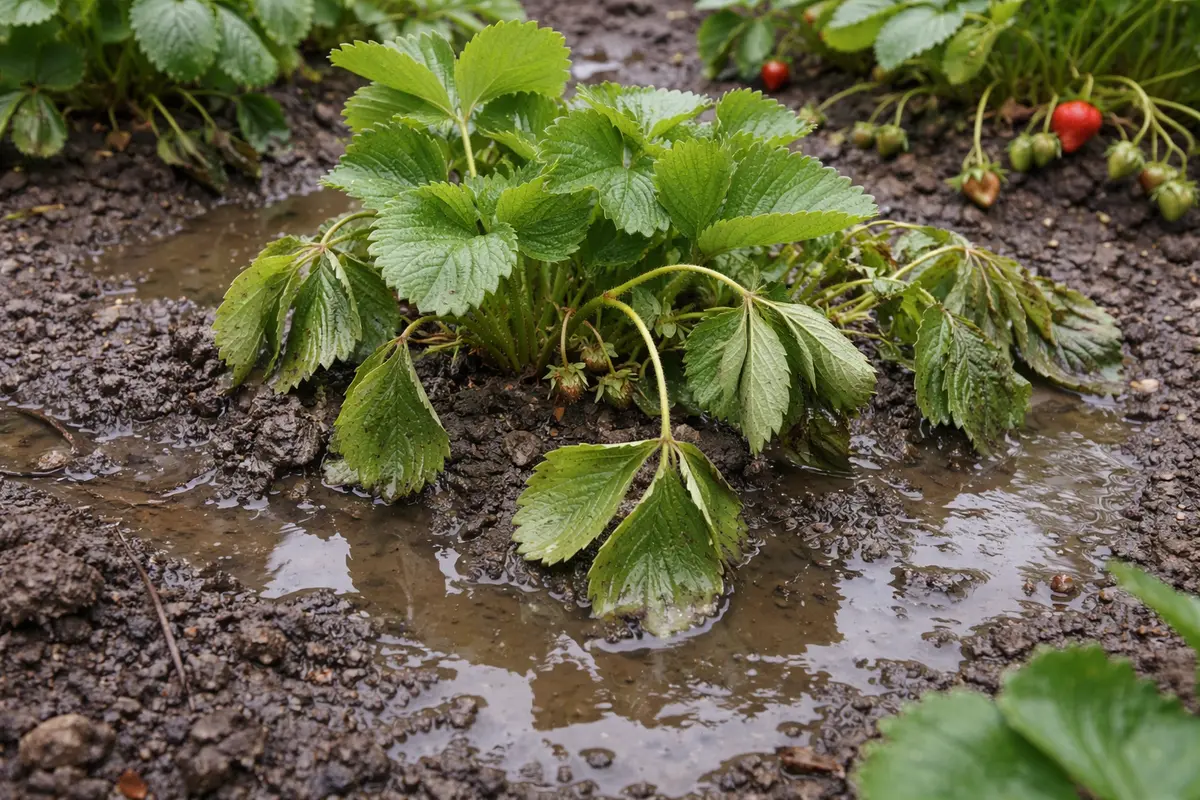
You may notice during hot spells that your strawberry plants appear weak and wilted, which is why you need to know what to do if strawberry plants droop after overwatering. This drooping often occurs when the roots become saturated, leading to mushy leaves and overall plant stress. If left unaddressed, this condition can worsen and weaken the plant, hindering growth and fruit production, but fixing it is possible now by checking the soil moisture and adjusting your watering schedule.
Step 1 – Trim Drooping Strawberry Leaves Immediately
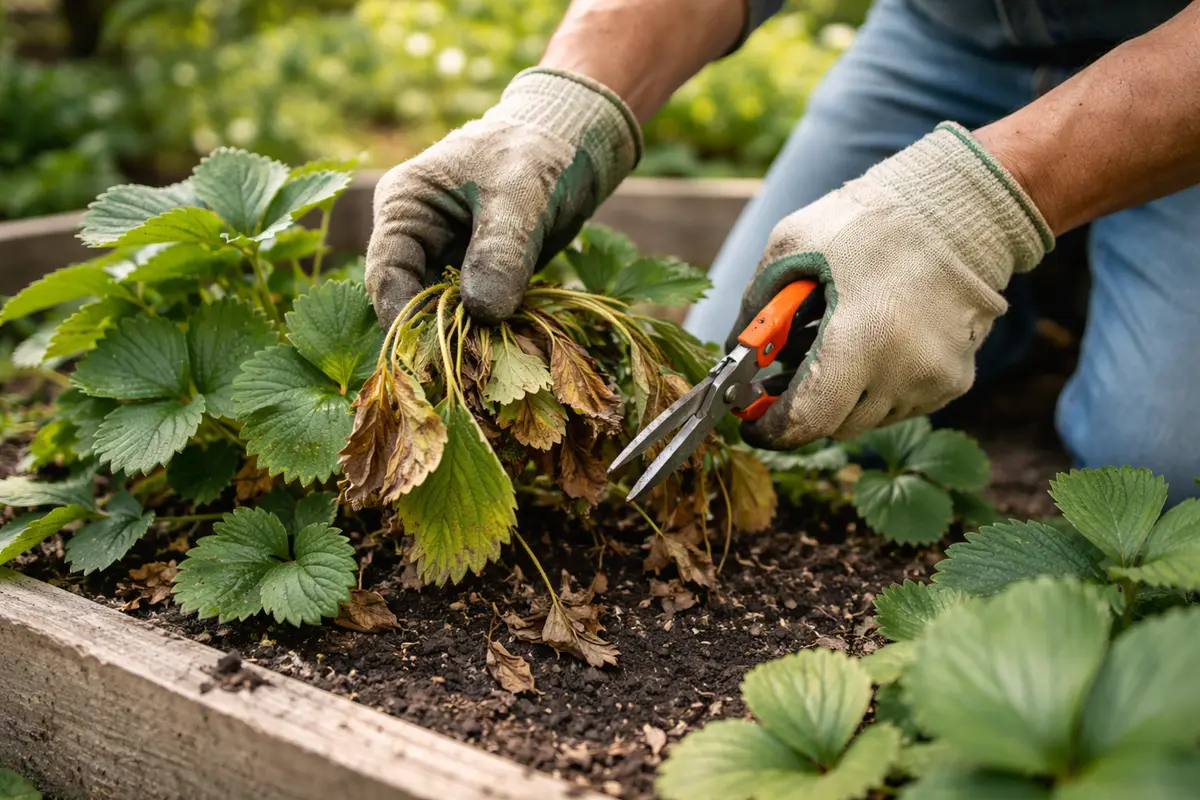
Start by trimming the drooping leaves off your strawberry plants right away. You will notice a decrease in visible stress on the healthier foliage within a few hours. By removing these limp and unhealthy leaves, you create the opportunity for the remaining parts of the plant to regain strength and channel energy more efficiently.
Removing the limp leaves is crucial because they are no longer receiving enough nutrients due to waterlogged conditions. The removal allows the plant to redirect its energy towards healthier leaves, promoting overall recovery. If left untrimmed, degraded leaves can spread disease and hinder growth, particularly in young plants that rely on efficient energy transfer. Moreover, any leaves that have begun to rot can release pathogens into the surrounding soil, compounding the problem and causing a vicious cycle of stress and decay that becomes increasingly difficult to rectify.
A common mistake gardeners make is waiting too long to remove damaged leaves, which only allows the problem to worsen. For example, if one notices brown spots indicating advanced decay but delays action, the infection can spread to the adjacent healthy foliage. Addressing the drooping quickly can prevent pathogens from taking hold, especially if the leaves appear brown and mushy. It’s vital to create a habit of regularly monitoring your plants after heavy watering to catch these issues early, ideally checking daily for visible signs of distress. If during these inspections you find that drooping is accompanied by a musty smell from the leaves, that’s an indicator that rot has already begun to set in, warranting immediate action.
Step 2 – Diagnose Overwatering Impact on Strawberry Roots
Check the soil moisture and drainage beneath your strawberry plants. You need to observe if the soil feels excessively wet or has a sour smell, indicating root problems that can compromise your plants’ health. Insert a finger into the soil around the roots to accurately gauge moisture levels; if your finger comes out muddy, that’s a sign of saturation needing immediate attention.
If the soil is saturated, it can lead to root suffocation, causing the plants to droop even more. Healthy strawberry roots need access to air; overwatering fills the air spaces in the soil with water, leading to rot and nutrient deficiencies. Soil drainage quality is essential, especially during peak growing seasons when temperatures and humidity can fluctuate rapidly. A well-draining mix of potting soil and perlite is ideal to balance moisture retention and drainage, allowing your strawberry roots to thrive without the threat of drowning.
If the soil smells sour, this means it is anaerobic, which could potentially kill off your plants. In such cases, consider repotting with a faster-draining mix to revive your plants and provide them with a much-needed lifeline. Conversely, if your soil is just moist but not soggy, it may indicate that your watering schedule is overzealous. If the soil feels compact and sticky when pressed, it signals a compaction issue that restricts oxygen flow around the roots. Adjust accordingly, as maintaining the right moisture profile is key; this means understanding seasonal variations. For example, during hot, dry spells, the plants might need a more consistent watering schedule, while in cooler seasons, less frequent watering may suffice. Monitoring soil moisture levels regularly helps prevent future waterlogging incidents—and if the top inch is dry but the deeper layers remain damp, adjust your watering routine to focus on deeper hydration rather than surface saturation.
Step 3 – Revive Drooping Strawberries with Nutrient Boost
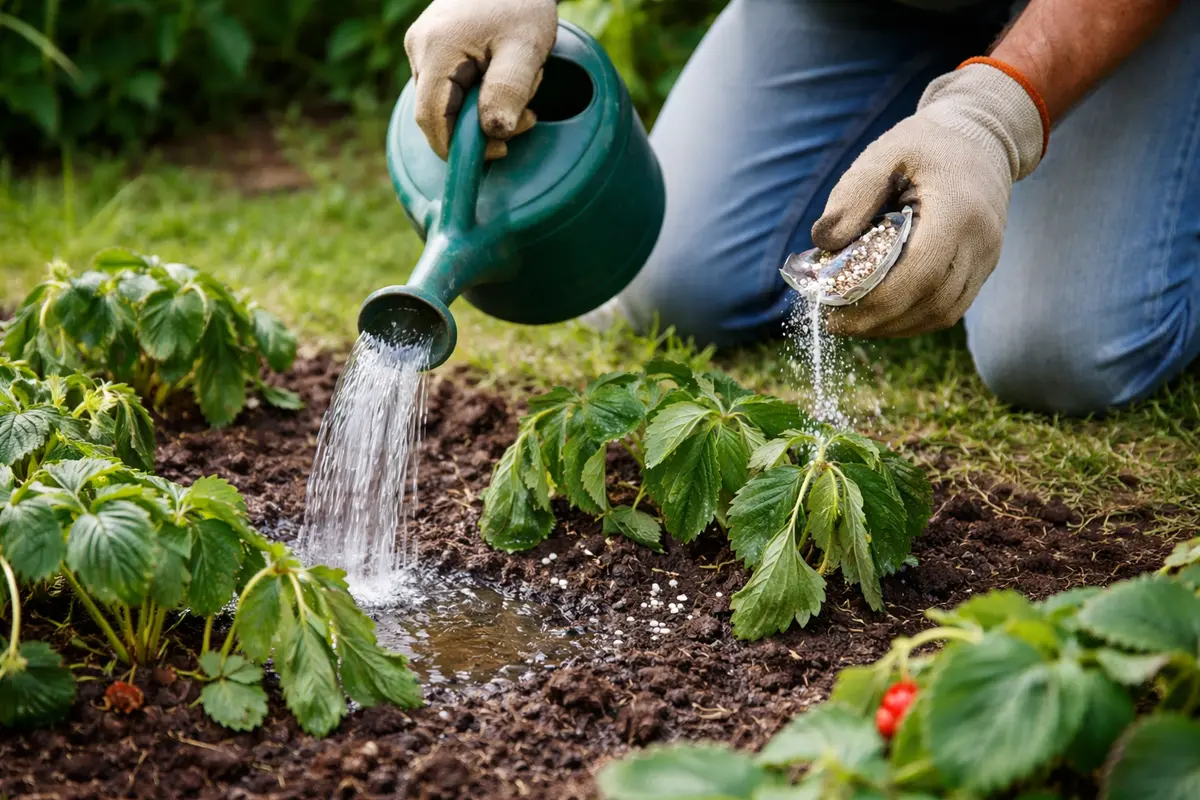
Apply a balanced fertilizer infused with essential nutrients to the remaining healthy leaves of your strawberries. You should notice an improvement in leaf firmness and color within 48 hours as the recovery process stabilizes. During this period, keep an eye out for any signs of distress or setback, especially if your plants exhibit signs of over-fertilization.
This small boost of nutrients is vital as waterlogged conditions can diminish root function, causing plants to starve. A fertilizer high in potassium can encourage healthy root growth and improve resilience against stressors in the soil, leading to a more robust recovery. This nutrient infusion is particularly beneficial in recovery, as it nourishes the plant’s ability to produce new growth essential for regaining vitality after experiencing droop. Some organic options, like compost tea, may also provide gentle nutrition without the risks associated with chemical fertilizers and can replenish vital microbes in the soil that promote healthy growth.
However, be cautious, as over-fertilizing can lead to further complications. Watch for leaf burn, which may indicate nutrient overload, or yellowing foliage, pointing to potential nutrient imbalance. The timing of fertilization is also crucial; applying it in the middle of a heatwave can stress the plants more intensely. Often, it’s wise to wait for a cooler day to apply fertilizers after resolving water issues for optimal improvements. If improvement seems stalled even after fertilization, consider the potential for root damage due to prolonged overwatering, which may necessitate a thorough inspection and possibly reworking the roots if they’re rotten. This approach not only helps recovery but also ensures that excess nutrients do not leach into the surrounding soil, which can harm the beneficial microbes that are vital for nutrient uptake and overall plant health.
Step 4 – Water Strawberries Carefully to Avoid Overwatering
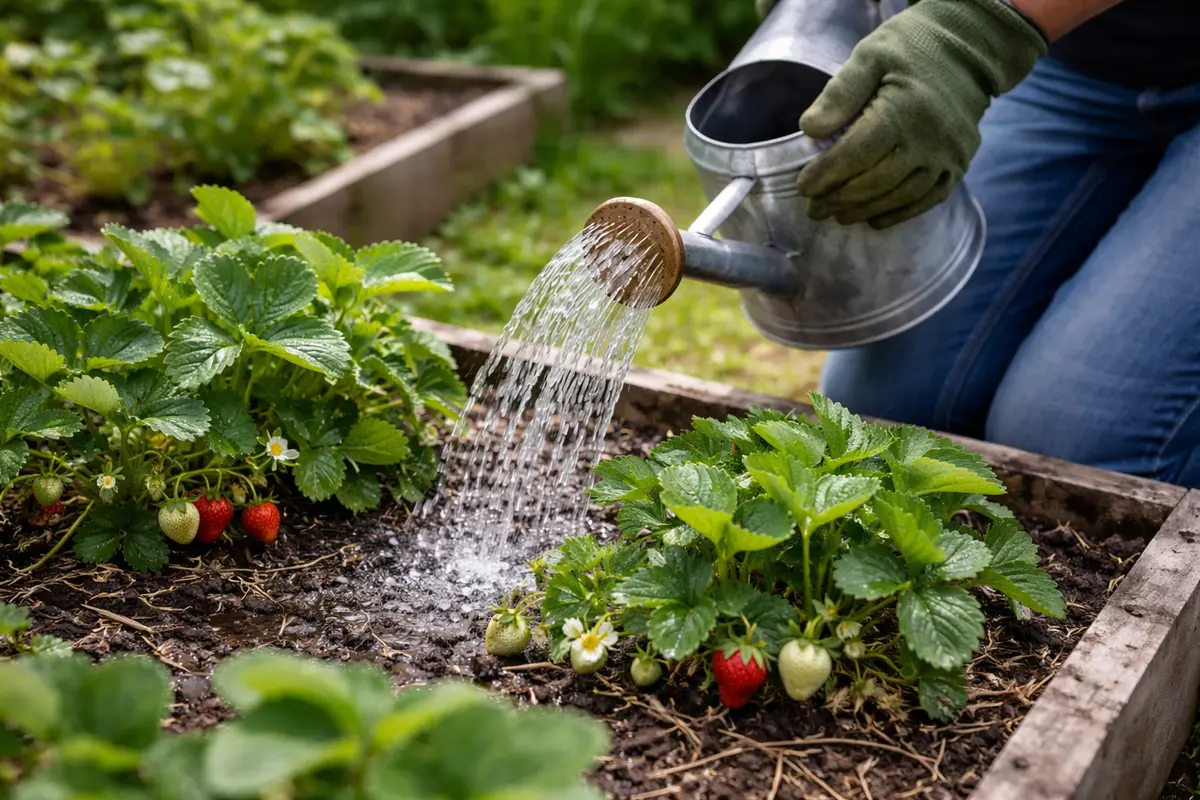
Start by allowing the top 1-2 inches of soil to dry out before watering again, ensuring that your strawberry plants regain their firmness. By establishing this routine, you will see an improvement in plant posture and reduced drooping.
Drooping often recurs when the soil remains overly saturated, creating conditions for root rot and other fungal diseases. By following a drying schedule, you address the moisture retention that triggers this issue, ensuring that the roots can breathe and absorb necessary nutrients effectively. If your plants are still drooping despite proper watering, check for signs of root rot, such as a foul smell or dark, mushy roots.
In the spring, when rainfall increases, adjust your watering schedule by checking soil moisture daily to prevent overwatering from natural precipitation. Additionally, consider using mulch to regulate soil temperature and moisture, which helps conserve water and prevent excessive saturation.
Environmental conditions like heavy rainfall or improper soil composition can lead to consistently soggy roots, which cause drooping. By enhancing drainage, you address the root cause of water retention while allowing roots to access vital oxygen and nutrients. If your plants show signs of yellowing along with drooping, check for compacted soil, as this can hinder drainage.
In the spring, implement a regular mulching routine to help conserve moisture without risking over-saturation during subsequent rains. If conditions are particularly wet, consider using raised beds for your strawberries to further enhance drainage and protect against future drooping.
A good practice is to check the moisture level at least three inches deep; if it feels dry at that depth, then water gently, using a slow drip method to allow for even absorption. This approach keeps the upper layers from washing away while ensuring deeper roots receive the moisture they need. Overwatering can lead to heavy soil that compacts roots, trapping them in a wet environment that encourages rot and prohibits proper nutrient uptake. Additionally, using mulch can help maintain moisture levels, reduce evaporation, and minimize potential soil compaction caused by foot traffic in garden beds that might disturb delicate roots.
During rainy seasons, monitor the moisture levels even more closely to adapt your watering frequency accordingly. Should you notice prolonged wet conditions, consider using raised beds to facilitate drainage or apply mulch to help absorb excess moisture. Implementing these regular checks can save your plants from future stress and contribute to creating a healthy growing environment. If conditions remain muddied for more than a few consecutive days, it may be time to explore the potential of moving your strawberries to a different area that affords better drainage opportunities. Remember, plants that sit in constant puddles are more prone to diseases like root rot; if you detect a worsening problem, consider employing soil moisture sensors for precision in your watering routine.
Step 5 – Check Strawberries for Signs of New Wilting
Next, monitor your strawberry plants closely for the next week, checking them every few days. Look for signs of recovery such as firm leaves and upright growth; drooping leaves may indicate that the issue persists. If you notice any ongoing drooping or yellowing, take immediate action to assess the soil moisture level and drainage, as overwatering might still be a concern.
A fully recovered strawberry plant displays vibrant green leaves that stand tall and are firm to the touch. In contrast, an early indicator of recurring issues can include leaves beginning to turn yellow at the edges while still drooping. If your plant appears lush yet the soil remains soggy, check the drainage to ensure it isn’t retaining too much moisture.
If drooping resumes despite your monitoring efforts, consider reducing watering frequency and evaluate whether the soil needs aeration or if the plant requires repotting in fresh, well-draining soil. If the problem persists after these adjustments, investigate the root system for signs of rot; unhealthy roots may necessitate more drastic corrective actions, such as trimming the affected areas or transplanting into new soil.
A fully recovered strawberry plant will display firm, vibrant green leaves that stand upright, contrasting with earlier droopiness and yellowing. In contrast, if you notice leaves that appear limp and the coloration begins to fade again, then the plant might be reverting to overwatering issues. If leaves feel mushy or exhibit dark spots, then it’s an indicator of ongoing distress; healthy leaves should feel firm and pliable.
If the problem persists despite following these monitoring steps, consider reducing watering frequency even further, allowing the soil to dry out more completely between waterings. If symptoms worsen, it may be necessary to apply a fungicide as root rot could be setting in, or transplant the plant to fresh, well-draining soil to alleviate persistent moisture concerns.
A fully recovered strawberry plant displays vibrant, bright green leaves that are firm to the touch, standing upright. In contrast, if the drooping returns, leaves may appear dull, limp, or even develop brown edges, indicating ongoing stress. If the leaves feel soft and mushy, check for root rot that can accompany excess moisture.
If drooping persists despite following these steps, reduce watering frequency further and improve soil drainage, such as adding perlite or compost to enhance aeration. If the problem continues, consider repotting into a well-draining mix or consulting a local gardening expert for tailored advice based on your specific conditions.
During these checks, observe if new leaves are emerging strong and green—this typically indicates a positive response to previous care actions. Conversely, if the plants remain dull and soft, they may still be suffering from compromised roots or residual overwatering effects. Consistent observation during the recovery period is crucial to catch any new problems early on, especially given that this stage can often reveal systemic issues stemming from the initial stress of overwatering.
If symptoms do return despite your previous efforts, try adjusting your watering regimen further, perhaps allowing for additional drying time between watering. Signs like persistent drooping in newly grown leaves can signal that the initial actions weren’t enough, and deeper root issues may still exist. Early detection is key to halting the spread of root rot or other complications that can escalate into a full-blown crisis. Regularly checking the moisture in the soil and adjusting your watering schedule accordingly will help maintain balance and ensure the plants do not revert to overly wet conditions that compromise their recovery.
FAQ
How long will it take for my strawberry plants to recover from drooping?
Depending on the severity of the overwatering, recovery might take anywhere from a few days to a couple of weeks. During this period, keep a vigilant eye on new shoots and healthy leaf regrowth, which are positive indicators that your plants are bouncing back to health.
Can overwatering spread disease to other plants?
Yes, excess moisture can encourage fungal growth and root rot, which may spread to nearby plants, especially if they share soil or space. It’s best to isolate affected plants until you can confirm they are recovering and free from pathogens, preventing the issue from compounding.
Should I remove all leaves from drooping plants?
You should only remove the most severely damaged leaves while retaining healthy foliage. The remaining leaves will aid the plant’s recovery by continuing photosynthesis, which is vital for regaining strength and supporting new growth, effectively increasing the plant’s ability to fend off potential diseases.