You may notice your raspberry plants developing mushy spots on their fruits during particularly humid weeks, which is why you need to know why are my raspberry fruits rotting during humid weeks. This rotting occurs due to excess moisture that encourages fungal infections and rot to take hold. If left unchecked, the issue can spread, leading to more damage and weakening the plant, but fixing it is possible now if you inspect your plants, remove any affected fruit, and adjust watering practices.
Step 1 – Remove Rotting Raspberry Fruits Immediately
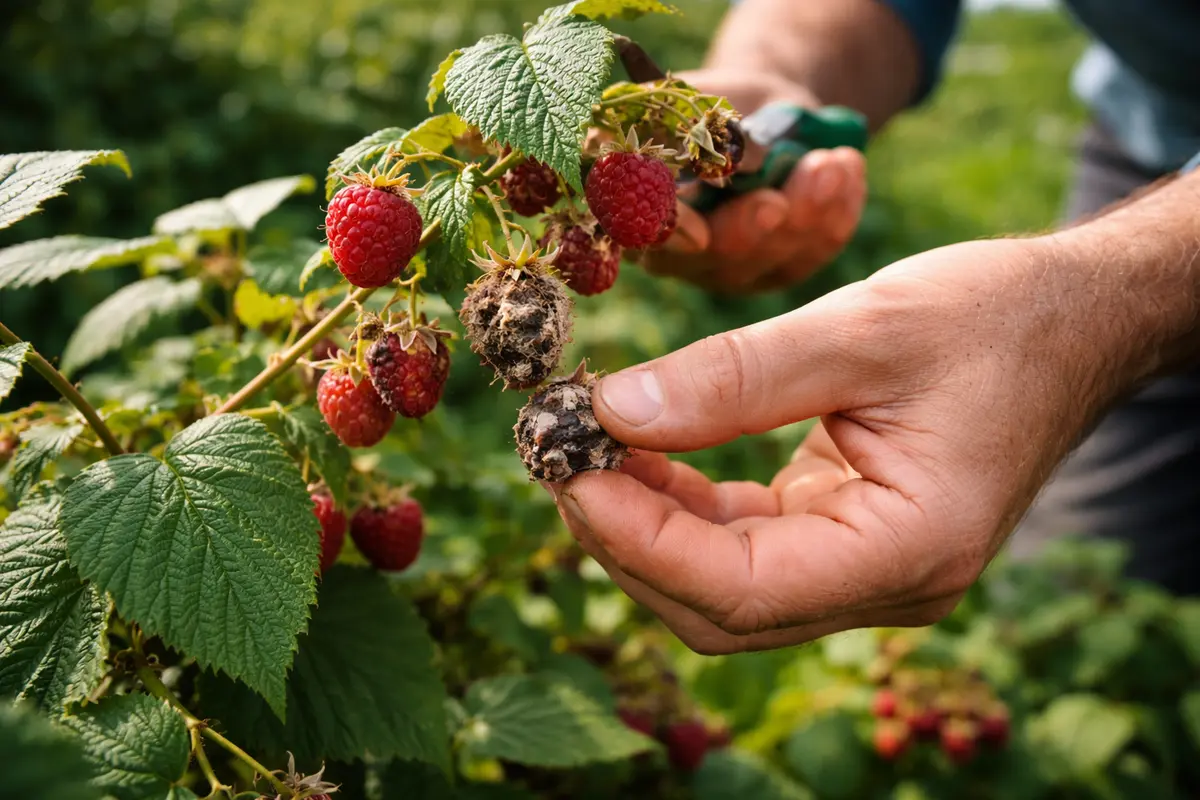
Remove all visibly rotting raspberry fruits at once. You should notice fewer blackened areas on your remaining berries, allowing the healthier fruits to thrive and develop further. If you remove the decaying fruits promptly, the likelihood of the remaining ones becoming affected drops significantly.
Taking immediate action is crucial because decaying fruits can quickly contaminate healthy ones. Fungal spores spread through moisture, and if left unchecked for even a day, they will multiply, causing additional rot in surrounding fruits. Raspberry plants are particularly vulnerable during humid conditions. If even a small cluster of berries is left to rot, it’s likely that within a week, neighboring fruits may also show signs of decay, which creates a compounding problem. During particularly humid weeks, the visible decay may spread quickly, often appearing as small dark spots on neighboring berries.
Many gardeners mistakenly think they should wait for signs of recovery before removing affected fruits. However, this delay allows pathogens to proliferate, leading to more extensive damage. A common mistake is to assume that by leaving the fruits on the plant, they may somehow rehydrate or regenerate. Addressing rot immediately not only limits the problem, but also provides your raspberries a better chance to recover and produce a healthy crop later on. In cases of severe humidity, routine inspections are essential; check your fruits every few days and act quickly to minimize potential losses. If your harvesting and inspection schedule allows, inspect your berry patch daily when humidity levels are high — early intervention is key to preventing escalation.
Step 2 – Diagnose Humidity Impact on Raspberry Health
Inspect the raspberry plants thoroughly for signs of root or soil issues caused by humidity. You will observe that the soil might be overly saturated or emitting a foul smell, indicating possible root rot in addition to the fruit issues. If the root zone is compromised, it may further exacerbate the rotting process of the fruits. Soil that remains wet for extended periods not only affects fruit but can cause deeper root issues, often manifesting through wilting leaves or stunted growth.
If the soil is excessively wet, it hinders the plants’ ability to uptake nutrients and water effectively. High humidity creates an environment conducive to fungal growth, leading to root issues that manifest as fruit rot. For instance, you might find that the plant leaves start to yellow or wilting if the roots are affected. This discoloration is a signal that immediate action is needed. By identifying these underlying soil and root problems, you can implement corrective actions to restore plant health before conditions worsen significantly.
If your soil feels muddy and also smells sour, it indicates overwatering, which could lead to major root damage. In this scenario, you should consider adjusting your watering schedule and improving drainage to give your plants the best chance of recovery. An ideal approach includes incorporating organic matter like compost into your soil to enhance drainage while preventing water from pooling. Be sure to monitor the drainage conditions regularly; if water is pooling after rainfall, it may be necessary to create raised beds or amend the soil further for proper drainage. If the roots appear dark, mushy, or have a slimy texture, it’s a sign that they are suffering from root rot, necessitating immediate amendments or even replanting if the damage is severe. Checking the roots, especially during and after expected rain, allows you to intervene before rot establishes.
Step 3 – Nourish Raspberries to Revive After Rotting
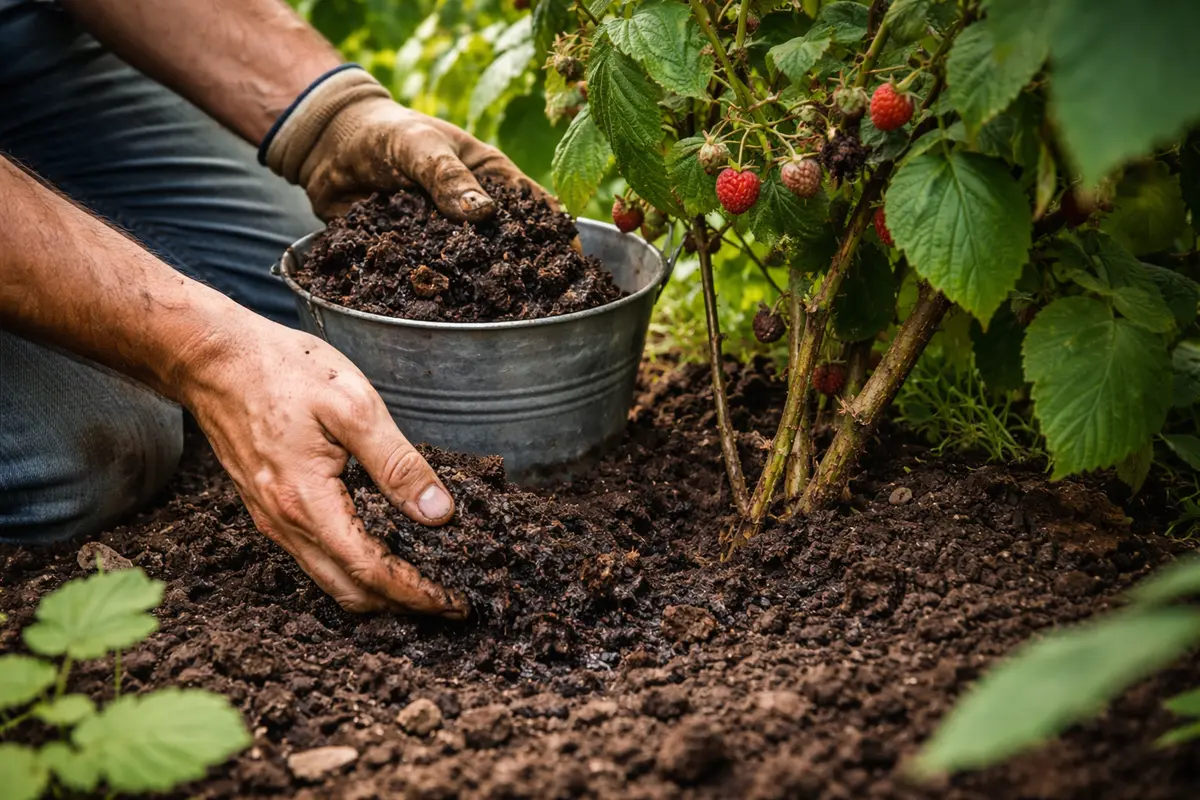
Apply a balanced fertilizer to your raspberry plants to nourish them back to health. Within a week, you should see new leaf growth and a decrease in fruit rot. The timing of nutrient application plays a critical role; providing them during the peak growing season can significantly boost recovery. Fertilizers with a balanced N-P-K (nitrogen, phosphorus, potassium) ratio are typically recommended for general maintenance—watch how plants respond, as enhanced growth can indicate successful recovery.
Nourishing your plants with the right nutrients plays an essential role in helping them recover from the stress of humidity-induced rot. When raspberries receive the right nutrients, their vigor increases, enabling them to resist fungal infections and other disease pressures more effectively. It’s imperative to avoid over-fertilizing; doing so can lead to even more significant issues. A common mistake is to assume that more nutrients will yield faster recovery, but excess fertilizer can stress the plants further, particularly if roots are already compromised. Always consider the condition of the soil — if the plants are in heavy clay, for instance, they may require less fertilizer due to the soil’s retention of nutrients.
Additionally, too much nitrogen can make the plants grow lush foliage at the expense of fruit development. Instead, target a balanced approach based on the conditions of your soil and the current state of the plants. Using a slow-release fertilizer can provide sustained nutrition without overwhelming the plant system. If fertilizer appears to wash out quickly following rainfall, especially in saturated soils, laying down a layer of mulch can help retain essential moisture and nutrients within the soil while preventing evaporation—this tactic can create a favorable growing environment amidst challenging conditions.
Step 4 – Guard Against Humidity-Induced Raspberry Decay
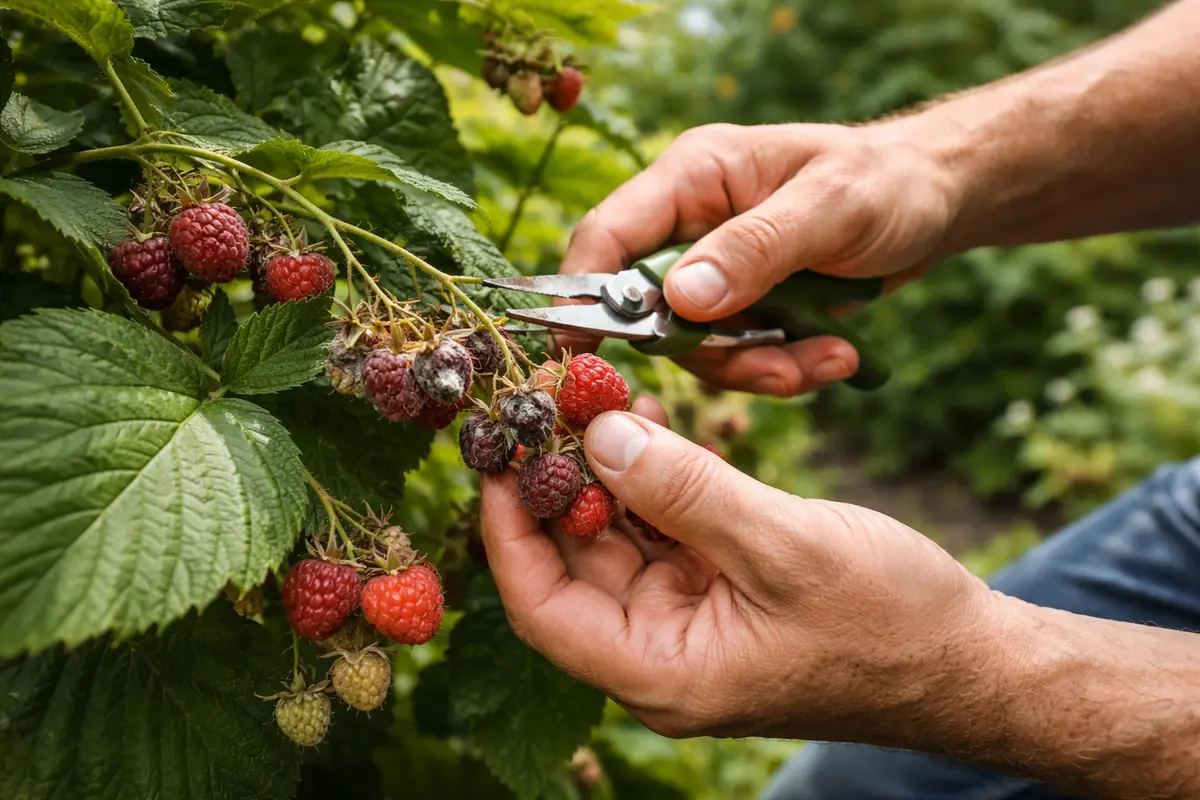
Start by ensuring adequate airflow around your raspberry plants by pruning crowded stems and leaves. This practice will result in faster drying of moisture, which decreases the likelihood of fruit rot during humid weeks.
High humidity traps moisture among the raspberry fruits and foliage, leading to conditions ripe for fungal infections like botrytis or fruit rot. By enhancing airflow through strategic pruning, you can effectively reduce humidity levels around the fruit, minimizing the chances of rot, unlike plants that remain dense and poorly ventilated.
In addition to regular pruning, applying a thin layer of organic mulch can help retain soil moisture without promoting fungal growth. If humidity levels are especially high, increase the frequency of pruning and remove any dead or diseased plant material to further decrease disease presence in your garden.
Understanding your environment is key to preventing future rot. During humid weeks, high moisture levels in the air amplify any existing soil saturation, leading to an ideal breeding ground for fruit-rot pathogens. By ensuring soil moisture is controlled and balanced, you effectively minimize the risk of recurring rot issues. This includes checking not only the soil but also ensuring that there is adequate air circulation around the plants, potentially via strategic pruning of surrounding vegetation. Consider the layout of plants—if they are too crowded, airflow is limited, consequently increasing humidity around your raspberries.
As part of your prevention routine, consider adjusting your watering schedule based on daily weather changes and forecast conditions. In times of consistent heavy rain, reduce watering frequency or install drainage systems in heavy clay soils to prevent ongoing waterlogging, which can exacerbate rot. If your local weather forecast indicates a series of humid days, adjusting your watering habits becomes necessary to avoid overwhelming the plants. Moreover, implementing ground covers or mulch not only helps maintain soil moisture levels but also reduces the risk of evaporation and excess water retention. If weeds grow aggressively near the plants, they can compete for water and nutrients—monitor for these and remove them regularly to ensure optimal growth.
Step 5 – Check Raspberry Plants for New Splitting Signs
Inspect your raspberry plants every few days for any new signs of splitting or rot developing. You should observe healthy fruit and foliage; the new growth will indicate that the plants are recovering. If signs of splitting or new rot appear, it’s a warning sign to assess your moisture levels and soil conditions closely once more. Documenting the progress or setbacks each time you check will allow you to see patterns over time that can inform your care practices.
It’s important to monitor the plants closely, as recovery from humidity-related rot can be gradual. New growth signifies that your efforts are effective, while any return of rot indicates that adjustments need to be made. Consistent observation will enable you to intervene swiftly before problems reignite—especially during humid weather. Tracking the health of your raspberries not only helps in immediate care but also provides valuable information to adapt your strategies moving forward.
If you notice that the plants are still struggling, consider revisiting your watering practices or checking for other environmental stress factors, such as competing root systems from nearby weeds. Additionally, observe whether the air humidity remains consistently high or if shade cover is affecting the plants’ ability to dry out. If any new splitting appears, this could signal that moisture is still excessively high in your growing conditions. A well-organized approach to monitoring your raspberries will allow you to intervene early and stop a problem from escalating into a full-blown crisis. If structures like trellises are in place, ensure they are functioning effectively to support airflow and plant stability.
FAQ
How can I tell if my raspberry fruits are too far gone to save?
If the berries are overly mushy, have an unpleasant odor, or exhibit significant discoloration and mold, they are likely too far gone. It’s best to remove these fruits to prevent further contagion within the plant. Letting them remain will increase the risk of spreading rot to healthier fruits, undermining your harvest further.
Will my raspberry plants recover after removing the rot?
Yes, if you take immediate action by removing affected fruits and care for the plants properly, they can recover. Keep an eye out for new growth and signs of vigor, indicating successful recovery. Regularly checking back on their status makes it easier to adjust your treatments based on what and how often you observe changes in the plant’s condition.
Why do my raspberries split during humid weeks?
Raspberries often split due to excessive moisture levels that result from both high humidity and overwatering. This condition stresses the fruit and can lead to rot. Adjusting your watering routine helps alleviate this issue, along with ensuring that the plants receive adequate airflow to help them dry out quickly during periods of high humidity. Aim for a balance where air circulation aids in keeping both foliage and fruit healthy.