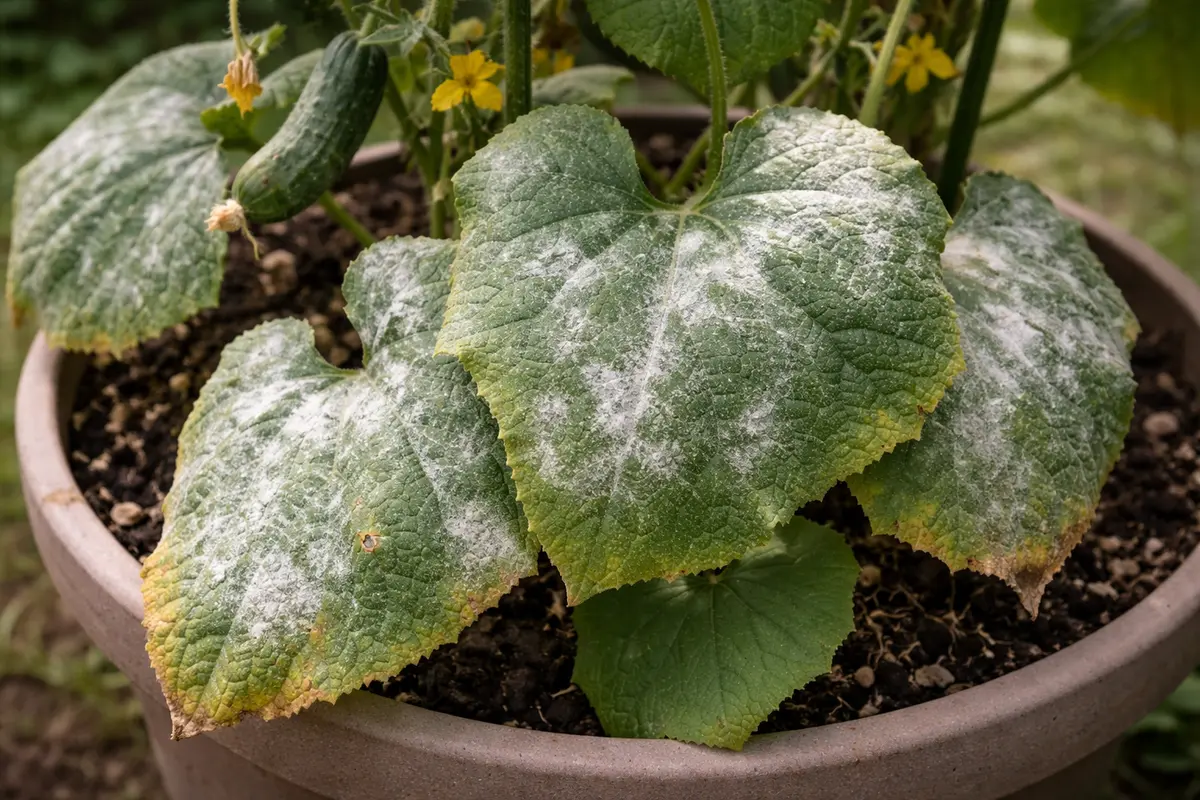
You may notice your cucumber plants developing white, powdery spots on their leaves during periods of high humidity, which is why you need to know about treating cucumbers for powdery mildew in pots after transplant. This fungal disease thrives in warm, damp conditions, causing severe damage and leading to yellowing leaves that can weaken your plants. If left unchecked, the condition can spread quickly and stall growth, making your cucumbers more vulnerable to other pests and diseases. Fortunately, you can improve the situation now by inspecting your plants closely, removing affected areas, and adjusting their care routine.
Step 1 – Spray Infected Cucumbers with Neem Oil
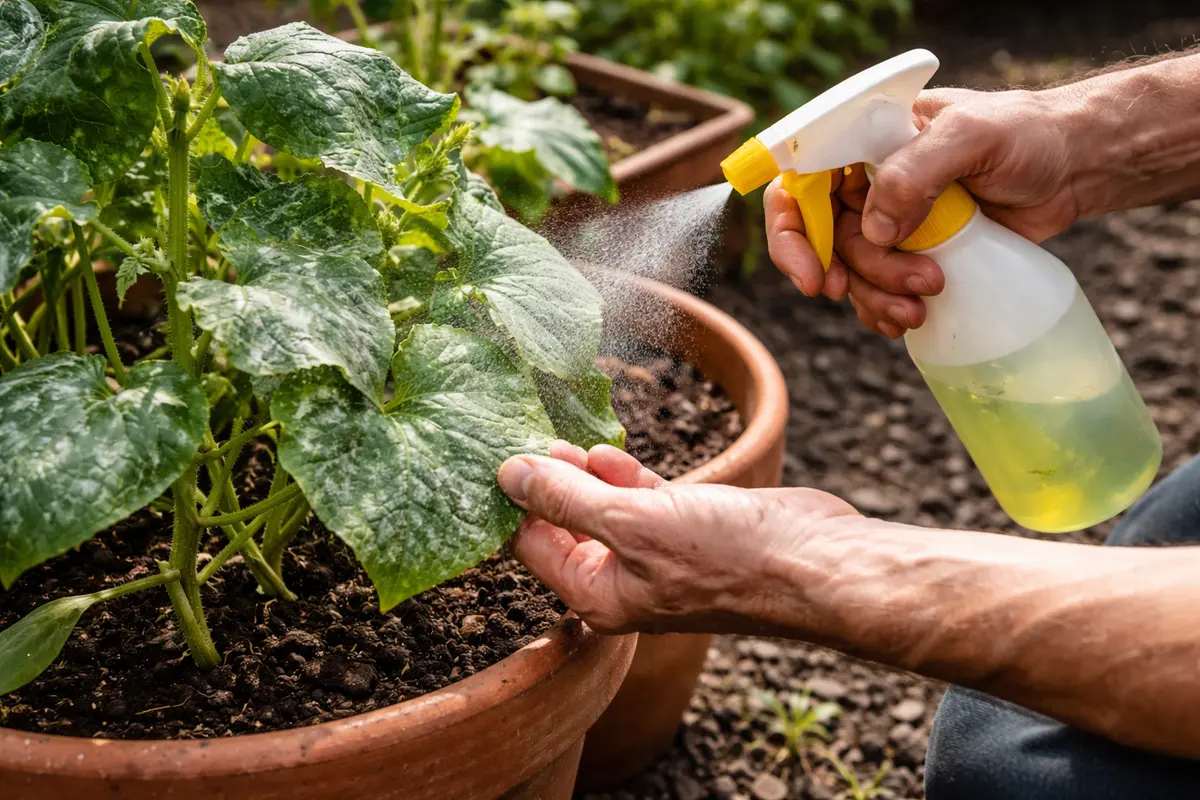
Spray neem oil on the infected cucumber leaves immediately. You should notice the white patches begin to fade within a few days, typically around three to five days after the initial application. Ensure that you are using a high-quality neem oil product that is specifically labeled for use on edible plants, as not all neem oil formulations are safe for vegetables.
Applying neem oil works effectively because it disrupts the lifecycle of the powdery mildew fungus, ultimately preventing its spread. This natural pesticide acts as a contact treatment, suffocating the fungal spores and breaking their capacity to reproduce. It’s essential to reapply the neem oil every five to seven days, especially following any rainfall, as water can wash it away. Regular application is crucial to eliminate the mildew completely, as one treatment might not eradicate all existing spores. If you notice that patches are still visible after a week, it is a sign that either the application was insufficient or the severity of the infection exceeds what neem oil can manage alone.
A common mistake gardeners often make at this stage is spraying neem oil only on the top surfaces of the leaves. Powdery mildew often hides on the undersides of leaves, so ensure you cover all areas thoroughly. Furthermore, if the spray is applied during the hottest parts of the day, the oil can evaporate before it takes effect, making it ineffective. Delaying this step or applying improperly can worsen the condition and increase treatment time, so act swiftly. If you find that neem oil is ineffective after several applications, it might indicate a root cause related to environmental conditions or plant stress, necessitating a further investigation into the plant’s overall health.
Step 2 – Diagnose Excess Humidity in Container Soil
Start by removing any affected leaves and improving air circulation around your cucumber plants. You should notice a decrease in the spread of powdery mildew, and the remaining healthy leaves will begin to recover as they receive more light and airflow.
Powdery mildew thrives in humid conditions with poor air flow, often settling on the leaves and stems of cucumber plants. As it develops, the fungus produces spores that can rapidly spread and infect nearby plants. If your cucumbers are turning white and wilting, it is likely due to this fungal infection inhibiting their ability to photosynthesize and absorb nutrients effectively.
If your soil feels excessively damp or smells sour, then anaerobic conditions may be present, requiring you to consider transplanting into fresh, well-draining soil. Alternatively, if you observe similar white spots on other plants but without wilting, they may be suffering from a different fungal issue like downy mildew, which requires targeted fungicides instead of simply improving airflow.
Excess humidity in the soil can suffocate the roots, leading to poor plant health and making them more susceptible to diseases like powdery mildew. Notice how the soil feels; if it is consistently muddy or feels like a clump that holds together tightly, it creates an environment where fungal spores thrive. This situation is typical in potted plants where drainage may not be optimal, especially if using rich organic mixes that retain moisture. Therefore, it is crucial to adjust your watering habits promptly. If the soil surface dries out quickly but the moisture meter indicates high readings deeper down, consider that the potting mix may have compacted, limiting drainage.
If you notice your soil smells sour or feels waterlogged, consider repotting your cucumbers in fresh, well-draining soil with added perlite or vermiculite to enhance aeration. This will ensure they receive adequate airflow around the roots. Additionally, if the pots lack drainage holes, drilling some may help alleviate the moisture problem. If water is still pooling at the bottom after thoroughly watering, it’s a sign that your pots need to allow for better drainage or that the roots may be deteriorating. An additional sign of root distress is yellowing leaves, which can result from poor root aeration or root rot due to excessive moisture.
Step 3 – Apply Organic Fertilizer to Revitalize Cucumbers
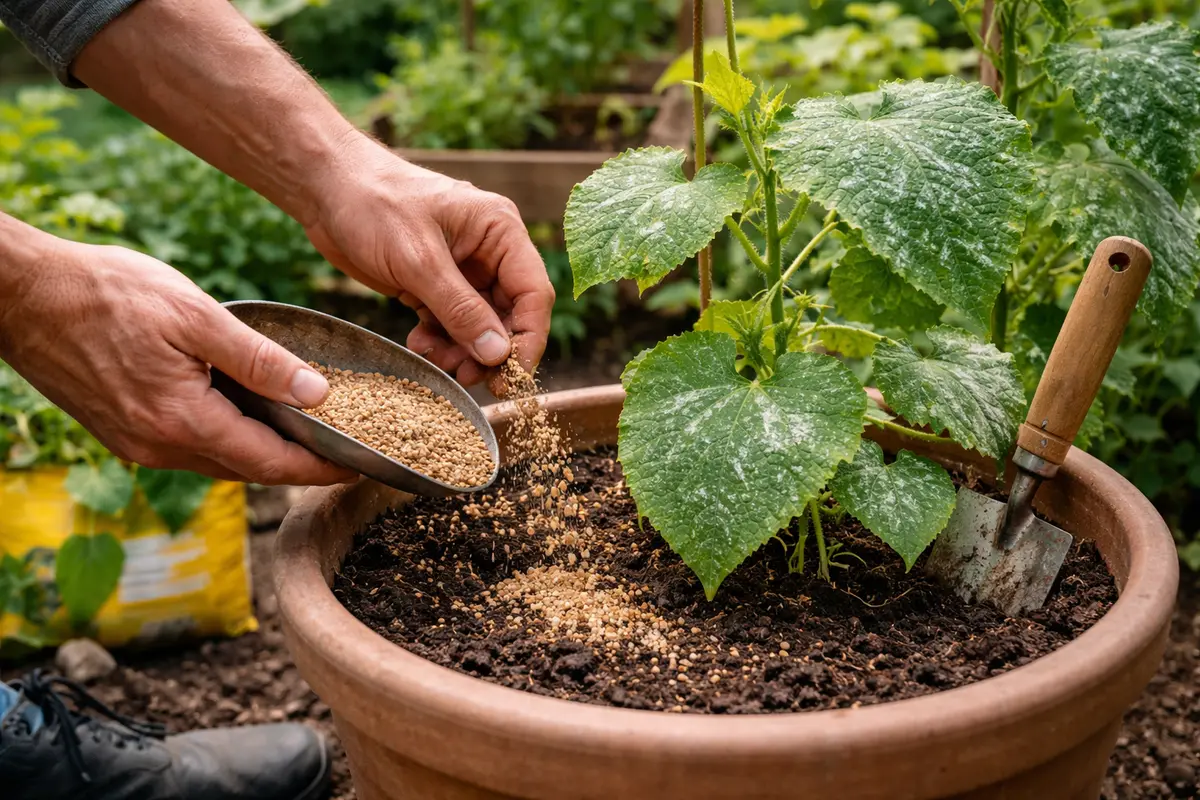
Apply a balanced organic fertilizer to the cucumbers to encourage recovery. You should see new growth and vigor return within a week, typically visible as greener foliage and new leaf shoots. When applying fertilizer, use a water-soluble option that can be absorbed by the plants more quickly, particularly if they are under stress from mildew.
Adding organic fertilizer supplies vital nutrients that may have depleted from the soil during the preceding stress. Healthy plants can better defend themselves against infections like powdery mildew, as they have the necessary resources for optimal growth. Fertilizing also stimulates robust and resilient foliage, which can naturally resist disease better than stressed plants. Opt for a nitrogen-rich fertilizer since nitrogen supports leaf growth; however, a complete fertilizer with a balanced NPK ratio is often most effective for overall plant health after transplant. If growth is still sluggish after fertilization, test your soil pH, as it can affect nutrient uptake and may require adjustments.
However, avoid over-fertilizing — this can lead to nutrient burn and further weaken the plants. Stick to the recommended application rates and consider the current growth stage of your cucumbers. For instance, if your plants have just been repotted, their nutrient needs may vary compared to fully established plants, potentially requiring a more gentle approach with half-strength fertilizer. If the growth appears yellow or burnt at the leaf tips, it’s an indication of nutrient lockout or over-fertilization; in such cases, reduce application frequency or switch to a diluted formula until the symptoms subside. Regularly check for changes in soil conditions; any sign of a crusty surface could indicate salinity buildup from excess fertilizer.
Step 4 – Drip Water to Prevent Future Powdery Mildew
Start by applying a preventive fungicidal spray containing potassium bicarbonate or neem oil to your cucumbers’ foliage immediately after transplanting. This routine will create a protective barrier against powdery mildew, and you should notice a decrease in disease prevalence over time.
High humidity and poor air circulation commonly trigger powdery mildew outbreaks, particularly in container gardens. By regularly misting your cucumbers in the morning and ensuring adequate spacing between pots, your prevention routine directly addresses the humidity levels that fuel fungal growth. If you observe mildew on leaves, check if your plants remain too cramped and adjust their placement accordingly.
As temperatures rise in late summer, adjust your misting frequency to every few days to combat increased humidity from heat. Additionally, consider adding a layer of mulch to pots, which can help manage moisture levels; however, be cautious not to cover the base of the plants. By implementing these seasonal adjustments, you can prevent recurring mildew while maintaining optimal growing conditions.
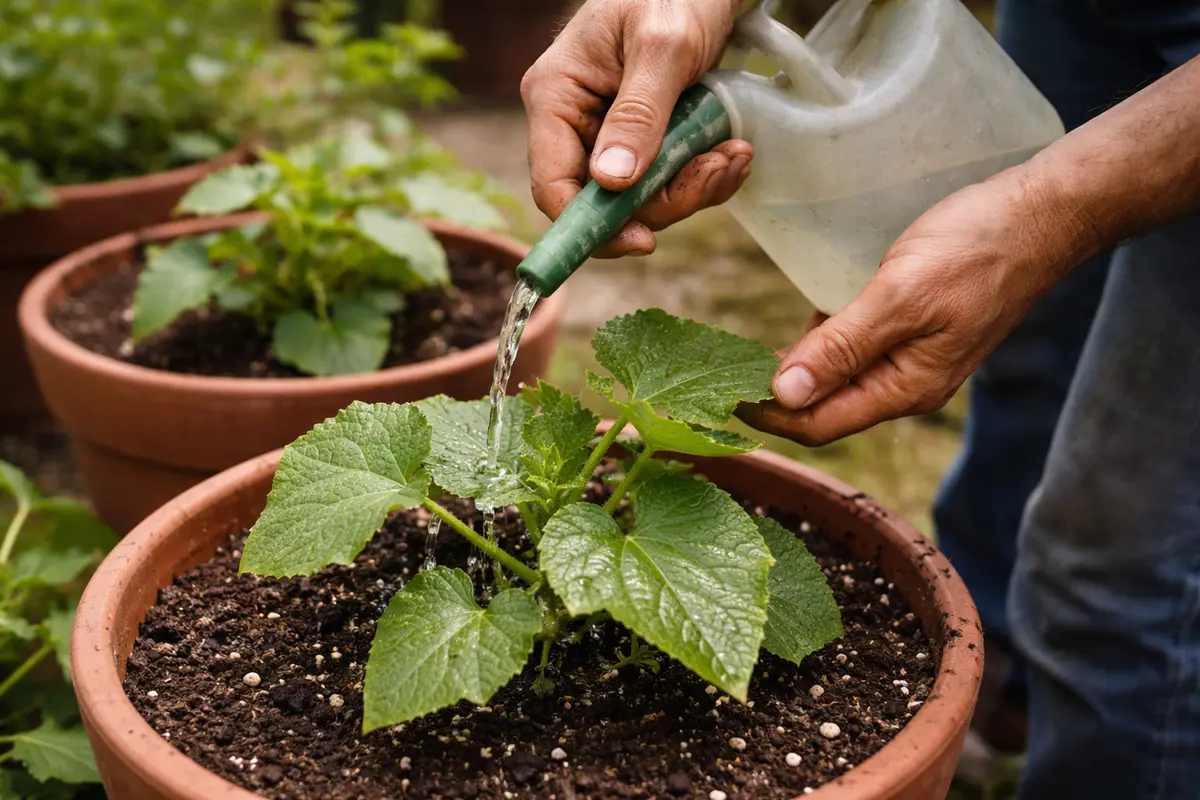
Drip watering delivers moisture directly to the root zone, allowing for precise control over how much water the plants receive. This prevents excess moisture buildup on leaf surfaces, which can lead to fungal growth. Adjusting your watering practice is key, especially as temperatures change throughout the growing season; cooler nights can mean less water retention is needed, while hotter days may require more frequent checks on moisture levels. A good rule is to ensure pots are dry down to at least two inches below the soil surface before watering again. Watch for signs of drought stress, such as wilting or leaf curling, which may indicate the need for more frequent watering adjustments.
Consider using mulch to help with moisture retention and soil temperature regulation, particularly during hot spells. Straw, wood chips, or grass clippings can work effectively as mulch, but be careful as thick layers can trap too much moisture if not monitored. Additionally, observe the weather — in rainy or humid seasons, you could reduce watering frequency significantly or adjust your watering routine to mitigate excess moisture in the pots. If consistent rainfall is expected, consider relocating pots to a more sheltered area temporarily. A further precaution is to stagger your irrigation schedule, watering early in the morning or late in the evening to prevent high evaporation rates.
Step 5 – Look for White Fungal Spots on Leaves Weekly
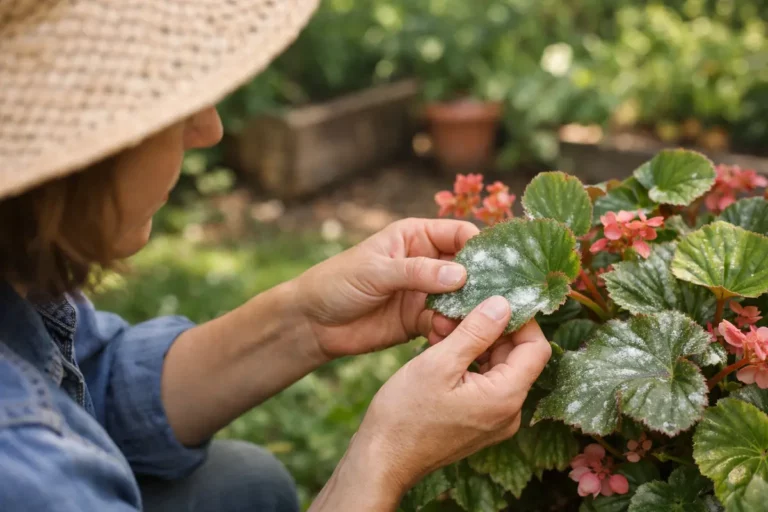
Start by monitoring your cucumber plants every two days for the initial signs of powdery mildew after transplanting. Check both the upper and lower leaf surfaces for white, chalky spots, which indicate the fungus. Recheck your plants frequently, especially after any humid weather, as these conditions can worsen the infection and promote further spread.
A fully recovered cucumber plant showcases vibrant green leaves with a smooth texture, free from discoloration or white powder. In contrast, early signs of returning powdery mildew may present as sparse white patches on the underside of leaves or a texture resembling fine, soft dust. If you spot new growth that appears stunted or distorted, check the foliage for signs of renewed fungal activity.
If powdery mildew returns despite following previous steps, consider applying an organic fungicide formulated for edible plants to curb the re-emergence of the issue. Focus on reinforcing proper airflow and avoiding overcrowding, as these factors contribute to fungal growth. If the problem persists, escalate your approach by removing heavily infected leaves and adjusting your watering schedule to minimize leaf wetness.
Regular monitoring is crucial because early detection of any returning powdery mildew enables you to address it before it spreads. If the new growth appears healthy while there are still some signs on older leaves, it is a good indication that your plants are recovering. A healthy plant will have robust foliage with no signs of white spots or other abnormalities, indicating that it has made a full recovery. Conversely, if you spot returning fungal growth, it calls for immediate attention. As a precaution, try inspecting the leaf axils and stems, as these areas often hide spores that can remain dormant until conditions become favorable.
If powdery mildew returns, reevaluate your watering practices and ambient conditions, as these are critical in managing fungus issues. Look closely at air circulation around the plants; adding a small oscillating fan can help improve airflow if positioned correctly around potted plants. Consider deeper plant care strategies as well, like improving air circulation or utilizing more frequent neem oil treatments until the mildew is under control. If mildew persists despite these adjustments, you may need to consider other fungicide treatments better suited for extensive infestations. Signs that indicate you should escalate treatment include increased surface area affected and consistent, rapid reoccurrence within a week.
FAQ
How long does it take for powdery mildew to spread on cucumbers?
Powdery mildew can spread rapidly, often within just a few days if left untreated. In humid and warm conditions, the spores can multiply quickly, making early detection and immediate action critical to prevent overwhelming infections that compromise plant health. Regularly checking your cucumbers is essential, as symptoms can escalate rapidly if absent preventative measures are taken.
Should I remove leaves affected by powdery mildew?
Yes, you should remove severely infected leaves to prevent the fungus from spreading to healthy parts of the plant. Ensure to dispose of these leaves properly and avoid composting them, as this can introduce spores into the compost pile and later to your garden. Cutting leaves back can also help increase sunlight and airflow around the remaining foliage. Be cautious when handling infected leaves; wearing gloves can help prevent the spread of spores to other plants.
Will my cucumbers recover after a powdery mildew outbreak?
Cucumbers can recover from powdery mildew if the treatment is implemented promptly and diligently. Effective management involves immediate actions like removing infected parts and improving growing conditions to enhance plant resilience. If the moisture levels and humidity are properly controlled, signs of recovery can often be seen within two to three weeks. If the fungus is persistent, however, persistent treatment will be necessary to maintain plant health.