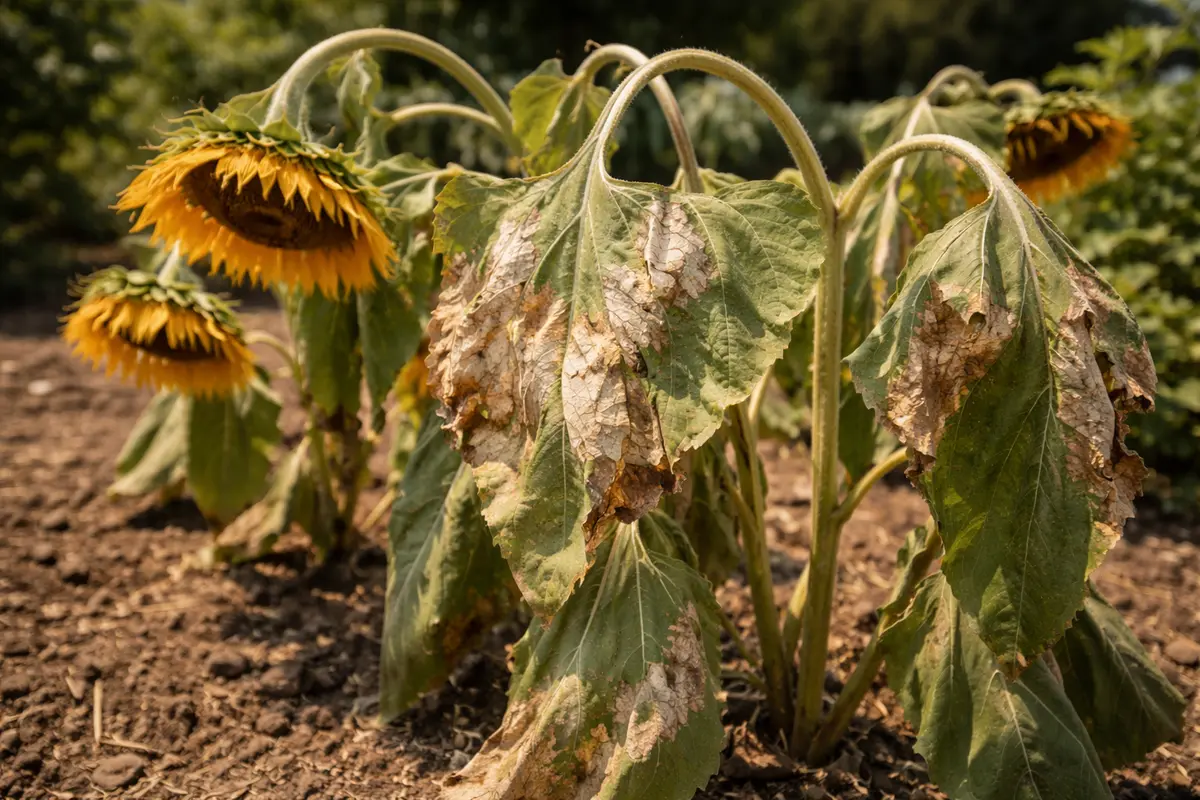
You may notice your sunflowers drooping during a heatwave, which is why you need to know how to fix drooping sunflowers during a heatwave. This wilting occurs when the plants experience stress from excessive heat, causing damage to their delicate stems and leaves. If left unaddressed, this condition only gets worse and can weaken the plant, making recovery more challenging. Fortunately, you can improve their situation now by watering, adjusting their location, or providing shade to help them bounce back.
Step 1 – Water Sunflowers Immediately to Revive Them
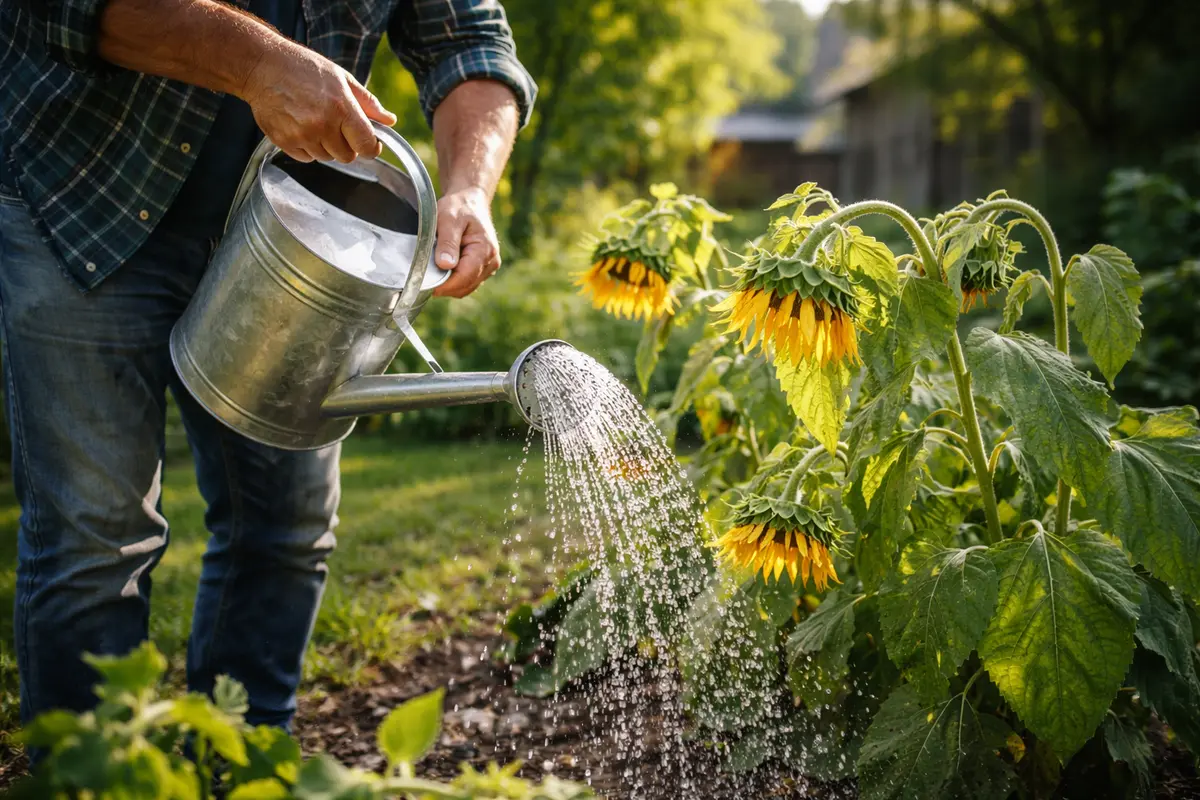
Start by watering the sunflowers deeply, ensuring that moisture penetrates at least six inches into the soil. Within a few hours of watering, you will see the drooping start to subside as they begin to perk up. If the soil is particularly dry, provide a second round of watering in the evening to keep the roots saturated overnight.
Drought conditions severely limit a plant’s ability to retain moisture, especially during a heatwave. Sunflowers require adequate hydration for their stems to remain rigid and upright; without sufficient water, they can flop and wither. By watering immediately and deeply, you restore moisture levels, enabling the roots to quickly rehydrate the plant and prevent permanent wilting. If the lower soil layer remains dry despite your efforts, check the moisture depth with your finger; the roots need access to water below the surface to fully recover.
Many gardeners mistakenly water only the surface of the soil, thinking that will suffice. However, if only the upper layers are moist and the deeper roots are dry, the plant will continue to suffer from heat stress. It’s crucial to ensure water penetrates deeply into the root zone; without this, the plant may droop again quickly. During extreme heat, watering in the early morning can significantly enhance absorption, as this is the coolest part of the day, reducing evaporation and maximizing moisture retention. Always consider the soil type; for clay soils, a slower soaking strategy can help prevent runoff, ensuring that water fully integrates before the next heatwave hits.
Step 2 – Check for Heat Stress in Your Sunflowers
Inspect your sunflowers for visible signs of heat stress, such as curled leaves and limp stems. If you see these symptoms, the plants are struggling to cope with the heat, indicating a need for immediate corrective action. Heat stress occurs when temperatures surpass about 90°F (32°C), which disrupts the plant’s ability to transpire effectively, leading to wilting and drooping. Observing these conditions can guide you in taking essential steps for recovery.
To alleviate heat stress, start by providing shade using shade cloth or strategically placed plants to minimize direct sunlight exposure during peak hours. This intervention reduces the stress on your sunflowers and allows them to recover more effectively. Additionally, ensure you are maintaining an adequate watering routine, giving the plants enough moisture to combat heat-induced stress. If the leaves are still drooping despite applying shade, examine the soil moisture; it should be consistently damp but not waterlogged. If the soil is dry a couple of inches down, increase your watering frequency to ensure proper hydration. If the soil remains overly soggy, check the roots for signs of rot, which requires a different corrective action.
If the plants visibly improve but symptoms persist, enhance air circulation around them or consider temporary relocation to a less intense sun exposure area. Monitor the sunflowers carefully during extreme heat, adjusting your approach based on their response to the applied corrections.
Step 3 – Test Soil Moisture for Drooping Sunflowers
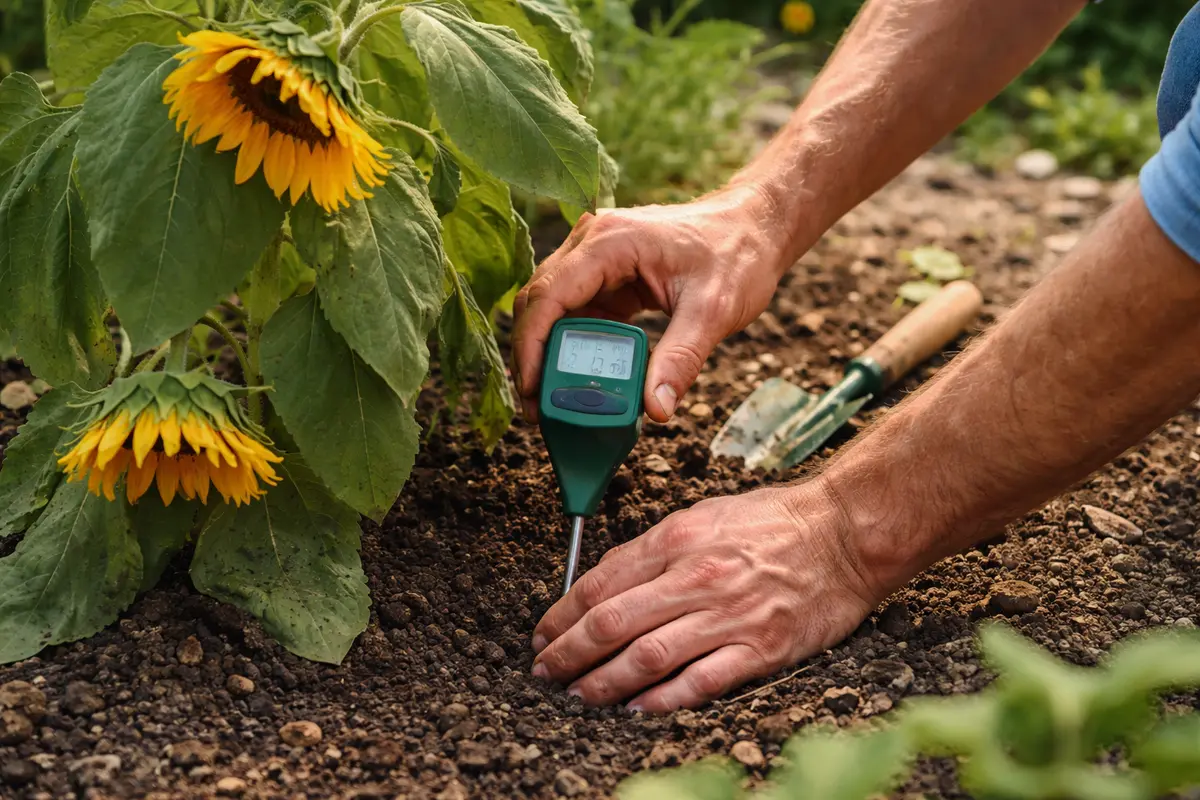
Begin by checking the soil moisture around your drooping sunflowers. If the soil feels dry several inches down, this indicates an inadequate water supply, leading to drooping plants. Observe whether the leaves begin to perk up a few hours after watering. For sandy soils, ensure you check moisture deeper, as they can dry out much faster than heavier soils.
Drooping may also stem from overwatering, which can cause root rot, leading to yellowing leaves and a mushy stem. Healthy sunflowers will have firm stems and vibrant green leaves, assisting you in distinguishing the problem. If the leaves seem crispy and the soil is soggy, it’s an indication of overwatering rather than underwatering. In cases of persistent overwatering, you might observe a halt in new growth, which suggests the plant is under stress and unable to thrive.
If uncertain whether the issue is under or overwatering, gently check the root system for decay. Allow a two-day observation period after your initial watering to note any changes in posture before proceeding with recovery steps. Accurately assessing moisture levels is critical for providing the right care at the right time. If the soil feels moist several inches down but the sunflower remains droopy, overwatering could be the culprit. In this scenario, the roots may be suffocating due to a lack of oxygen, necessitating a reduction in watering frequency or improvements in soil drainage to avoid further stress.
If the soil continues to feel excessively damp, consider repotting the plant into fresh, well-draining soil, especially if you notice yellowing leaves, which indicate root distress from excessive moisture. Ensure that the potting container has sufficient drainage holes to facilitate optimal outflow. Be alert for any foul odors from the soil, as this is a clear sign of rot and suggests a more drastic approach is required to salvage your sunflowers.
Step 4 – Fertilize Sunflowers to Encourage New Growth
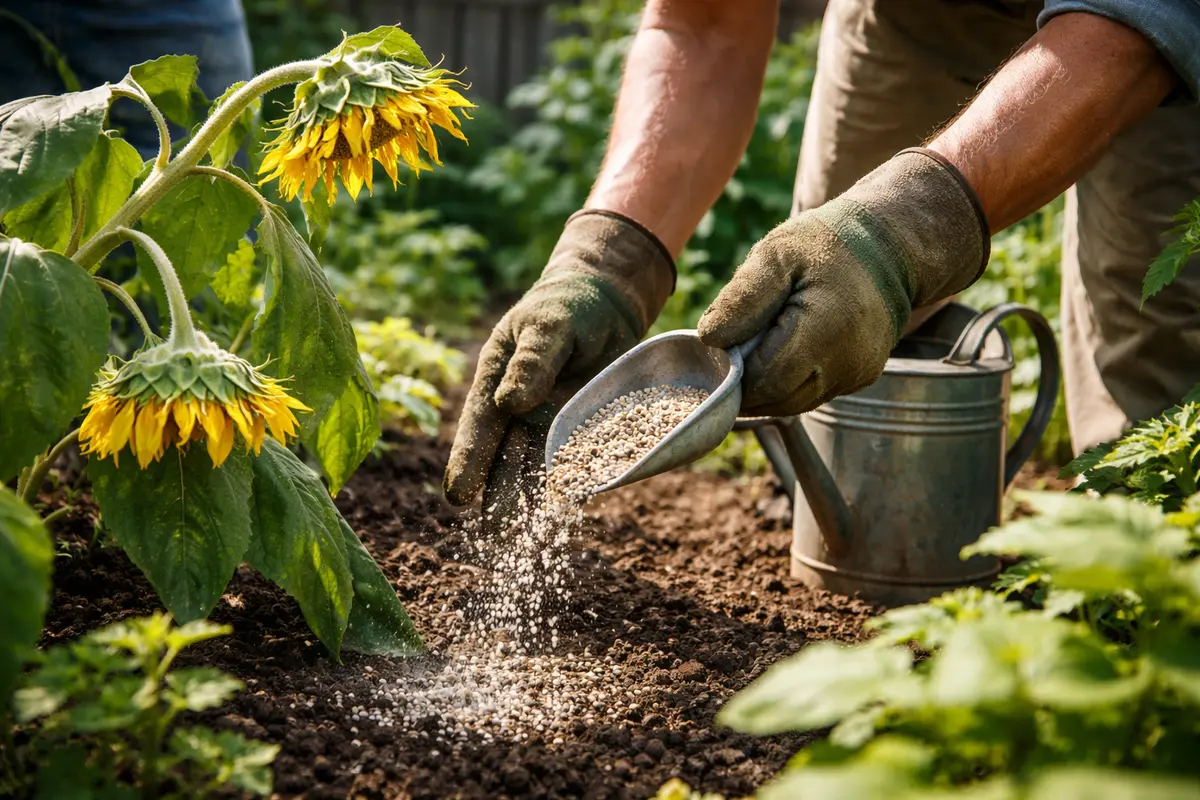
Start by applying a balanced, water-soluble fertilizer to the soil around the base of your sunflowers. Within a few days, you should see the leaves becoming more vibrant and the stems regaining their strength and upright position.
Recovery visibly progresses over the next two to three days, where you will notice signs such as new leaf growth and sturdier stems. In ideal conditions, like mild temperatures and partial sunlight, these changes will occur more rapidly. If, however, the leaves remain limp or begin to yellow again, double-check that your watering schedule is consistent and that the soil isn’t too dry.
During this recovery phase, avoid applying too much fertilizer, as this can lead to nutrient burn and further complicate recovery. Maintaining steady soil moisture is crucial; ensure the soil is damp but never waterlogged. If signs of distress persist, investigate your watering routine to confirm it is regular and balanced.
Within 24 to 48 hours, you should witness continued improvements, such as an increase in leaf firmness and a slight rise in the flower heads. Providing an environment with moderate temperatures and some shade will help mitigate stress during this critical recovery phase. If the sunflowers are still showing distress after this period, check for signs of nutrient deficiencies or root rot by examining the soil drainage.
Be cautious about over-fertilizing, which can hinder recovery instead of helping it. Sunflowers usually require minimal fertilization after a period of stress; if conditions appear dry yet watering does not yield results, revisit your soil’s drainage characteristics and adjust as necessary.
Realize that appropriate fertilization restores vital nutrients depleted during stressful heat events. When nutrient levels bounce back, the sunflower can resume growth processes that promote healthy, upright growth, enabling it to withstand heat-induced damage. Avoid heavy fertilization; it may cause root or leaf burn, compounding the existing issues. Always follow the recommended dilution rates on fertilizer labels, allowing for light applications every three to four weeks during the recovery phase.
Avoid the common pitfall of assuming that more nutrients will speed up recovery, as excess fertilizer can lead to nutrient lockout, making absorption difficult. Instead, aim for a moderate dose of fertilizer, ensuring it’s worked into the soil and properly watered in for effective uptake. Monitor the sunflowers’ response post-application to determine if adjustments to your fertilization frequency are needed based on the recovery process. If yellowing persists or does not improve, reconsider the type of fertilizer used, as certain formulations may be more suitable for your specific sunflower varieties.
Step 5 – Water Sunflowers Regularly During Summer Heat
Start by watering your sunflowers deeply and regularly, aiming for 1 to 2 inches of moisture per week. You’ll see them perk up, showing stronger stems and improved foliage as they combat the heat. Schedule watering early in the morning or late in the evening to minimize evaporation.
To help prevent drooping, create a consistent routine: water every 3 to 4 days during peak summer heat, ensuring the soil remains consistently moist but not soggy. If the leaves begin to curl or feel crispy at the edges, that indicates underwatering and should trigger you to adjust your watering frequency. In extremely hot weather, supplement your watering with a light misting on the foliage in the mornings; observe if they seem more hydrated throughout the day.
Add a layer of mulch around the sunflowers to retain moisture and moderate soil temperature. Use wood chips, straw, or shredded leaves, replenishing this layer when it decomposes or thins. If you begin to see the soil drying out too quickly, check your mulch layer thickness to ensure proper coverage — a two to three-inch layer works well. Adjusting your mulch thickness can be pivotal as it directly affects how often you need to water.
Continue this routine to support the sunflowers’ resilience against heat spikes. Consider increasing the watering frequency to every 2 to 3 days during particularly hot spells, since young plants will need more water as they grow. If wilting occurs despite watering, it may signify inadequate retention within your soil, prompting you to investigate soil amendments like compost or organic material for improvement.
If the stress symptoms persist, excess heat might indicate the need to install a drip irrigation system for better control over water application. Regularly assessing moisture retention and adapting your strategies guarantees your sunflowers flourish, maintaining their vigor even under adverse conditions.
Step 6 – Inspect Sunflowers for Signs of Recovery Weekly
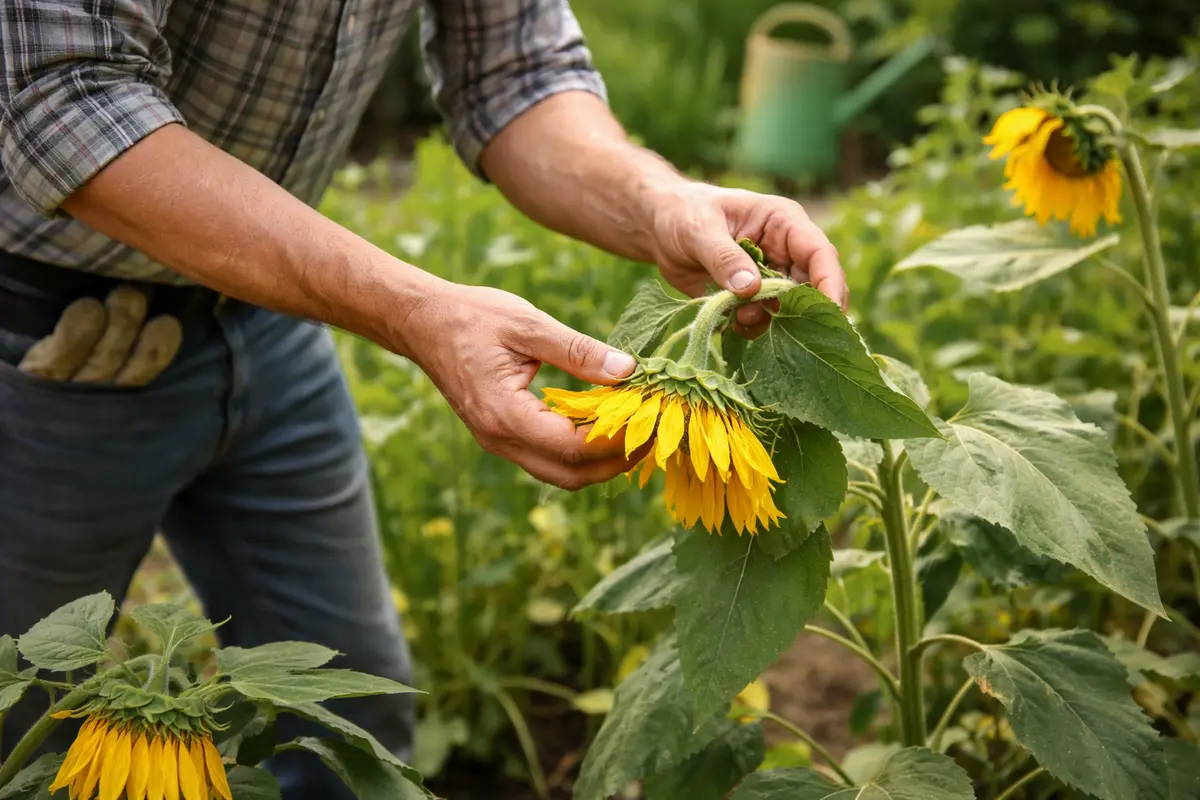
Check your sunflowers weekly for signs of recovery. You should observe new leaf growth, vibrant colors returning to the foliage, and an upright posture within a few days of improved care. Recheck every week to monitor progress; healthy growth confirms that your sunflowers are responding positively to the adjustments you’ve made. If you notice the leaves firming up and additional foliage unfurling, this shows improvement.
Look for the onset of flowering, which suggests timely and effective recovery. A healthy state will exhibit lush green foliage, while continued wilting or yellowing indicates persistent issues. If recovery does not begin within a week, reexamine soil conditions, watering schedules, and sunlight exposure to ensure optimal conditions are being met. If not this, check for competition with nearby plants that may block light and nutrients.
If wilting or discoloration returns, reassess the initial factors that led to stress and modify your care approach accordingly. Having a keen eye on these indicators empowers you to act quickly, ensuring your sunflowers can adapt and withstand the heatwave and its challenges. Continuously monitoring their progress will help maintain their health through ongoing environmental stressors.
FAQ
How long does it take for sunflowers to recover from heat stress?
Sunflowers may take anywhere from a few days to a week to show signs of recovery after heat stress, depending on how quickly they receive the necessary water and nutrients. If your sunflowers respond well, you should see improved firmness and greener foliage within this time frame, helping them regain their vigor. Regular inspections can ensure that any adjustments needed are quickly implemented.
Can drooping sunflowers spread damage to healthy plants nearby?
Drooping sunflowers themselves do not typically spread damage; however, poor conditions or pests that affect one sunflower can pose a risk to nearby healthy plants. Adequate spacing and proper airflow between plants are crucial to prevent potential issues and ensure individual plants can thrive while occupying the same garden space.
Should I remove drooping sunflower leaves?
Only remove severely damaged leaves that are completely brown or dead; this helps the plant focus its energy on recovery. However, if the leaves are merely drooping but still green, it’s best to leave them on until the plant stabilizes, as they can still contribute to photosynthesis and the overall recovery process. Upkeep of proper pruning techniques can enhance airflow and prevent disease while still being beneficial for the sunflowers.