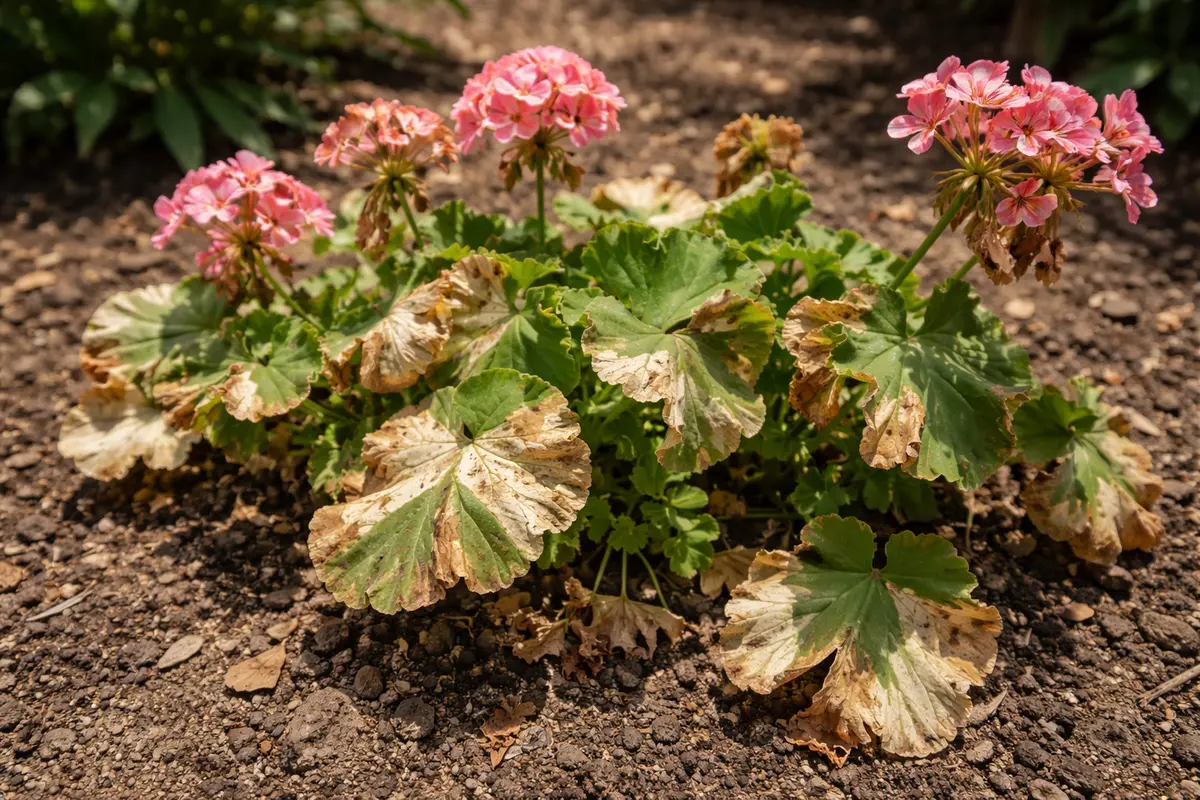
You may notice that your geraniums are struggling during the scorching days of summer, which is why you need to know, “Why are my geraniums wilting during a heatwave?” This wilting indicates that the plants are suffering from heat stress, leading to drooping leaves and overall damage. If left unaddressed, this problem gets worse and can spread to other plants, but fixing it is possible now—just inspect your plants closely, adjust their watering routine, and provide some shade to help them recover.
Step 1 – Water Geraniums to Revive Them Fast
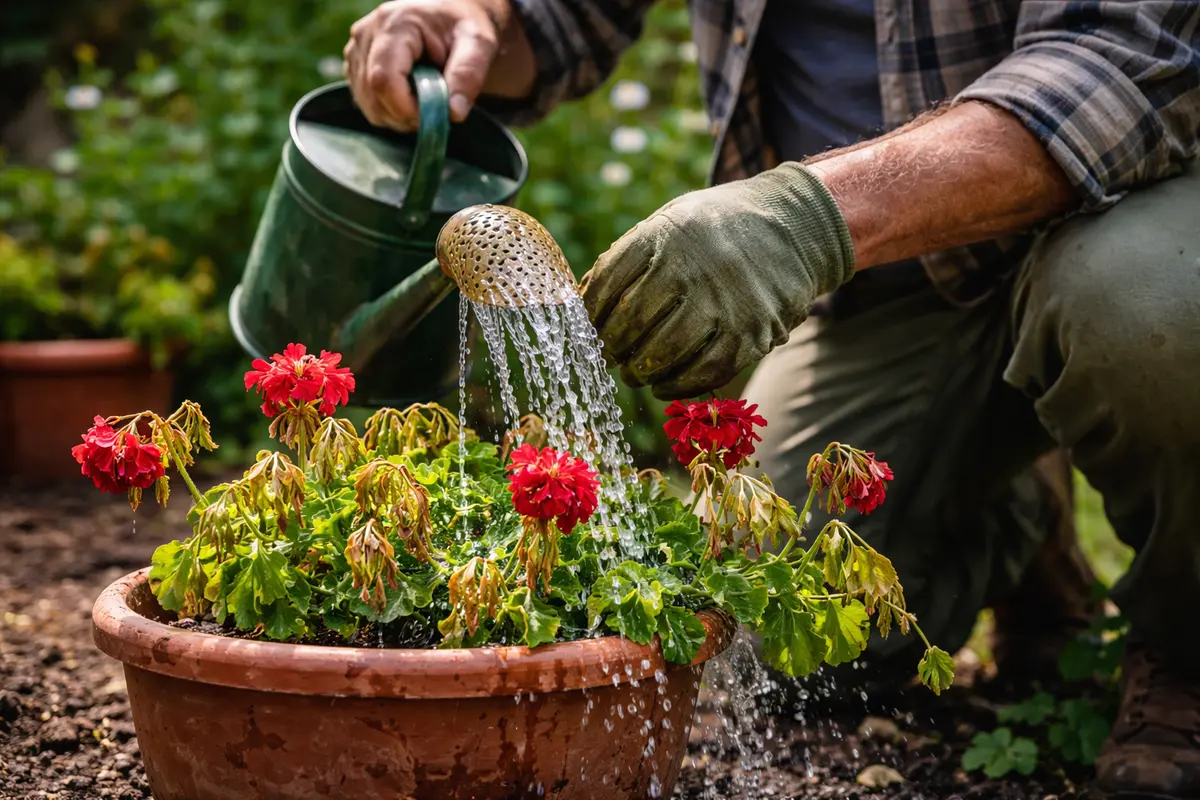
Water the geraniums deeply to immediately restore moisture to their roots. You should see the leaves begin to perk up within a few hours; if they don’t show improvement within this window, there may be a more serious issue. Aim to provide at least 1 inch of water per watering session, ensuring the moisture penetrates the soil down to at least 6 inches. To ensure thorough saturation, water the plants slowly and evenly, ideally over a 10-15 minute period.
Quick recovery is essential during a heatwave because geraniums tend to lose water rapidly when exposed to high temperatures and direct sunlight. When moisture levels decrease, the plants struggle to maintain cellular turgor pressure, leading to wilting. If the situation is not addressed, the leaves can develop sunburns, and flower buds may drop off prematurely. If the wilting is pronounced, consider checking the soil moisture every two to three hours until visible recovery is noted, as deeper roots may still be dry even if the topsoil appears wet.
Many gardeners mistakenly think that simply spraying water on the leaves is sufficient. This method fails since it doesn’t address the root moisture level needed for recovery. Instead, ensure you water the soil directly and allow it to soak in adequately; aiming for a slow drenching is essential. Additionally, assess how water runs off; if it pools instead of absorbing, the soil may be compacted. Compacted soil restricts water uptake and can lead to longer-term issues like root suffocation. If you find this is the case, consider aerating the soil by gently loosening it around the roots with a hand tool.
Step 2 – Assess Heat Stress on Geranium Leaves
First, check the soil moisture level around your geraniums. If it feels dry several inches down, give the plants a thorough watering, ensuring the water reaches the root zone. Over the next few hours, you should see the wilting leaves begin to perk up and regain their turgidity.
When geraniums wilt during a heatwave, it’s often due to insufficient moisture in the soil, leading to stress on the plant. This situation causes the roots to struggle in taking up water, ultimately reflecting in the leaves as they begin to droop. In contrast, if you notice that your soil is overly saturated and retains water, this could lead to root rot, which also causes wilting due to damaged roots; this is a distinct problem requiring careful diagnosis.
If your geraniums are still drooping despite adequate watering, check for pests like aphids or spider mites that can also stress the plant. If you spot any pests, treat your plants with insecticidal soap or neem oil to restore their vitality. Alternatively, if the soil smells sour or rotten, you may need to repot them in fresh, well-draining soil to prevent further decline.
Understanding heat stress is crucial because it occurs when temperatures exceed ideal growing conditions, causing the plants to lose more water than they can absorb. Geraniums thrive in temperatures ranging from 60°F to 75°F, and prolonged exposure to temperatures higher than this can quickly lead to tissue damage. Identifying how your geraniums react to heat stress allows you to take the necessary steps to mitigate further damage. If discoloration continues to spread beyond the edges, it may indicate that the plant needs immediate care beyond just water, possibly requiring adjustments in shading or cooling methods.
If you notice wilting but no discoloration, this may indicate an overwatering issue instead of heat stress. In such cases, consider checking soil moisture levels to prevent sinking into an underwatering versus overwatering debate. Adjusting your watering accordingly is vital; if soil is compacted or too moist, consider aerating the soil around the roots gently. This allows water to equilibrate without risking root rot, which may compound the initial wilting issue. Roots benefit from airflow, so a quick check can prevent a situation where roots start to die off before the underlying watering issue is identified and corrected.
Step 3 – Test Soil Moisture Before Treating Wilting
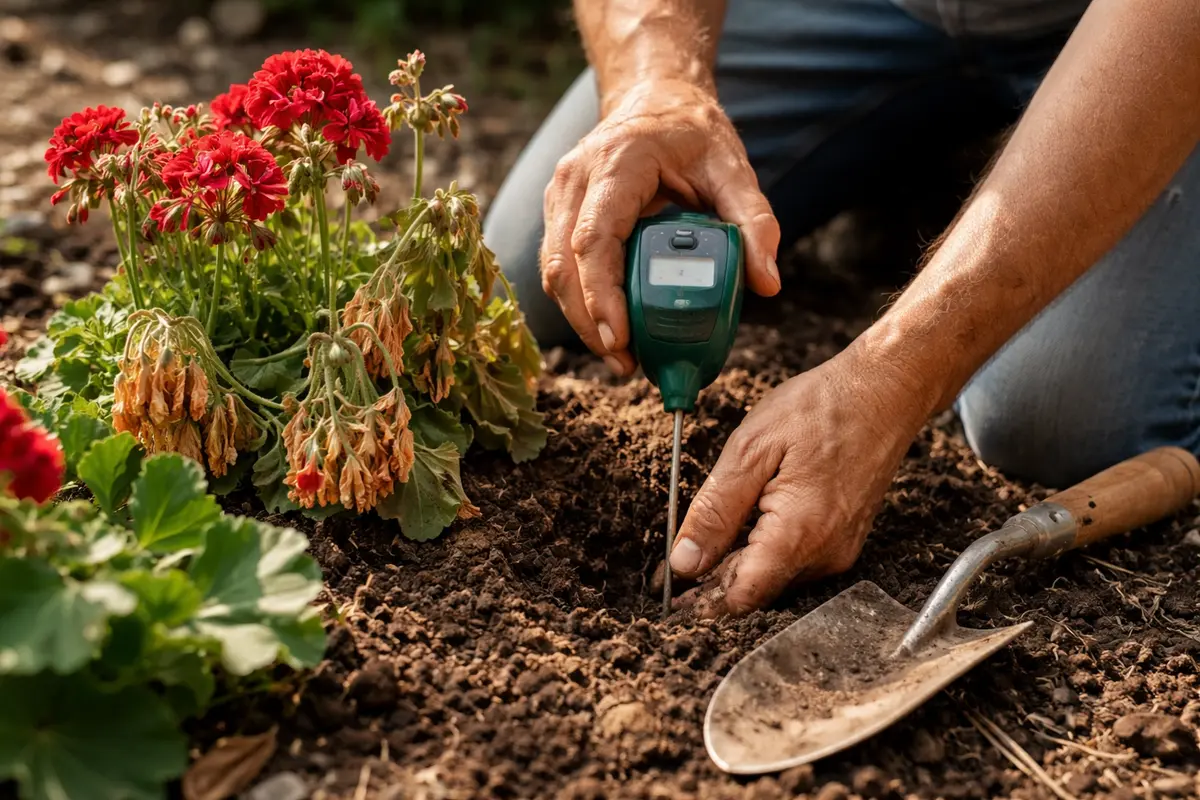
Check the soil’s moisture content by inserting your finger about an inch deep to feel for dampness. If the soil feels dry, it confirms that inadequate watering is likely contributing to the wilting. However, a dry surface doesn’t always equate to dryness below; thus, verifying deeper moisture is essential to accurately assess the condition.
Testing soil moisture is key when assessing plant health during a heatwave. If the soil is dry, it means the roots are not receiving enough water to support the geranium, leading to wilting. Conversely, if the soil is too moist and waterlogged, it can also cause root rot, further complicating recovery. To ensure you’re getting an accurate picture, measure soil moisture at different points in the root zone, including both sides of the root-basket area and deeper regions of the soil. Utilizing a moisture meter can provide a more precise reading and confirm your finger tests.
In uncertain cases, wait another day to monitor the condition after the initial water assessment. Check for any visible signs of improvement or further decline; if the leaves remain wilted even with watered soil, the problem might lie with root health or soil compaction. If there are indications of prolonged wilting or unexpected lethargy in growth, consider examining drainage holes to ensure proper outflow. If roots appear tangled or overly compacted, plan to repot using well-draining soil that can enhance aeration. This next step can rejuvenate root health, allowing better access to vital nutrients and moisture.
Step 4 – Apply Organic Fertilizer for Wilting Recovery
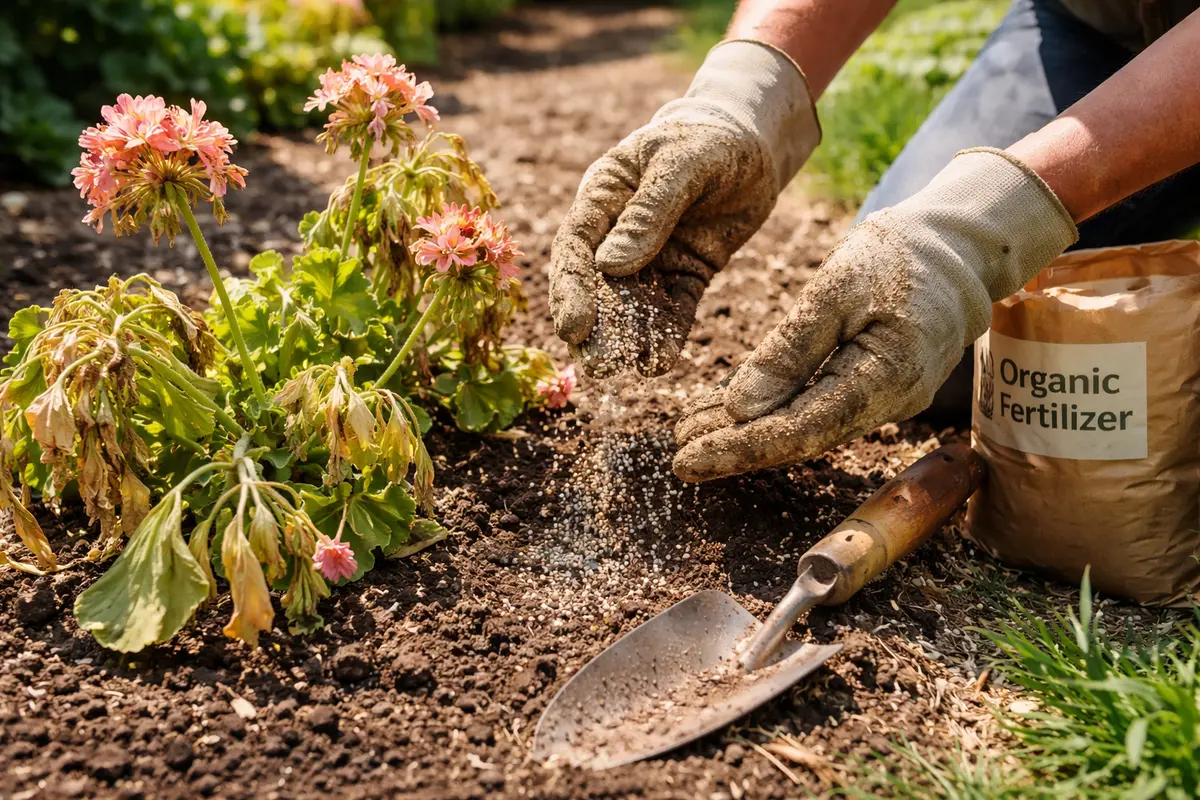
Apply a balanced organic fertilizer around the base of the plants to promote quicker recovery. You should notice the onset of new growth within a week, indicating that your geraniums are responding positively to the nutrient boost. Aim for a slow-release fertilizer — typically, this means about 0.5 to 1 tablespoon per plant, spread evenly around the base and mixed lightly into the soil for best results.
Adding fertilizer plays a vital role in the recovery process, as geraniums require nutrients to regenerate healthy tissues after facing distress. During heat stress, essential nutrients can leach from the soil due to increased moisture evaporation, creating deficiencies that stunt recovery. Apply fertilizer when the soil is moist but not saturated; if your plants are too stressed, they may not absorb nutrients efficiently, resulting in little to no benefit. Monitor their growth response closely; if the new leaves become yellow, this may indicate excess fertilizer or nutrient burnout.
While fertilizing is essential for recovery, avoid over-fertilizing, as it can exacerbate stress on the plants. A common error is applying a high-nitrogen formula, which can cause burning at the roots if moisture levels aren’t precisely balanced. Instead, focus on using a balanced organic option that includes enough phosphorus to support root development. If you notice that growth appears stunted again within weeks, reassess your fertilization frequency and amounts; too much can hinder absorption and lead to other issues like crown rot.
Step 5 – Water Geraniums Before Future Heatwaves Hit
Start by providing shade for your geraniums during the hottest parts of the day by using garden fabric, patio umbrellas, or strategically placed potted plants. This action will significantly reduce heat stress and prevent wilting, allowing your plants to maintain their appearance and vitality throughout the heatwave.
High temperatures can lead to increased evaporation of moisture from the soil, causing stress for geraniums that aren’t able to access enough water. When exposed to direct, intense sunlight, potted plants can suffer from rapid soil drying, leading to droopy leaves. By implementing shade, you directly address the root cause of moisture loss, which can prevent the recurrence of wilting during future hot spells. If you notice wilting in shaded areas, check that the soil remains adequately moist.
In addition to providing shade, increase watering frequency during extreme heat, ensuring your geraniums receive a deep watering session at least twice a week. If a heatwave occurs in mid-summer and is coupled with strong winds, consider adding mulch to retain moisture, providing a secondary layer of protection against drying conditions.
Frequent watering can prevent recurrence of wilting by ensuring the soil remains adequately moist, allowing roots to access water directly during times of intense heat. When the soil dries quickly due to high temperatures, geraniums can suffer severely, making an effective watering strategy critical. Consider creating a watering rhythm—for instance, watering every three to four days when weather conditions predict temperatures rising—so that plants remain hydrated and healthy.
Consider complementing this routine with a layer of mulch around the base of your geraniums to further regulate soil temperature and moisture retention. A mulch layer of about 2-3 inches can significantly reduce evaporation and help the plant withstand extended heatwaves, ensuring a healthier overall environment. Keep mulch away from the stems to prevent rot and check its moisture retention properties if a dry spell follows the heat; refresh it as needed to maintain effectiveness and keep the soil cozy yet breathable.
Step 6 – Inspect Geraniums for New Wilting Signs Weekly
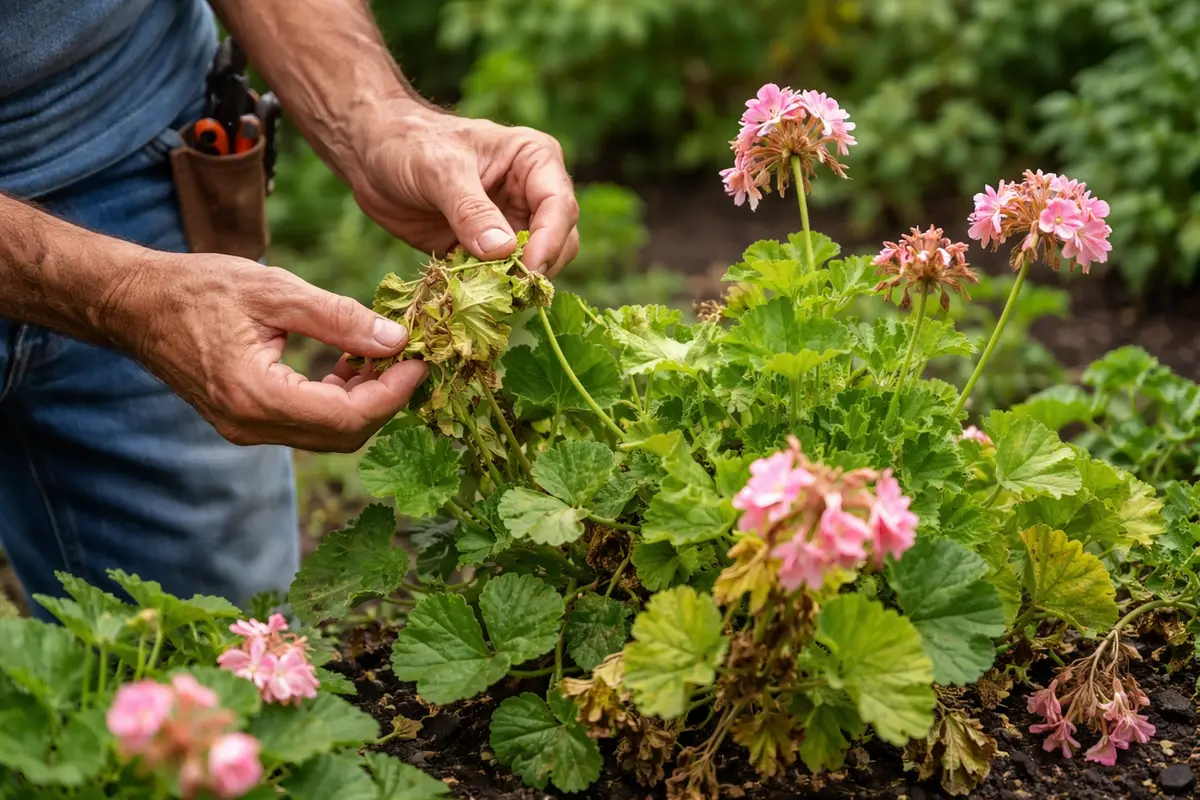
Inspect your geraniums weekly to identify any new signs of wilting or stress. After implementing recovery steps, you should observe leaves staying firm and vibrant in color. If wilting recurs within two weeks of recovery efforts, it’s crucial to investigate further the location and conditions under which they are growing.
Regular checks are essential for cultivating healthy geraniums. This consistent monitoring process allows you to catch signs of heat stress or water deficiency before they escalate into serious issues. Healthy plants will show firm leaves and vivid colors, indicating they are processing nutrients effectively. While inspecting, pay attention to surrounding environmental conditions — factors like temperature fluctuations, humidity, and sunlight exposure can also contribute to ongoing health or distress challenges.
If wilting reappears despite your diligent efforts, reassess your watering practice, including timing and amount. Dive deeper into soil composition and drainage conditions; persistent wilting may indicate that the roots are confined in a pot, necessitating repotting to offer them a larger space to thrive. For example, if roots are circling the pot and don’t show signs of growth pushing outward, it might be time to transfer them into a larger container with a mix that improves aeration while allowing for future growth.
FAQ
How long does it take for geraniums to recover from wilting?
Recovery typically takes a few days to a week, depending on the severity of the wilting and the environment. Signs of improvement include perking up of the leaves and the emergence of new growth. If improvements do not occur within this timeframe, further investigation into root health and soil conditions is required.
Can wilting geraniums regain their health?
Yes, with proper care, wilting geraniums can effectively bounce back. Immediate watering and nutrient support are crucial to help restore their vitality. Consistent monitoring and timely interventions will ensure the plant can thrive even in challenging conditions, making adjustments as necessary for ongoing resilience.
Should I remove wilting leaves from my geraniums?
Removing wilted or damaged leaves can help the plant redirect energy towards healthier growth. However, avoid excessive pruning and only trim the most affected areas to reduce stress. Focus on sections with severe burns or complete wilting, as these can attract pests if left unattended and potentially impede recovery efforts.