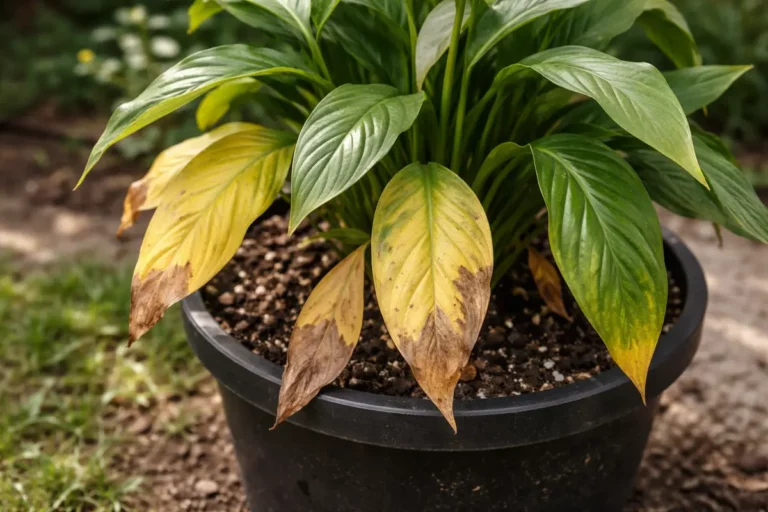
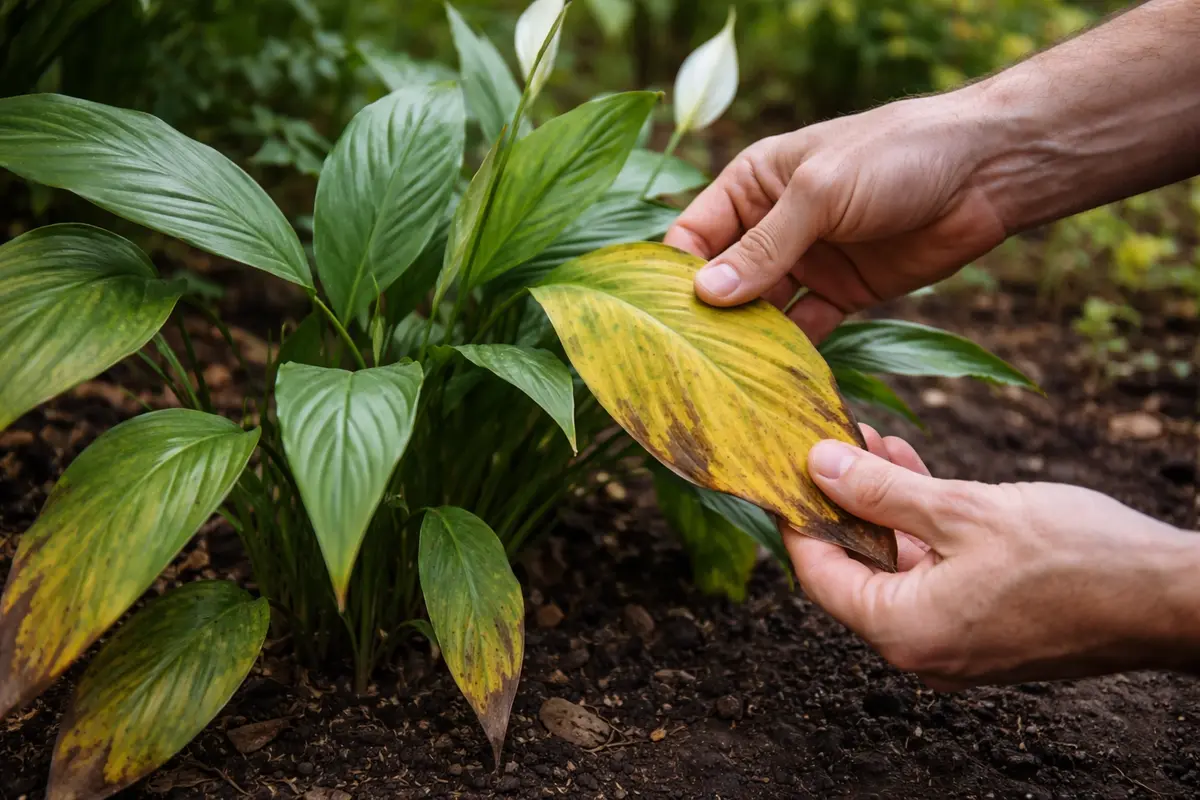
You may notice your peace lilies exhibiting yellowing leaves after watering, which is why you need to know how to fix yellowing leaves on peace lilies after watering. This discoloration often indicates overwatering or poor drainage, leading to yellowing and potential leaf drop. If left unaddressed, the issue can worsen, weaken the plant, and hinder its growth, but you can easily fix it now by checking the soil moisture and adjusting your watering habits. Immediate action can make all the difference in restoring your peace lily’s health.
Step 1 – Inspect Peace Lily Roots for Overwatering Signs
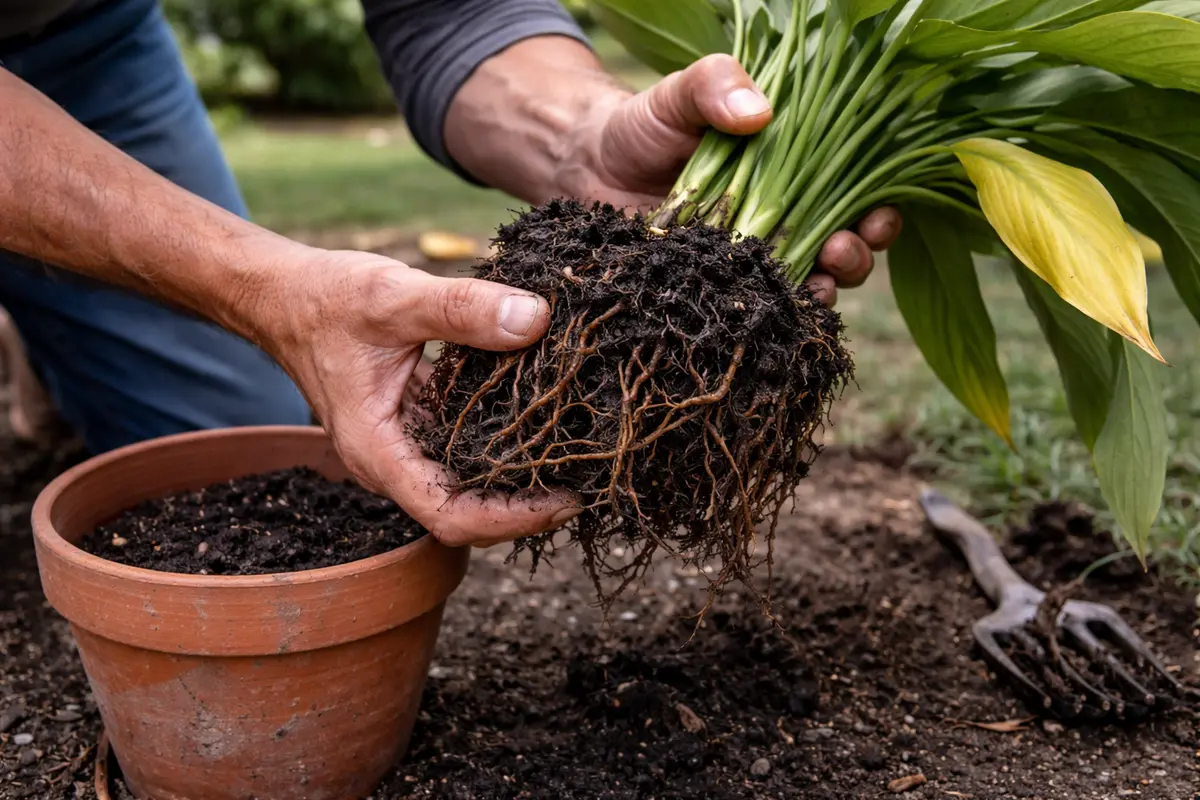
Start by carefully removing the peace lily from its pot to examine the roots. You will see if the roots are healthy and firm or brown and mushy, which indicates overwatering or root rot. An investigation into the roots can reveal underlying issues, even if the plant’s surface appears healthy. When checking the roots, look for a light brown color and firmness, indicating good health, versus soft, dark, or blackened roots, highlighting stress.
A thorough root inspection is critical because yellowing leaves often indicate stress due to waterlogged conditions. If the roots are overly saturated, they cannot absorb nutrients effectively, which causes the leaves to yellow. Peace lilies prefer to dry out slightly between waterings, which means a proper root inspection informs your next steps in treatment. Look for signs of root rot like a foul odor or blackened sections, as these indicate severe neglect and need immediate attention. Implementing a thorough check ensures you can prevent further damage more effectively, thus promoting recovery.
A common mistake gardeners make is watering their peace lilies on a strict schedule instead of checking the soil moisture first. If the soil is consistently soggy, it can lead to root rot, and the leaves will show distress. This is particularly true if the plant has been in the same pot for several years, potentially leading to nutrient depletion and root crowding. If you notice a dense, dark mass of roots that forms a tight ball, this points to overwatering and insufficient aeration. If that’s the case, pruning back a portion of the roots can improve airflow and enable healthier regrowth, as roots that are tightly bound are less able to absorb nutrients.
Step 2 – Analyze Soil pH and Drainage Quality
Check the soil’s pH and drainage capacity to address the root cause of the yellowing leaves. You will see that the right soil should allow for moisture retention without becoming soggy or compacted. An ideal pH for peace lilies is between 5.5 and 6.5, and maintaining this level encourages efficient nutrient uptake. You can use a pH meter or soil test kit to determine the pH, ensuring it remains within this range; this small detail can significantly impact how well your plant absorbs nutrients and responds to care.
Insufficient drainage leads to water pooling at the bottom of the pot, which can suffocate roots and cause yellowing leaves. Good quality potting mix should contain perlite or vermiculite to promote aeration and drainage. Testing the drainage by observing how water disperses in the soil during watering will show whether it’s time for a soil change. For instance, if water runs off the surface rather than sinking in, drainage is likely poor, requiring immediate corrective action. If the water hangs around too long, it can create an anaerobic environment detrimental to the roots and worsen the yellowing condition.
If the soil is too compacted or fails to drain well, consider re-potting the peace lily in a new container with fresh potting soil. On the other hand, soil that smells sour indicates anaerobic bacteria and is a sign you might need to replace the soil immediately. Be cautious, however, as simply adding more drainage material on top without changing the soil can lead to similar issues in the future. If you’re in doubt, conducting a simple drainage test can help confirm—check if water drains through within a few minutes. If it takes longer than this, it’s a sign that you need to improve the potting mix’s quality or change the container entirely to ensure proper drainage. Regularly checking drainage every few months is advisable to maintain optimal soil health.
Step 3 – Nourish Peace Lily to Stimulate Leaf Recovery
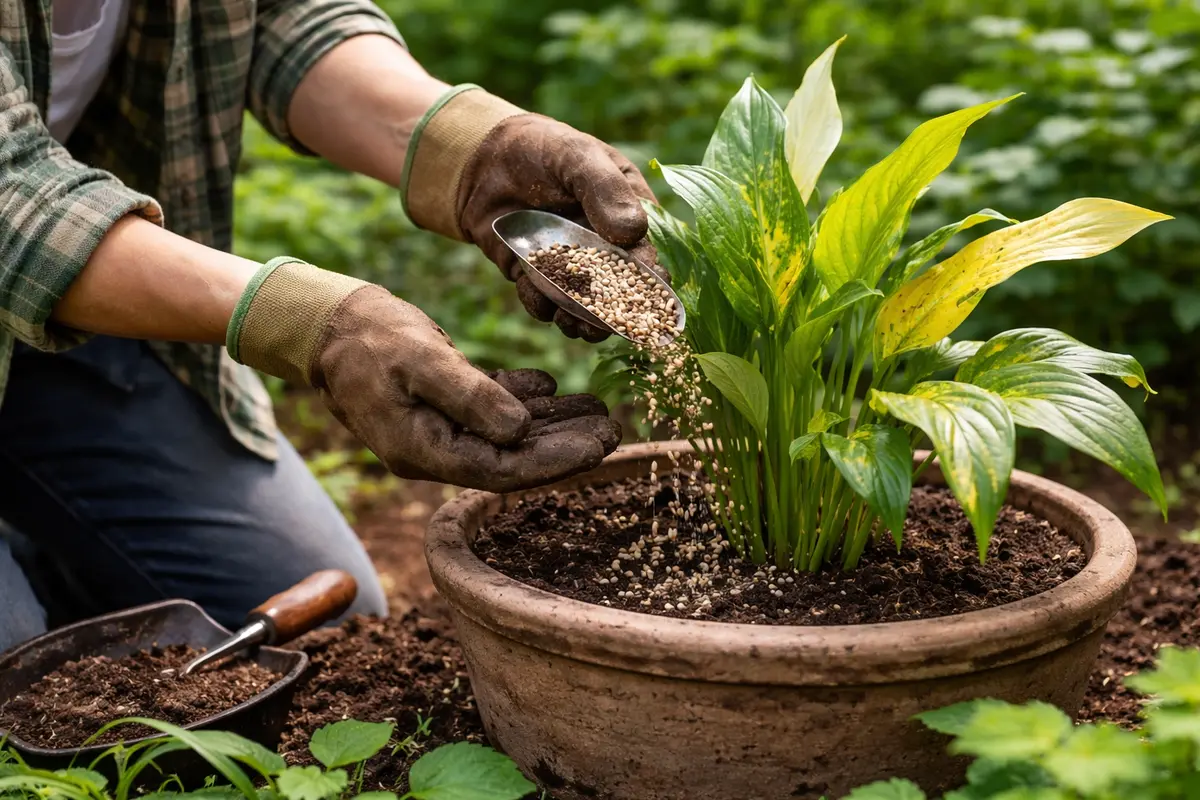
Fertilize the peace lily with a balanced houseplant fertilizer to stimulate recovery after addressing drainage and root health. You will notice the plant responding positively as new leaves emerge and existing leaves start to regain their vibrant green color, potentially within four to six weeks post-fertilization, provided that all other care factors are stable. Ensuring the right nutrient balance during this stage can help the plant bounce back effectively, transforming the plant from its stressed condition to a lush green specimen. Choose a fertilizer with equal ratios of nitrogen, phosphorus, and potassium, such as a 20-20-20 formulation, to address all essential nutrient needs during the recovery period.
Fertilization provides essential nutrients that promote healthy leaf growth and recovery. Peace lilies benefit from an application of nitrogen to encourage foliage growth, phosphorus for root health, and potassium to enhance overall vigor. Make sure to follow package instructions for dosage and frequency, as over-fertilization can cause salt accumulation in the soil. If you observe a white, crusty texture on the soil surface after fertilizing, it indicates salt buildup—a condition that stresses the plant further. If this occurs, consider flushing the soil thoroughly with water, allowing it to run through the bottom drainage holes, effectively rinsing away excess salts and facilitating healthier conditions.
Establish a routine of fertilizing once a month during the growing season and then reducing frequency in the winter months when the plant’s growth slows down. Be cautious not to overdo it, as excess fertilizer can lead to salt buildup in the soil that can stress the plant further. If you notice the leaves developing brown tips again, it’s a sign that either the fertilizer concentration is too high or that there’s a need to flush the soil with water to reinstate the ideal balance. An effective way to gauge nutrient levels is to observe the growth rate: if the plant is not producing new leaves within the expected timeline, revisiting your feeding strategy is warranted. After fertilizing, maintaining a steady biweekly approach to watering while also monitoring plant responses can enhance recovery success further.
Step 4 – Look for New Growth After Watering Changes
Next, check the soil moisture level using your finger or a moisture meter. If the top inch of the soil feels wet, avoid watering again; look for signs of root rot or overwatering by inspecting the roots for mushiness and unrecoverable conditions. Always recheck in a week or so; if the yellowing persists, further adjustments may be needed in both your watering tactics and the plant’s environment, such as adjusting light levels or humidity. This frequent monitoring helps fine-tune care based on how the plant responds.
A fully recovered peace lily displays vibrant, deep green leaves with shiny surfaces, while early signs of yellowing manifest as pale or mottled foliage, indicative of continued stress. If the plant begins to droop again or if the leaf tips turn brown, it indicates that stress might be returning. Conversely, if the leaves remain pliable and lush, it suggests that the plant is on a healthy path toward recovery.
If the yellowing persists despite proper care, consider repotting the plant in fresh, well-draining soil, as nutrient deficiency or continued overwatering may be factors. Alternatively, check for pests that might be damaging the roots or leaves; catching an infestation early can significantly aid recovery. Comparing newly developed leaves to older ones can yield insights—new growth should appear healthy and without yellowing, while old leaves may lose their color first, informing you of the overall health trajectory. Also, anticipate that established plants may take longer to bounce back, so maintain patience and keep a keen eye on their conditions.
A fully recovered peace lily will exhibit new leaves that are healthy and robust, with no yellowing present. Familiarize yourself with your plant’s baseline condition to accurately identify code red situations of distress. Additionally, the leaf texture should feel firm rather than limp, reflecting improved moisture balance and nutrient absorption. While checking for growth, look for more than just new leaves; overall vigor, such as a robust stem and greater leaf node development, indicates that the plant is thriving. When conditions improve, a regular schedule of watering every 1-2 weeks can help maintain optimal growth while preventing reverting health issues.
If you find signs of yellowing returning after recovery, re-evaluate your watering schedule to ensure the soil has not become waterlogged once again. If necessary, check your pots for proper drainage holes. A clear indication of overwatering would be leaves that feel overly soft to the touch or exhibit yellow spots that could quickly escalate to browning. Take a moment every few weeks to perform a comprehensive check, assessing both the visual condition of the plant and the feel of the soil to ensure your peace lily remains healthy. You should also pay attention to any signs of pests or disease, as these can further stress the plant even after correcting watering habits.
FAQ
How long does it take for peace lily leaves to recover from yellowing?
Recovery can take anywhere from a few days to several weeks, depending on the plant’s condition and how well it responds to interventions. Look for new leaf growth and improved color as signs of recovery. Ensure consistent care; these signs usually appear sooner if the root cause of the yellowing is promptly addressed. If the plant continues to struggle, it may indicate other underlying issues that require further investigation, such as continued drainage problems or nutrient deficits.
Can yellowing leaves spread to other plants?
Yellowing leaves on a peace lily usually do not pose a risk of spreading to other plants, as it typically stems from localized issues such as overwatering or soil quality. However, ensure to practice good hygiene and check surrounding plants for similar symptoms to prevent any cross-contamination. If multiple plants show signs of distress, a thorough inspection of your watering practices and soil conditions might be in order. This is especially important if the yellowing is coupled with any unusual textures, such as slimy surfaces or wilted edges, pointing to potential root problems.
Should I remove yellowing leaves from my peace lily?
Yes, removing yellowing leaves can enhance the plant’s appearance and allow it to focus energy on new growth. Trim the affected leaves at the base, but ensure the plant is otherwise healthy and recovering from the underlying issues. In some cases, leaving damaged leaves can send stress signals throughout the plant, so prompt removal can contribute to overall recovery. Post-trimming, a gentle application of a rooting hormone may help encourage healthier new growth, especially in a recovering plant that is attempting to establish itself.