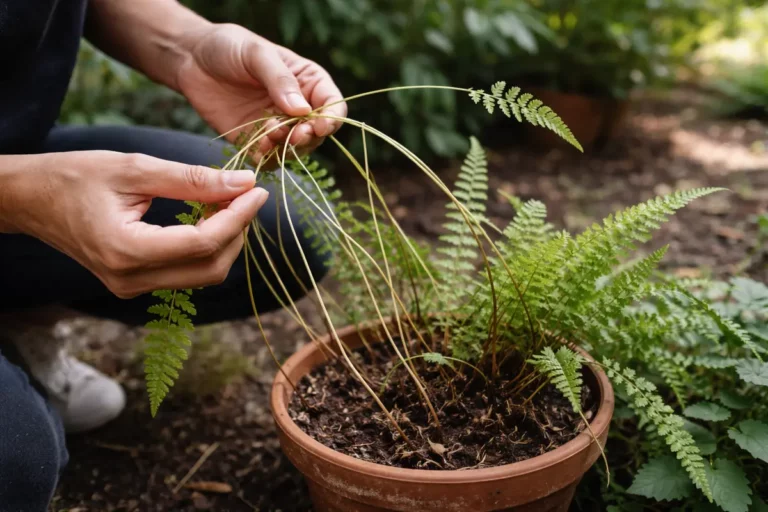
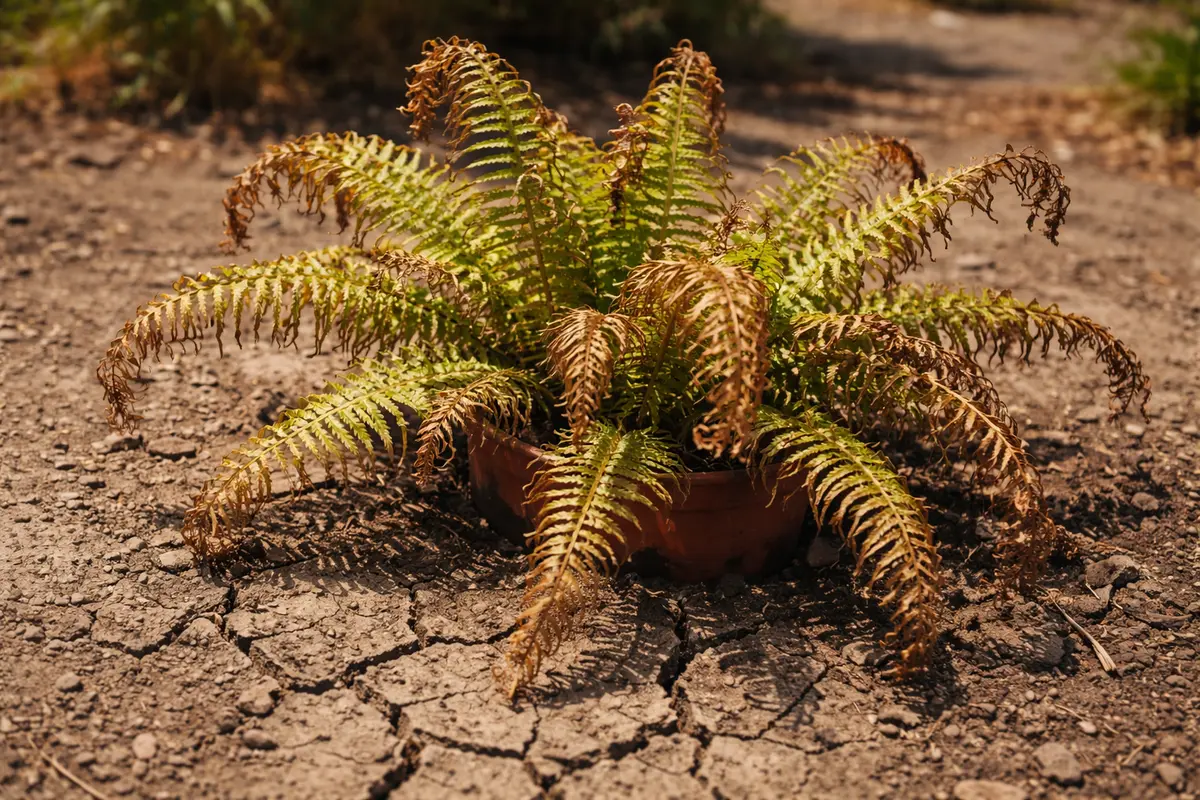
You may notice your indoor fern starting to droop and show yellowing fronds during dry winter months, which is why you need to know what to do when an indoor fern starts dying in low humidity. This decline often results from inadequate moisture levels, leading to wilting and leaf drop as the plant struggles to survive. If left unaddressed, the situation gets worse, ultimately weakening the plant and making recovery harder, but fixing it is possible now—just check the humidity levels, adjust your watering routine, and ensure proper placement for optimal growth.
Step 1 – Water Your Fern Immediately If Wilting
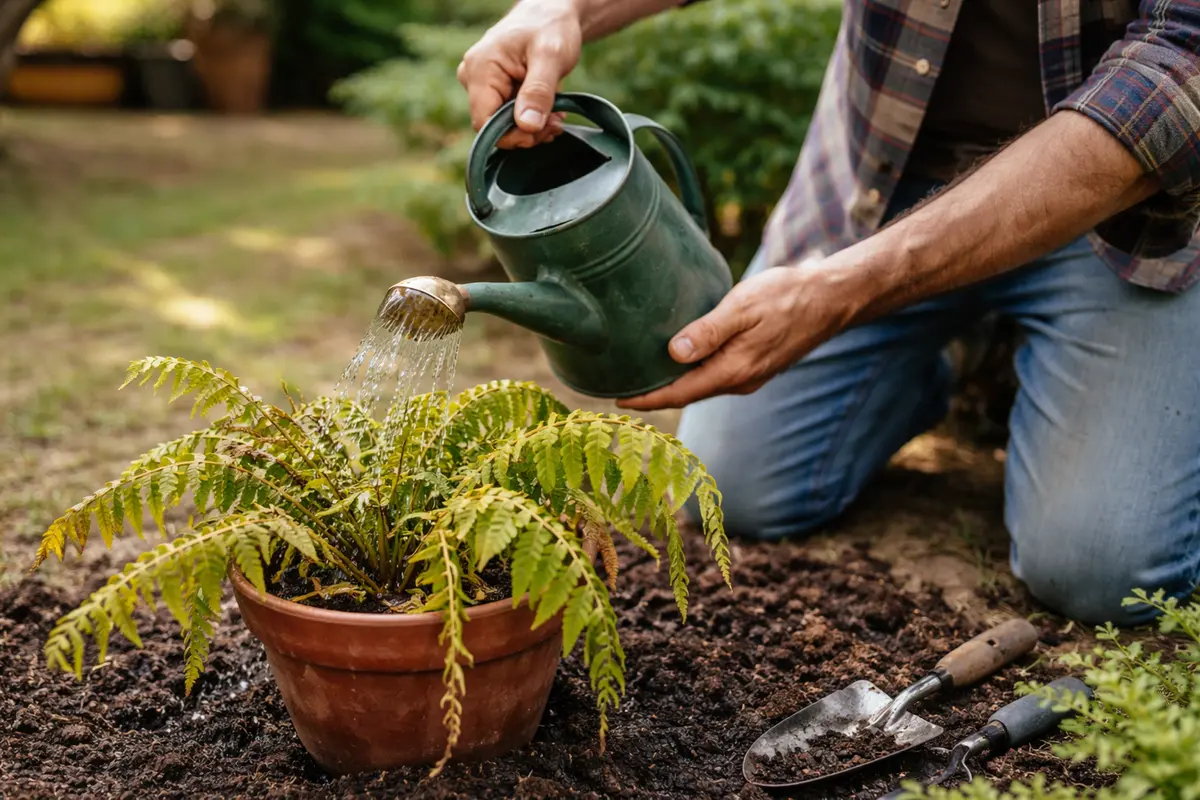
Water your fern deeply right away. You should notice the leaves starting to feel firmer within a few hours. To do this effectively, fully saturate the soil until moisture seeps from the drainage holes of the pot, which indicates that the entire root system is receiving water. If the pot feels heavy enough after watering, it suggests that the roots are starting to absorb the new moisture correctly.
When you water your fern immediately, you are stopping wilting and reversing the damage caused by low humidity and insufficient moisture. Plants like ferns naturally thrive in humid environments, and when they experience prolonged dryness, their leaf tissue begins to dehydrate, leading to browning. This condition becomes progressively worse if the plant remains dry, as roots lose their ability to absorb water effectively. Without deep watering, your fern will continue to suffer, potentially leading to a complete collapse of its fronds.
A common mistake many gardeners make at this stage is to only water lightly based on the assumption that a quick splash is enough. For instance, if you’ve previously watered sparingly, returning to this practice can allow the fronds to droop further. If you find that the fronds are still drooping even after watering, dig into the soil about an inch with your finger. If it feels dry even below the surface, it indicates that the plant needs further watering or a boost in humidity levels. If your fern isn’t improving within a day or two after watering, assess the soil’s moisture retention. This might help you determine whether the roots need more time to recover or if you need to address potential issues like root rot that could be hindering recovery.
Step 2 – Assess Low Humidity Levels Impacting Ferns
Start by increasing the humidity around your fern immediately to combat its decline. Use a humidifier or place a tray filled with water and pebbles beneath the pot, ensuring the pot does not sit directly in the water, which risks root rot. Within a few days of raising humidity levels, you should notice the foliage looking less wilted and new fronds beginning to emerge.
Low humidity prevents the fern from successfully absorbing moisture through its leaves, leading to dehydration. As soil moisture decreases, the roots may struggle to uptake sufficient water, leading to brown tips and drooping fronds. When humidity levels improve, you should see the leaves regaining their turgor and vibrancy as the plant rehydrates. This correlation between humidity and plant health underscores the importance of monitoring conditions closely.
If you notice a sour smell emanating from the soil, this signals root rot, which may require a different approach altogether. Remove the fern from its pot and check the roots; if they appear blackened and mushy, trim away the affected areas and repot in fresh, well-draining soil. If the leaves are still drooping despite proper humidity, examine your watering frequency. Overwatering can also contribute to similar symptoms, causing additional stress on the plant’s health.
Low humidity levels directly contribute to the decline of your fern. When humidity falls below the optimal range, the plant’s transpiration rate increases, resulting in water loss that exceeds the absorption capacity of its roots. This condition can cause wilting, but it often leads to broader damage to the leaf structure, making ferns appear crispy or browned, especially along the edges. If the humidity remains low for too long, the fern will not only become weak but will also lose its vibrancy, ultimately affecting its overall health and making it more susceptible to pests and diseases.
If your home has low humidity and your fern is drooping or wilting, it’s crucial to employ multiple strategies. For example, if your fern is near a dry air source, like a heater, moving it away might drastically improve its condition. Grouping plants together in warmer environments can also create a beneficial microclimate through increased ambient moisture. However, if humidity readings are below 30%, it’s best to directly utilize a humidifier in the room or use a pebble tray to raise humidity levels effectively.
Step 3 – Mist Leaves Regularly for Fern Recovery
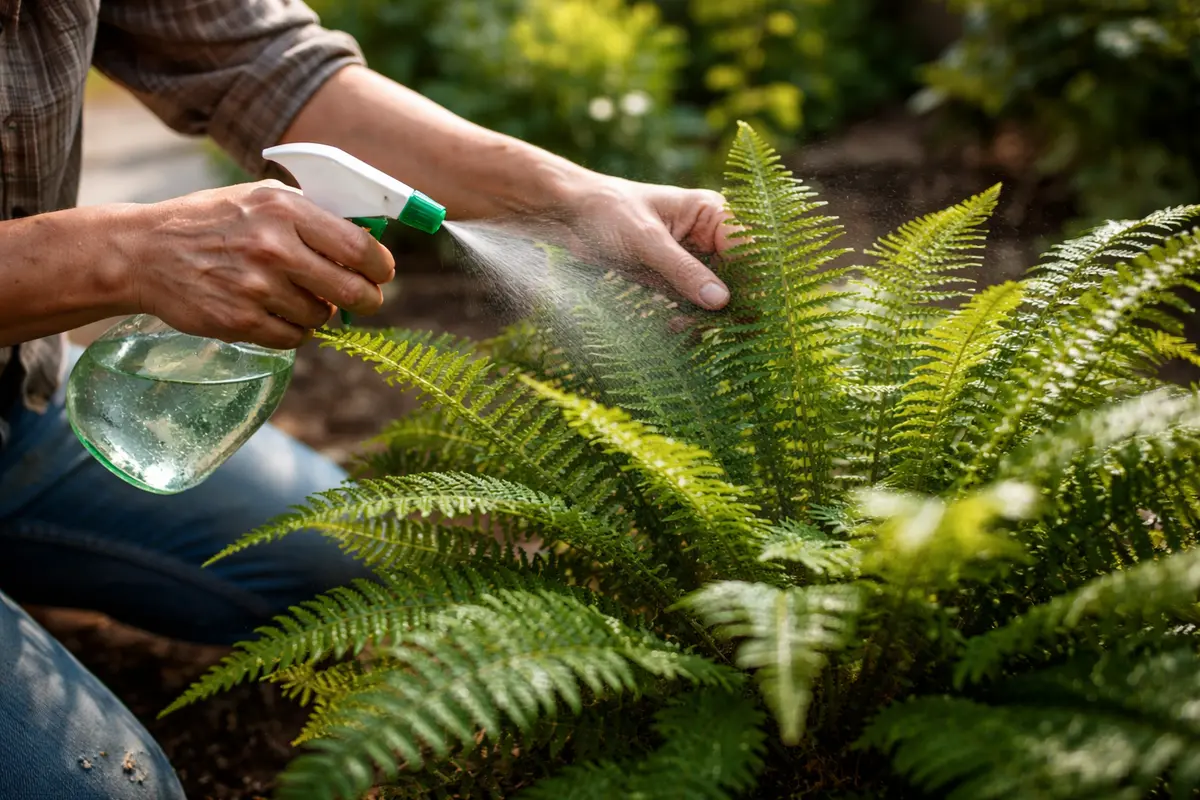
Begin misting your fern’s leaves daily. You should observe improved fullness in the leaves and a reduction in brown edges within a week. Misting helps create a humid microenvironment around the plant, which is vital for its recovery from low humidity stress and dehydration. Ideally, make this a part of your daily routine, particularly during the hottest parts of the day when evaporation rates are naturally higher.
When you mist regularly, you are not just adding moisture; you are mimicking the natural conditions of the fern’s native habitat. They thrive in environments where humidity maintains a constant level, and the moisture from misting counteracts the dehydration caused by low humidity. Observing fresh growth or perked-up fronds within a week indicates that the plant is responding positively to your care. Notably, misting may also help reset the chlorophyll levels in the leaves, enhancing the plant’s photosynthetic potential as moisture levels return to normal.
A common mistake during this recovery phase is to overcompensate by misting excessively and watering too much, leading to conditions favorable for leaf spot diseases due to pooling moisture. Look for areas where excess water gathers on the leaves, as this could indicate over-misting. If this happens, reduce misting frequency. Another issue may arise if the mist evaporates too quickly, indicating a need for a more frequent misting schedule, especially in warmer months when humidity levels naturally decline. Monitor the plant closely; if you notice your fern’s condition declining or areas starting to rot, reduce the frequency of misting to allow the leaves to dry lightly, which ensures that you’re not creating an overly damp environment that could foster fungal growth.
Step 4 – Create Humid Environment to Protect Ferns
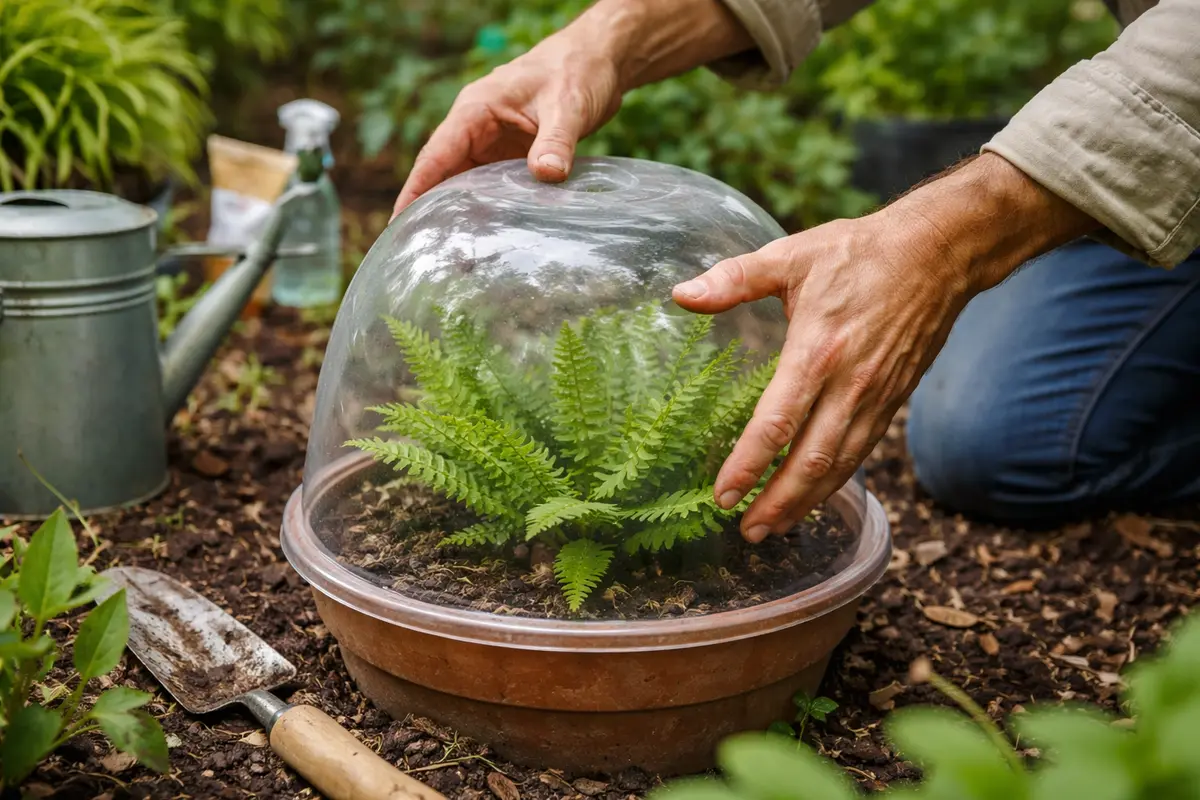
Start by placing a humidifier near your indoor fern to maintain consistent humidity levels above 50%. You will notice the fronds perk up and a reduction in browning tips as the humidity stabilizes. Keeping the humidity within this ideal range is crucial for long-term health.
Low humidity often triggers stress in ferns, leading to wilting or yellowing leaves. By introducing a humidifier, you directly combat this environmental issue, providing much-needed moisture that prevents future problems related to dry indoor climates. For instance, in winter, when indoor heating can drastically reduce humidity, increase the humidifier’s output to combat the dryness effectively.
Alternatively, grouping your fern with other humidity-loving plants can create a microclimate that retains moisture more effectively. This technique works by allowing water to evaporate steadily, which generates a microclimate of higher humidity specifically around the fern, thereby combating low indoor air moisture. Combining this with regular misting can provide a robust support system that encourages recovery without risking over-saturation of the soil.
Additionally, consistently topping off the water in any pebble trays is crucial for maintaining humidity. However, if you find that increasing humidity around your fern is not sufficient, consider relocating the fern to a bathroom with a moisture-rich atmosphere or investing in a small room humidifier to maintain optimal conditions. If the bathroom option is feasible, be aware that fluctuations in moisture due to shower use can greatly benefit your fern’s recovery, but continuous monitoring is essential to prevent periods of excessive dryness.
Step 5 – Look for New Growth in Fern After Care
Monitor your fern every few days to check for new growth. You should begin to see new fronds emerging within one to two weeks if your care is effective. This timeline indicates that the fern is on its path to recovery, especially when you see healthy signs like bright green fronds and a return of firmness to existing leaves.
Monitoring growth is crucial, as it marks the transition from recovery back to healthy development. With proper humidity levels and care, the fern’s leaves should feel less crispy. If you observe fresh, vibrant green color returning to the foliage, it is a strong signal of improvement. However, if the fronds remain limp or continue to brown without any signs of life, this may suggest that the roots are still struggling. If browning continues despite the right care, investigate the soil’s moisture levels and check the condition of the roots for possible hidden issues.
If the fern does not show signs of growth and browning continues, it’s time to investigate further. Check for excess moisture or a foul smell from the roots, indicating root rot. In such cases, consider repotting the fern in fresh, high-quality potting soil mixed with perlite to enhance drainage, allowing more oxygen to reach the roots effectively. Removing any affected roots during repotting, along with a careful assessment of the remaining fronds, will also create a healthier environment to stimulate new growth. Always ensure the new potting mix contains nutrients that can support ongoing recovery.
FAQ
How long does it take for my fern to recover from low humidity?
The recovery timeline can typically range from one to two weeks, depending on how quickly you improve humidity levels and watering conditions. If care is consistent and regimens are followed properly, signs of new growth and improved green coloring in the leaves should appear within this period. However, if there’s no change after two weeks, consider assessing other potential issues.
Can low humidity spread to other plants nearby?
Yes, low humidity can significantly affect nearby plants, especially those that thrive in similar conditions. When one plant suffers, neighboring plants can also experience stress, leading to potential declines in health if measures aren’t uniformly applied across the grouping, making them susceptible to similar issues unless steps are taken to raise humidity levels consistently for all.
Should I remove the dead parts of my fern?
Yes, pruning any dead or severely damaged fronds is important as it encourages new growth and enhances the plant’s appearance. Remove them cleanly, ensuring minimal stress on the plant to mitigate further unnecessary risks. Always check that the remaining fronds are healthy to facilitate better overall care moving forward, and consider applying a natural growth hormone to the trimmed edges for accelerated recovery.