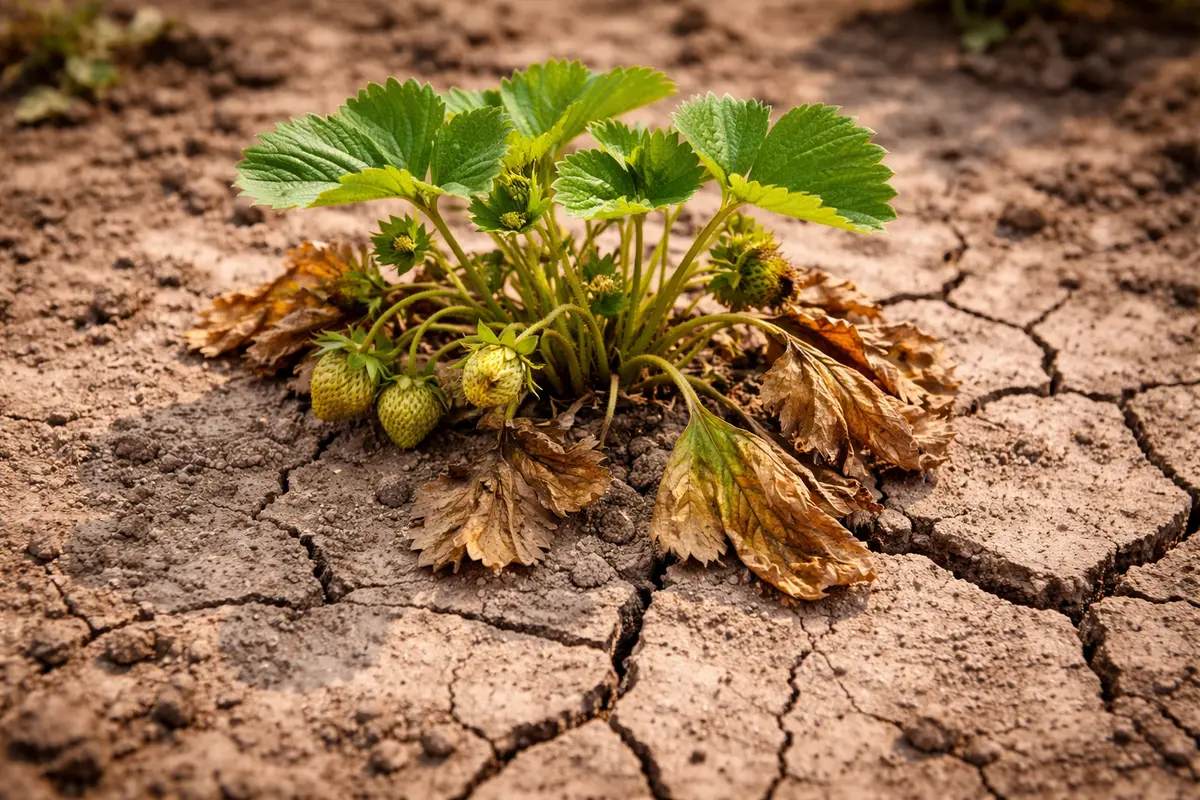
You may notice your strawberry plants drooping and showing signs of wilting during a drought, which is why you need to know what to do if strawberry plants are dying during a drought. The lack of water leads to yellowing leaves and damage to the plant’s overall health, making it difficult for them to thrive. If left unchecked, the situation can worsen and lead to more damage, but fixing it is possible now by adjusting your watering schedule and inspecting the plants for any signs of stress.
Step 1 – Water Strawberry Roots Urgently During Heat
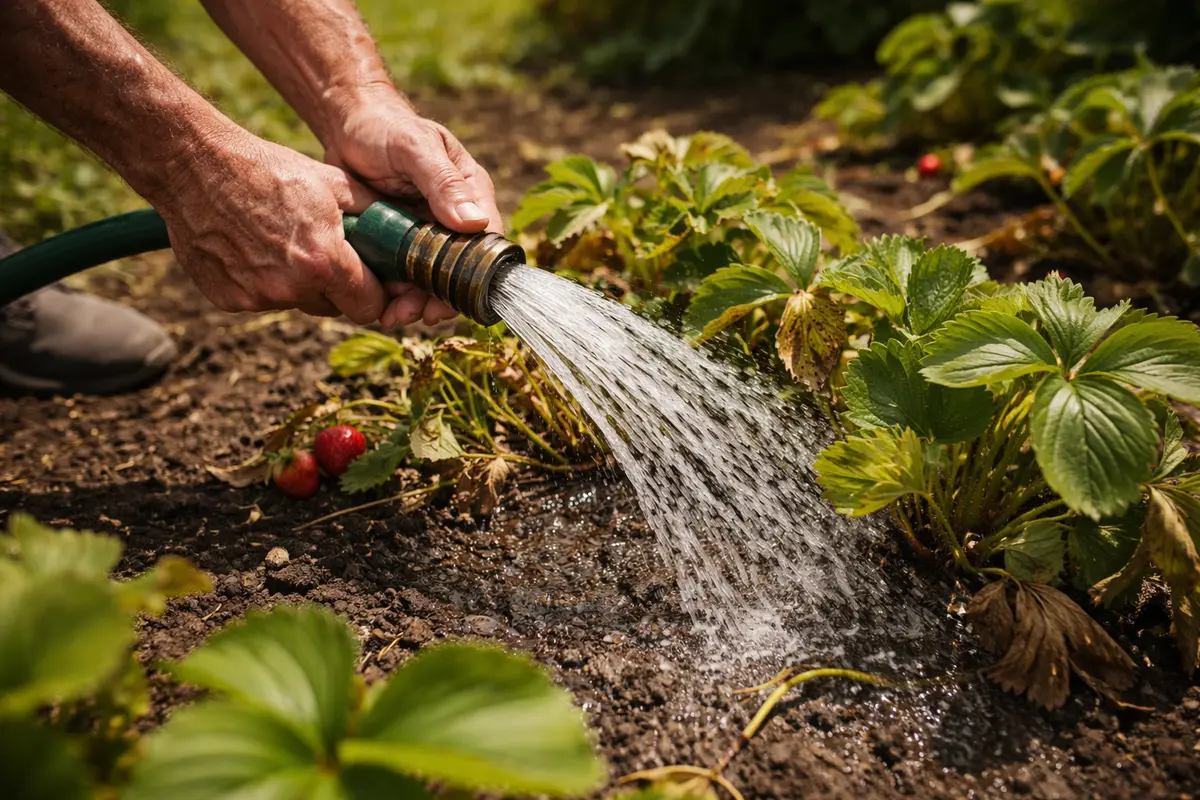
Start by deeply watering your strawberry plants at the root zone. You will see the soil darkening as it absorbs moisture, and the leaves may perk back up within hours. For optimal results, target watering primarily at the base of the plant rather than sprinkling over the leaves; this method ensures the roots soak up as much water as possible.
Watering deeply is crucial because it helps restore the plant’s access to moisture essential for photosynthesis and nutrient uptake. When soil moisture remains low, the plant cannot absorb enough water to sustain itself, leading to further wilting and a decline in fruit production. As the heat increases, strawberry plants experience accelerated water loss through transpiration, making immediate watering a priority. It’s critical to water right when the soil begins to dry out—typically on the surface before you see a complete wilting of the leaves.
Many gardeners mistakenly water only the surface, thinking it is enough; this can lead to additional stress for the plants as roots remain dry. Aim to apply water for at least 30 minutes until it saturates the soil to a depth of 6 inches. Additionally, using a soaker hose can help deliver moisture directly to the root zone more effectively than overhead watering. It’s recommended to water early in the morning or late in the evening to minimize evaporation, which can occur during hotter parts of the day. If the temperature soars above 90°F, consider additional watering sessions to ensure the plants do not endure double stress.
Step 2 – Diagnose Wilting in Strawberry Plants
Start by checking the moisture level in the soil around your strawberry plants; if it feels dry several inches down, water them deeply. After watering, observe whether the leaves perk up and show signs of rehydration within a day or two.
When strawberry plants experience drought conditions, their roots struggle to absorb necessary moisture, leading to wilting leaves and poor fruit development. The soil may become compacted or hydrophobic, preventing water penetration, as tightness in the soil inhibits root expansion and nutrient uptake. If your plants are wilting but the soil feels damp, it may indicate a root rot issue instead of drought stress.
If the soil smells sour or has a mushy texture, switch to a well-draining mix and consider adding organic matter to improve aeration. Conversely, if the leaves are scorched but the soil remains damp, check for fungal diseases that could be affecting your plants rather than dehydration.
Identifying specific symptoms is key; wilting and yellowing leaves typically indicate drought stress, while blackened or mushy stems might suggest root rot from overwatering or saturated soil. In drought scenarios, water retention is crucial. If the plants have been neglecting certain nutrients due to dry soil, it exacerbates the issues they face. These elements are crucial in diagnosing the underlying health issues. For instance, if drought stress persists over time, the strawberry plant may develop roots that are shallow and unable to access deeper moisture once rainfall returns.
If you find that your plants are not just wilting but also exhibiting signs of nutrient deficiency, it may indicate that the roots are too dry to properly uptake nutrients. Signs like leaf discoloration and stunted growth can be attributed to dehydration. Promptly address their watering needs if the soil appears dry, and if it smells sour or feels mushy, suspect decay from overwatering instead. This leads to the critical observation that knowing the moisture levels and how long it’s been since the last watering directly influences plant health. Each inspection should lead to an immediate action to safeguard their well-being.
Step 3 – Test Soil Moisture for Drought Issues
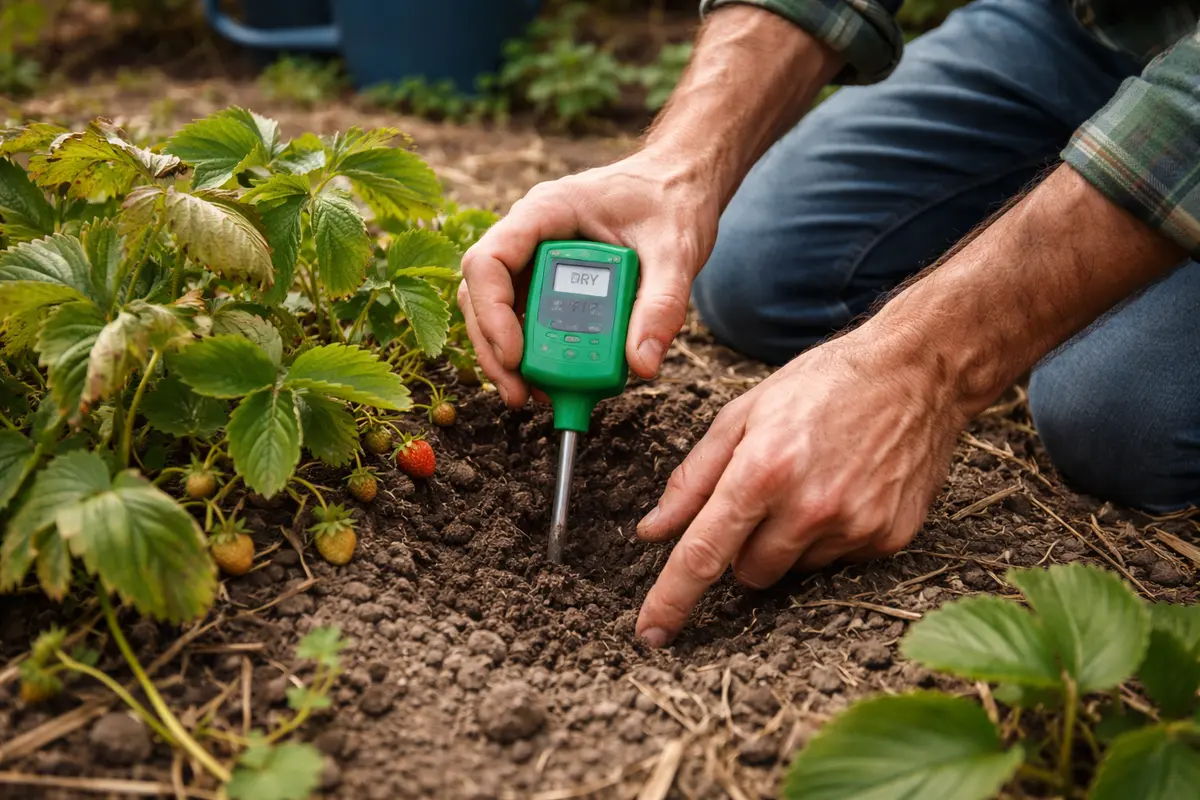
Check soil moisture levels by inserting your finger into the ground near the roots. If you feel the soil is crumbly and dry down to your knuckle, this confirms a lack of moisture. It’s crucial to assess soil moisture carefully since different soil types behave differently in retaining water; if you are gardening in sandy soil, it might dry out much quicker than clay, which can hold onto water longer.
Proper moisture levels are indicated by soil that feels cool and slightly damp, whereas dry soil leads to poor plant health because it diminishes the roots’ ability to absorb key nutrients. Consider a moisture meter if you consistently struggle with accurate assessments. Different soils drain water differently; sandy soils may feel dry quickly after a drought, while clay soils retain moisture longer, masking the need for water. Check deeper into the soil where moisture can be retained longer and observe the overall soil texture.
If your plants are showing signs of drought but the soil feels wet, investigate the drainage system for blockages. When water pools at the surface after heavy rains or extended watering, it often indicates poor drainage, which can suffocate the roots. It’s best to allow the soil to dry out slightly before watering again; if it remains consistently full of moisture without improvement, it may be time to consider adding amendments like perlite or sand for better drainage or aeration. This careful observation reduces further plant damage by accurately targeting the soil condition, ultimately giving the plants a better chance at recovery.
Step 4 – Revive Strawberry Plants with Deep Watering
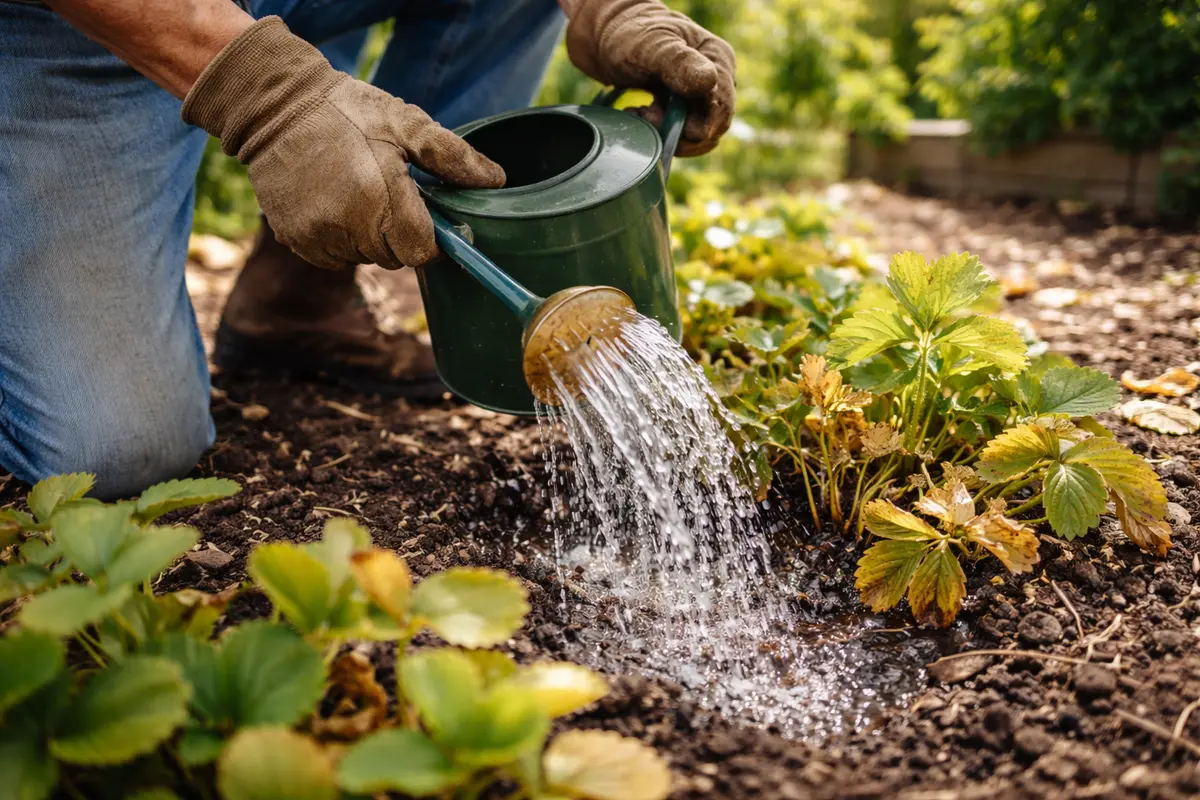
Begin by watering your strawberry plants thoroughly, using a garden hose or watering can to ensure the roots receive adequate moisture. Within a few hours, observe the leaves starting to perk up, which is a sign of revitalization. Monitor their response closely on the following day to gauge how effectively the initial watering rehydrated the plants.
Reviving stressed plants takes commitment and the right approach to watering; when deep watering occurs, you encourage the recovery of the root system, allowing access to necessary moisture levels. Recovery times can vary based on the extent of stress; generally, signs that the plant is bouncing back include firm leaves and budding new growth within a week. Be cautious with frequency after the first thorough watering, as jumping straight into a daily regimen can lead to overwatering, which can cause its own complications.
A common pitfall is flooding the area thinking they can mend all the damage at once; instead, giving 1-2 inches of water over a two to three day cycle is often more effective. Regularly assess how moist the soil feels before proceeding with additional watering—adjust the frequency based on the daily temperatures and humidity levels. When plants are under stress, ensure to regularly monitor them so that you can respond to changes quickly. This approach allows you to balance between under-watering and over-watering, ultimately establishing a stable watering routine that promotes recovery.
Step 5 – Guard Against Future Drought Damage
Start by implementing a deep watering schedule for your strawberry plants, providing about 1 to 2 inches of water weekly. This routine will enhance the root system’s resilience and speed up recovery from drought stress, leading to improved fruit production during dry spells.
Extreme heat and low humidity during drought conditions often lead to wilting and leaf yellowing in strawberry plants. By consistently watering deeply, you are addressing the uneven moisture levels in the soil that trigger these symptoms, ensuring that the plants can better withstand the harsh conditions. If you notice dry, cracked soil around the root zone, adjust your watering approach immediately.
In the hottest months, increase your watering frequency to twice a week, particularly if temperatures exceed 90°F. Alternatively, applying a layer of mulch can help retain soil moisture and regulate temperature, adding an extra barrier against drought stress when conditions are particularly severe.
Staying proactive can significantly reduce future drought stress by establishing routines that accommodate the changing weather patterns. Consider using groundwater irrigation systems or mulch layers that can help retain soil moisture during dry spells. This approach not only reduces evaporation but also helps in enhancing soil quality and prevents weed growth that would compete for nutrients. When deploying mulch, typically 2-3 inches deep should be sufficient to maintain moisture; adjust accordingly based on your local climate and ongoing observations.
Weather conditions can vary, so adjust your practices accordingly; for instance, in the late summer, consider a more frequent watering schedule if you notice that summer rainfall is minimal. It’s essential to ensure that the soil remains well-aerated and free of compacting, as densely packed soil can exacerbate dryness and root issues. By incorporating soil amendments and ensuring proper drainage, you’ll see improved resilience in drought conditions.
Step 6 – Inspect Leaves for New Signs of Stress
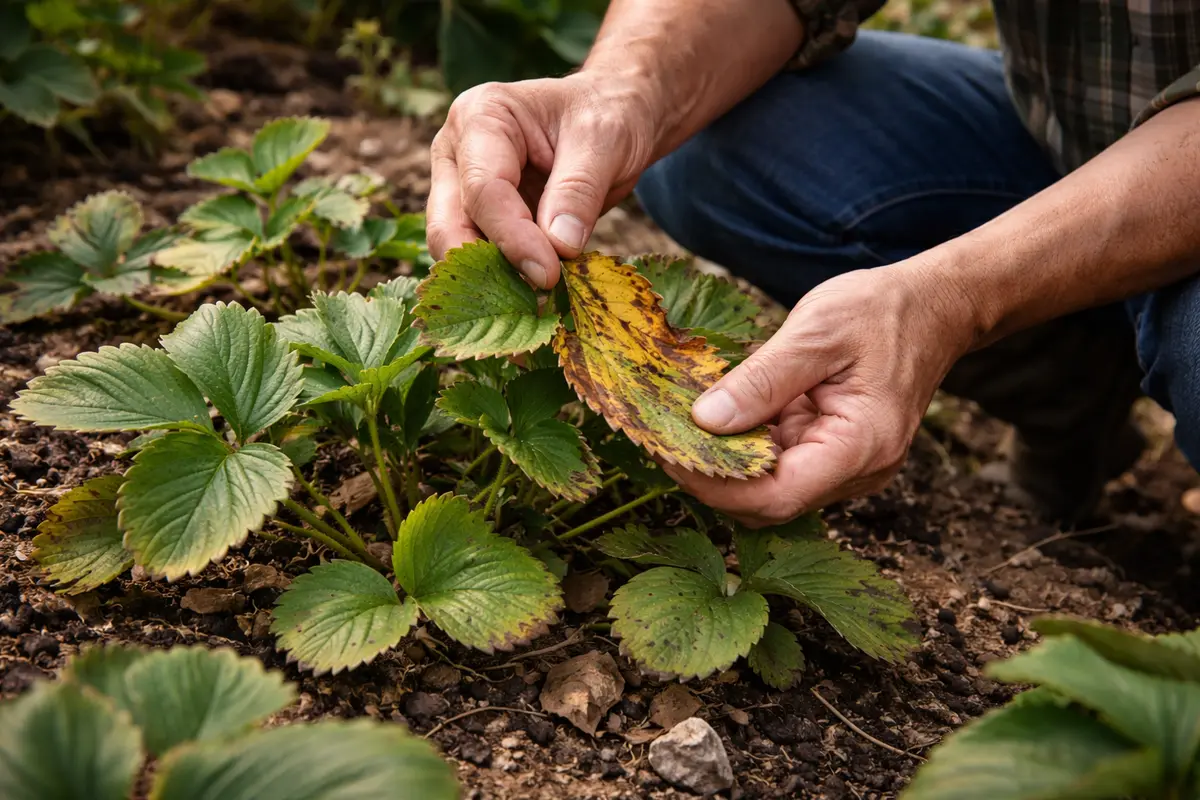
Start by checking the soil moisture level around your strawberry plants at least once a week during the drought. Use your finger or a soil moisture meter to observe the moisture depth, ideally 2-3 inches below the surface. If the soil feels excessively dry, water the plants immediately and continue to monitor the moisture weekly to ensure effective hydration.
A fully recovered strawberry plant exhibits vibrant green leaves that feel firm to the touch and sturdy stems, while early signs of the problem returning include wilting or yellowing leaves that feel dry and brittle. If the leaves turn brown at the edges but retain some green in the center, this indicates a water deficiency. If not this → check for signs of root rot, which can occur if overwatering follows the initial drought stress.
If symptoms return despite your watering efforts, consider adjusting your watering schedule to increase frequency or amount based on weather conditions. Additionally, applying a layer of mulch around the base of the plants can help retain moisture. If the problem persists, it may be necessary to evaluate the drainage conditions in your garden bed and amend the soil accordingly.
During these inspections, pay close attention to any discoloration or leaf curling, as these can be early indicators of returning problems. A fully recovered plant will show increased new leaf growth and contribute to flower production, marking the plant’s return to health. Conversely, persistent problems like pest infestations should be addressed promptly; a well-nourished plant can often fend off pests better than a dehydrated or stressed plant.
If any stress symptoms return, reassess your watering schedule and possibly integrate nutrient feeds to support plant resilience. Implementing a light fertilizer during the growing season can also assist in boosting their overall health. It’s important to note that when applying fertilizer, diluting it to half the recommended strength can help avoid burning stressed plants. A monthly check-in on root moisture and general health will help you stay proactive with your garden, ensuring you adapt quickly to any shifts in plant condition.
FAQ
How long does it take for strawberry plants to recover from drought stress?
Recovery time varies based on the severity of the stress, but most plants show signs of improvement within a week after being adequately watered. Following quick actions to increase soil moisture can lead to noticeable changes, such as leaf perkiness, generally within a few days. However, if plants don’t seem to improve within this timeframe, checking for underlying issues like root problems or disease becomes crucial.
Should I remove any damaged parts of my strawberry plants?
Yes, removing any dead or severely brown leaves can help the plant focus its energy on new growth instead of sustaining dying leaves. Pruning back stressed plants allows them to channel resources effectively, despite the reproductive phase challenges. It’s essential to wear disinfected gardening sheers to prevent the spread of potential diseases during this process.
Can drought damage lead to pest infestations in my strawberry plants?
Yes, weakened plants are indeed more susceptible to pests. Stress from drought can lead to overall plant health declines, making them easier targets for pests; it is advisable to monitor for early signs of infestation while caring for drought-stressed plants. Implementing integrated pest management strategies can significantly reduce risks during periods of stress, allowing for an effective balance between maintaining plant health and controlling pest populations without excessive chemical intervention.