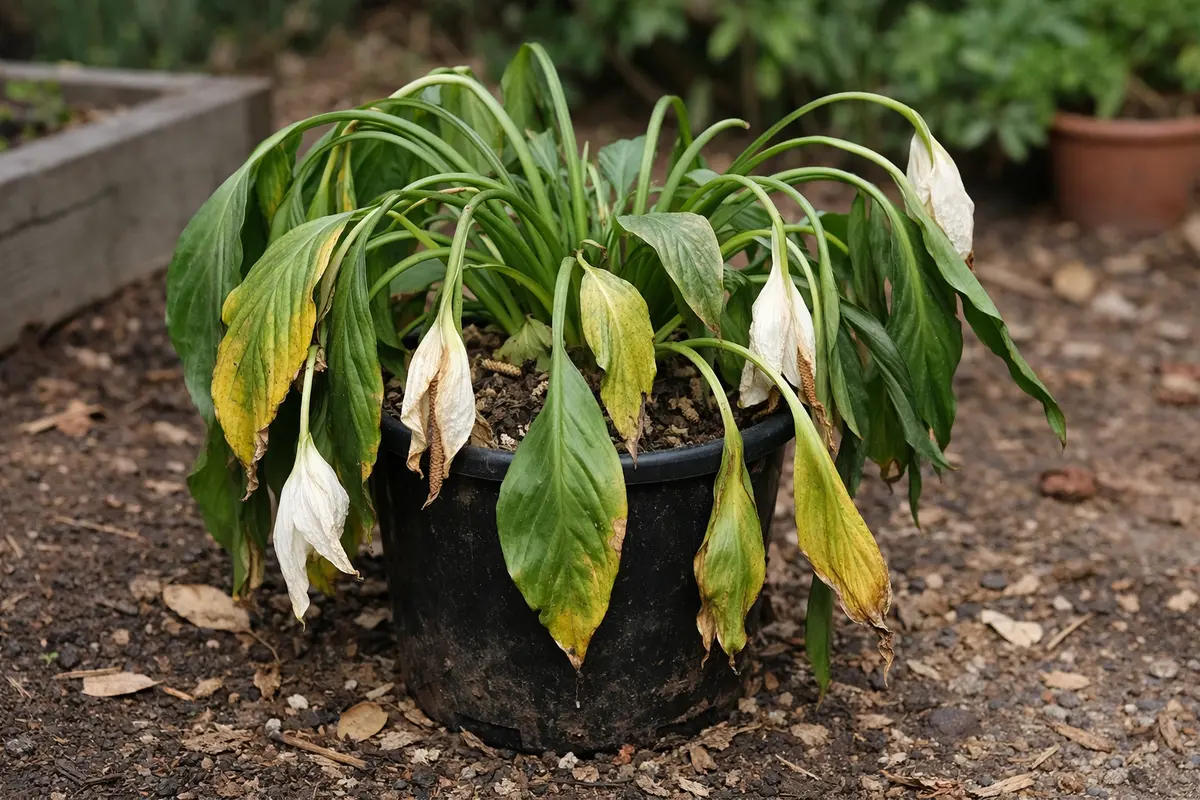
You may notice your peace lily looking less vibrant and healthy when you bring it indoors for the season, which is why you need to know “Why does my peace lily droop after moving indoors.” This drooping often occurs due to stress from changes in light and humidity, leading to wilting leaves and a lack of vigor. Ignoring these signs can worsen the situation, making it harder to fix, but you can always improve conditions by adjusting light levels and monitoring moisture levels.
Step 1 – Adjust Peace Lily’s Position Immediately
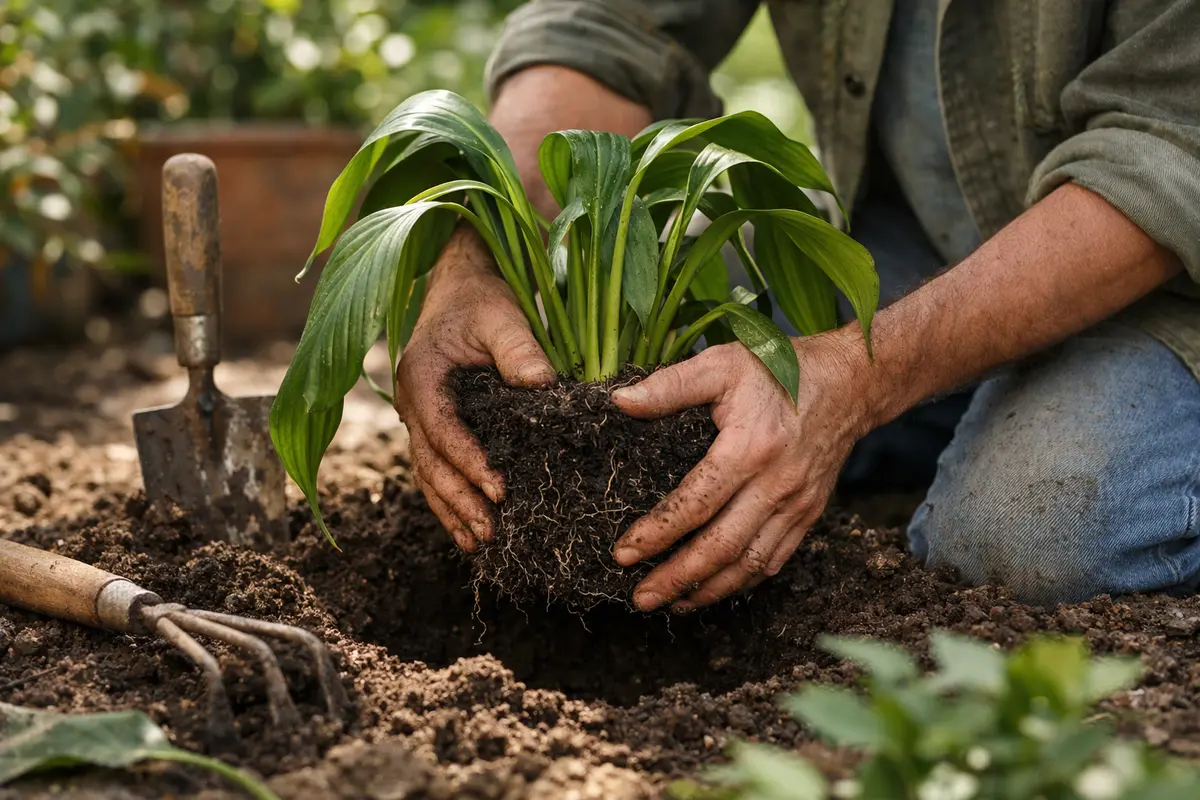
Check the placement of your peace lily and relocate it to a brighter location with filtered light. You should observe an increase in leaf firmness and overall vibrancy within a few hours if the new spot meets its lighting needs. Optimal positioning near an east or west-facing window where sunlight is indirect can markedly enhance the plant’s photosynthesis ability, which is vital for its recovery. A well-lit environment allows the peace lily to absorb sufficient light, thus rejuvenating its foliage.
Relocating your peace lily to an ideal area with bright, indirect light is essential, as these plants thrive under such conditions. Insufficient light can hinder photosynthesis, resulting in drooping leaves and compromised health. If you find the leaves remain droopy after a few hours, this could indicate that the lighting is still inadequate. Additionally, a peace lily in low light struggles to bloom; therefore, checking for any signs of pale or weak growth can help confirm this issue.
A common mistake is placing the peace lily too close to a window with direct sunlight, which can scorch the leaves. Look for signs such as brown leaf tips or edges after relocation; these symptoms indicate overexposure to light, leading to stress and further drooping. In practice, I have often seen significant recovery in peace lilies once they are moved to a properly lit space. If the plant curls or browns after adjustments, consider reducing light exposure while retaining some brightness to avoid additional stress. If drooping persists, inspect the soil moisture to identify if more adjustments are needed.
Step 2 – Diagnose Water Stress in Your Peace Lily
Examine the moisture level of the soil by inserting your finger about one inch deep. If the top layer feels dry, water the plant thoroughly until you see water draining from the pot’s bottom. This visible drainage confirms you’re adequately hydrating the soil, which should not retain excess water. Let’s aim for the right moisture balance, as optimal hydration is crucial; expect the leaves to start perking up in about half a day with a healthy root system.
Water stress results from either excessive or insufficient watering. If your peace lily is underwatered, it can’t absorb nutrients effectively, leading to drooping leaves. Conversely, overwatering can suffocate the roots, causing them to become compromised, also leading to droop. Observing the pot’s weight can provide insight; if it feels lighter than expected, this indicates low moisture. Ideally, healthy soil should appear dark and crumbly, while overwatered soil is typically muddy and emits an unpleasant odor. Soil texture and feel can help differentiate the two conditions; dry soil will be hard to penetrate, while soggy soil will feel heavy and compacted.
If the soil is overly saturated and you don’t see water escaping from the drainage holes, this suggests overwatering. On the other hand, if it’s bone-dry, it’s crucial to give your peace lily a good drink. Modifying your watering routine can elicit improvements within a day or two. If you notice water pooling at the drainage holes after watering, you’ve hydrated effectively without causing root rot. Always be vigilant; if the leaves are still drooping despite watering, inspect the roots as waiting too long can result in root health issues. If roots are brown and mushy, you’ll need to consider repotting the plant in fresh, well-draining soil.
Step 3 – Revitalize Drooping Leaves of Peace Lily
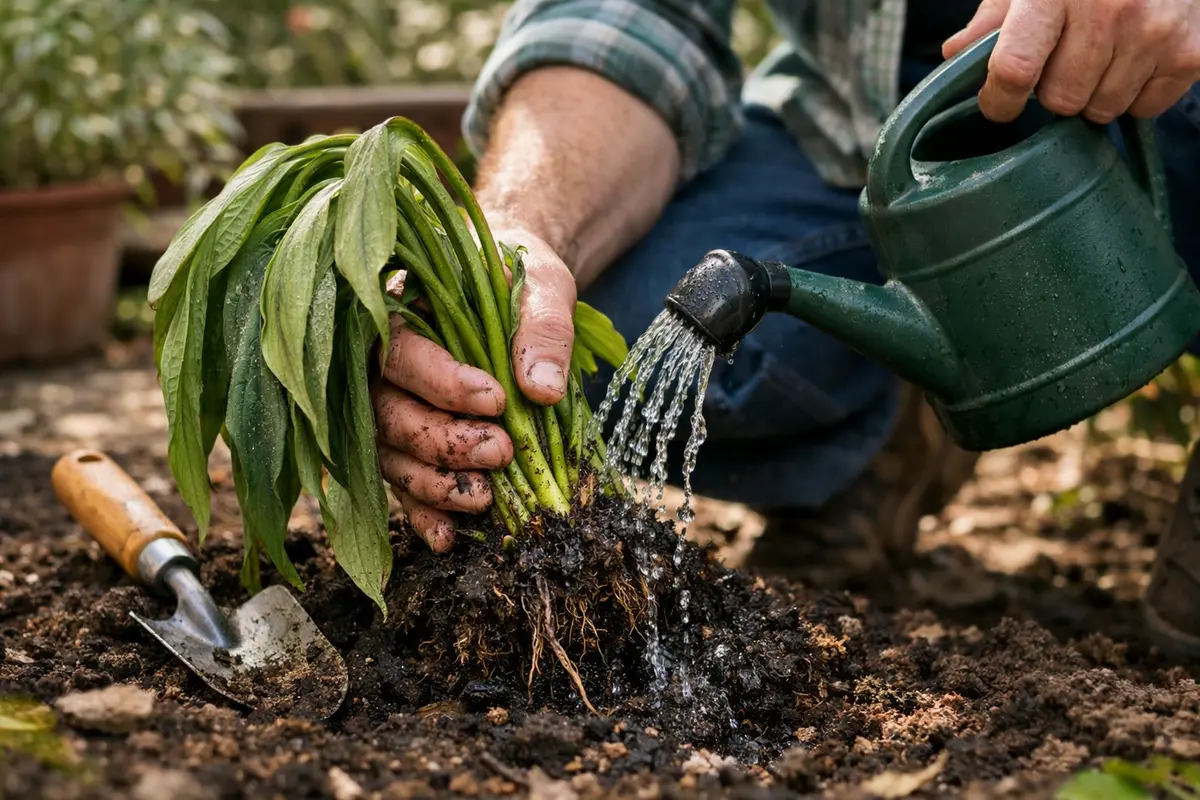
Apply a diluted liquid fertilizer specially formulated for houseplants to revitalize your peace lily. You should notice the leaves regaining vibrancy and firmness within a week if the fertilizer is appropriate and not overwhelming. Combining this with consistent watering can significantly enhance recovery chances. Using a 50% diluted solution will provide essential nutrients without risking chemical burns; cautious fertilization can effectively jumpstart the plant’s recovery.
The application of fertilizer supplies necessary nutrients that may be depleted after the stress of relocation. Insufficient nutrients weaken the plant, causing its leaves to droop due to a lack of support. Fertilizing encourages healthier growth and helps the peace lily bounce back from the stress it experienced. This revitalization process typically takes at least a week, so patience is key. Observe for signs like greener leaves and a return to firmness, which indicate progress. During this healing period, keep the soil adequately moist to facilitate nutrient uptake.
Be careful with the amount of fertilizer you apply; excessive fertilization can lead to nutrient burn, especially if your peace lily has already been stressed. Always follow the manufacturer’s recommended dosage, and if you notice rapid leaf yellowing or browning post-application, this signals over-fertilization. You should flush the soil with water to dilute the excess nutrients. Fertilizing during the growing season—specifically spring and summer—tends to yield the best results. If your peace lily fails to bloom despite fertilization, it suggests additional underlying care issues are at play, emphasizing vigilant monitoring. If the addition of nutrients doesn’t yield improvement, consider completely changing the soil to reset nutrient levels.
Step 4 – Shield Peace Lily From Temperature Fluctuations
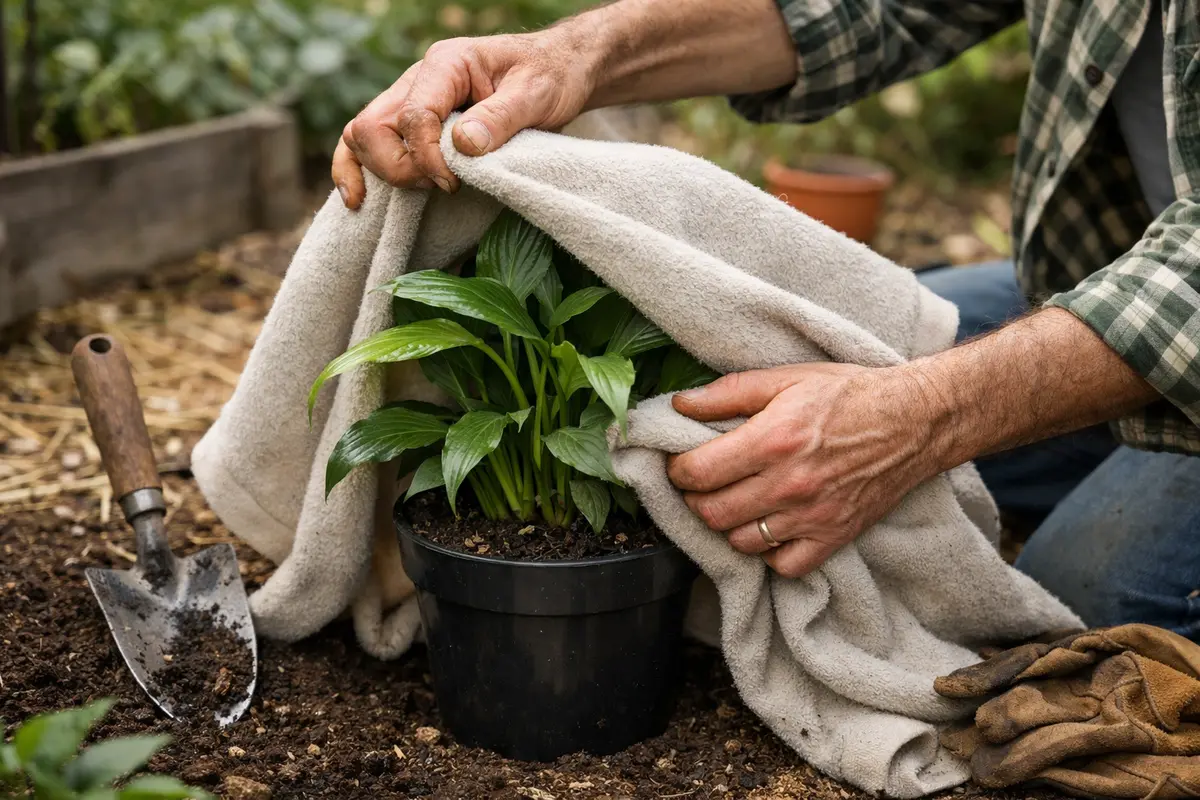
Start by placing your peace lily in a location where it receives bright, indirect light and maintaining a consistent watering schedule. By doing this, you will notice the drooping should decrease as the plant adjusts to its new environment and thrives. Aim for soil that is moist but not soggy to prevent ongoing distress.
Peace lilies often droop due to sudden changes in light or humidity after moving indoors. Insufficient light can cause wilting; conversely, too much direct sunlight can scorch leaves, leading to drooping. By ensuring your plant is in a stable environment with the proper light and moisture, you directly address the causes of stress that result in drooping foliage.
In the winter, when indoor air tends to be drier, integrate a humidifier or mist the leaves regularly to maintain appropriate humidity levels. If you notice persistent drooping despite these adjustments, check the soil moisture and drainage to ensure it’s not waterlogged, as this can also cause stress for your peace lily.
Peace lilies are sensitive to changes in lighting and humidity. When moved indoors, low light levels can trigger drooping, while erratic watering can exacerbate this. By maintaining stable light and moisture levels, you address the root causes that lead to wilting, preventing recurrence.
During the winter months, indoor heating can dry out the air, so increase humidity around your peace lily by using a pebble tray with water or a humidifier. If the leaves continue to droop despite humidity adjustments, check for root rot or insect infestations as potential issues.
Peace lilies can droop under drafts or abrupt temperature changes, as they require stable environmental conditions. To prevent this, keep them away from heating vents and cold drafts, which addresses the root causes of drooping. Maintaining stability is vital, since plants in fluctuating conditions can lose water quickly and experience further drooping.
Throughout the changing seasons, be mindful of humidity levels. Increasing humidity during dry winter months and adjusting watering schedules in the heat of summer helps avoid drought stress. Ideally, keeping humidity levels above 50% supports healthy growth; a hygrometer can help you measure this accurately. If humidity levels are low, consider utilizing misting techniques or placing the pot on a pebble tray filled with water. This simple adjustment can help raise humidity and support the peace lily.
Temperature fluctuations cause stress that can lead to wilting. Peace lilies thrive in warm, consistent conditions, and exposure to cold drafts causes them to react negatively. By maintaining moderate temperatures, you encourage strong, steady growth for the plant. Frequent assessment of temperature variations in your home during seasonal transitions can help identify if the peace lily’s condition could improve with better placement. If needed, relocating the plant further from windows during winter or positioning it in a stable indoor space can prevent exposure to cold drafts.
Step 5 – Inspect Leaves for Droop Signs Weekly
Start by checking the soil moisture level every few days to determine if your peace lily needs watering. Observe the leaves and stems for any signs of improving firmness and texture, with leaves becoming upright and less droopy. If you notice no changes after about a week, reassess the lighting conditions to ensure the plant is receiving adequate indirect sunlight.
A fully recovered peace lily will showcase vibrant green leaves that stand tall and firm, free from any wrinkles or extensive drooping. In contrast, early signs of the problem returning may include yellowing leaves, which feel mushy to the touch, signaling they may be overwatered. If the leaves soften again after recovering, check that the plant isn’t receiving too much direct sunlight.
If the problem persists despite following the steps, consider repotting your peace lily in fresh potting mix to enhance drainage and aeration. Alternatively, if issues continue, consult local gardening resources or consider bringing your plant to a nursery for professional advice.
A fully recovered peace lily displays firm, upright leaves with a vibrant green color, while early signs of the problem returning include drooping leaves that feel soft or limp to the touch. In contrast, a drooping lily may exhibit yellowing or browning leaf tips, signaling that it is under stress once again. If the leaves regain their firmness but start showing signs of discoloration, further investigation is needed.
If the peace lily shows signs of drooping even after regular watering, it’s advisable to check for root rot by gently removing the plant from its pot. If the roots appear brown or mushy, repot the plant in fresh, well-draining soil. If the plant continues to struggle despite adjustments, consider relocating it to a different area with more suitable light conditions.
A fully revived peace lily exhibits firm, upright leaves with rich green coloration, contrasting starkly with previous droopy and yellowing foliage. Early detection of any re-emerging issues—like yellowing leaves—can be crucial. Yellowing may suggest overwatering or nutrient deficiency and signals an urgent need for remedial action. Keeping a record of observed changes can aid troubleshooting efforts. If symptoms persist, consult care guides to align your observations with actionable solutions.
If you notice droplets reappearing, it’s time to reassess all care factors—such as light, water, and temperature. A lack of visible improvement over a week signals the need for more serious intervention; for instance, if brown spots accompany the droop, it might suggest a more significant issue with moisture levels. In such cases, a soil change may be necessary to ensure the roots receive optimal conditions for recovery. Remaining attentive to small changes can lead to substantial improvements in your peace lily’s health.
FAQ
How long will it take for my peace lily to recover?
Recovery typically takes a few days to a couple of weeks, varying based on how much stress your peace lily encountered. Maintaining consistent care and optimal environmental conditions is pivotal for its successful recovery. Observing multiple stress signs may necessitate modifications in your care routine to accelerate recovery, as timely interventions can greatly influence the plant’s health trajectory.
Can overwatering cause my peace lily to droop?
Yes, overwatering is a frequent cause of drooping leaves in peace lilies. When roots become engorged with excess water, they suffocate and can no longer absorb moisture and nutrients adequately. Regularly assess soil appearance; dark, saturated soil often indicates potential root issues that may require immediate action. If problems persist, transplanting your peace lily into fresh, well-draining soil may be necessary to restore its vigor.
Should I remove drooping leaves from my peace lily?
Trimming severely drooping or dead leaves can redirect the plant’s energies toward healthier growth. Ensure you use clean, sterilized scissors to minimize the risk of introducing pathogens. Keep an eye out for signs of new growth, as this will guide your decisions on whether to trim older leaves. Regular removal of unhealthy leaves not only enhances your plant’s aesthetic but can also reduce the risk of pests and diseases.