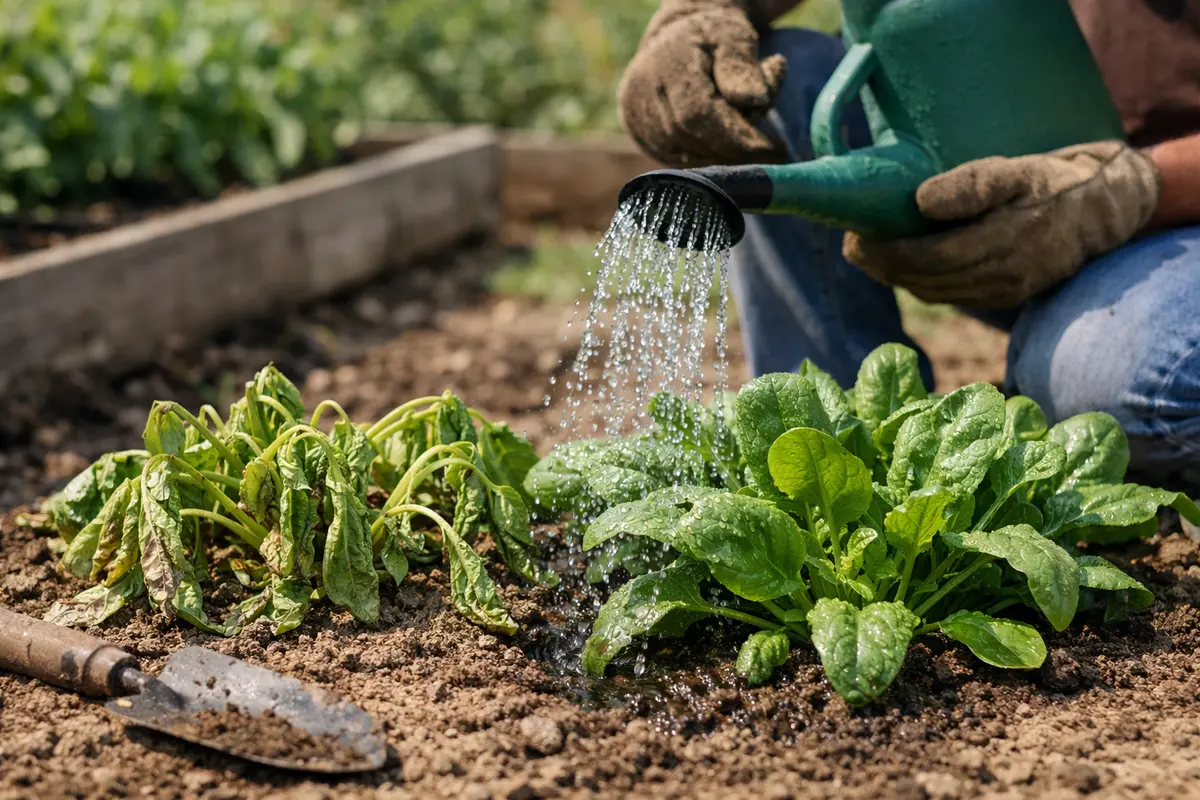
You’ve probably seen your once-vibrant spinach drooping and wilting under the scorching sun during the recent heatwave, which is why you need to know about Restoring wilted spinach leaves after a heatwave. This wilting occurs as the plant loses water faster than it can absorb it, leading to visible damage and drooping leaves. If left unattended, the situation gets worse and can weaken the plant, making recovery harder to fix, but addressing it now by watering thoroughly and adjusting shade conditions can make a significant difference. Ignoring these critical signs can lead to irreversible damage and potentially a failed crop, making immediate action essential.
Step 1 – Revive Wilted Spinach Leaves Quickly

Start by watering the soil around your spinach plants thoroughly. The soil will darken and become saturated, allowing the plants to absorb moisture quickly. Use a garden hose to deliver water directly to the soil, applying pressure to ensure moisture penetrates at least six inches deep. This immediate action limits further damage from heat stress by optimizing water intake through the roots. Proper hydration will cause spinach leaves to perk up within a few hours as the moisture restores turgor pressure, improving their appearance and vitality. If hydration needs are not addressed swiftly, irreversible damage can occur within the first few days following heat exposure; the leaves may become crispy and discolored.
Observe that healthy spinach plants need consistent hydration to maintain structure and function; shortfalls can cause wilting and hinder growth. Depending on environmental conditions, under-watered plants may show signs of distress such as leaf curling and discoloration. Addressing the hydration issue quickly combats the effects of extreme temperatures, preventing your spinach from reaching a critical point of decline. If the temperature exceeds 80°F without adequate moisture, long-term stress can begin to set in, with even healthy-looking plants showing signs of nutrient deficiency over time.
A common mistake is to water only slightly, assuming the plants will recover quickly. This approach can backfire if water doesn’t penetrate deeply enough into the soil, resulting in increased stress. In my experience, full saturation is necessary after particularly hot days since sporadic watering won’t effectively reach the roots. To prevent wilting from becoming a recurring issue, consider monitoring soil moisture levels regularly, ensuring they remain within the optimal range for spinach, approximately 6–12% moisture content.
Step 2 – Analyze Soil Moisture Problems for Spinach
Check the soil moisture levels surrounding your spinach plants. The texture will reveal whether the soil is dry and compact or adequately hydrated. Start by probing the soil about three inches deep with your finger to gather a clear indication of moisture levels without disturbing the root system. If the soil feels dry to the touch and crumbles easily, it indicates a need for hydration.
The cause of wilting can often be traced back to moisture imbalances; healthy spinach roots require consistent moisture for full nutrient uptake. If the soil is too dry, the plant will exhibit visible wilting, indicating insufficient hydration. Conversely, if overwatering has occurred, the soil will feel soggy and compacted, leading to detrimental anaerobic conditions that hinder root health. Overly saturated soil can prevent oxygen from reaching the roots, potentially causing root rot and other fungal diseases.
If the soil feels sandy and dry, begin watering to restore hydration. However, if it appears sticky or clammy, corrective action is necessary to improve drainage. Consider aerating the soil or mixing in sandy materials to facilitate better runoff, especially if you notice a sour smell or overly saturated soil; stagnant water can kill root tissues. For compacted or dense soil, adding organic matter like compost will enhance soil structure and drainage over time. Regularly incorporating matter enhances both moisture retention and nutrient availability. To track moisture levels accurately, think about installing soil moisture meters or sensors, especially if poor moisture conditions recur.
Step 3 – Rehydrate Spinach with Targeted Watering
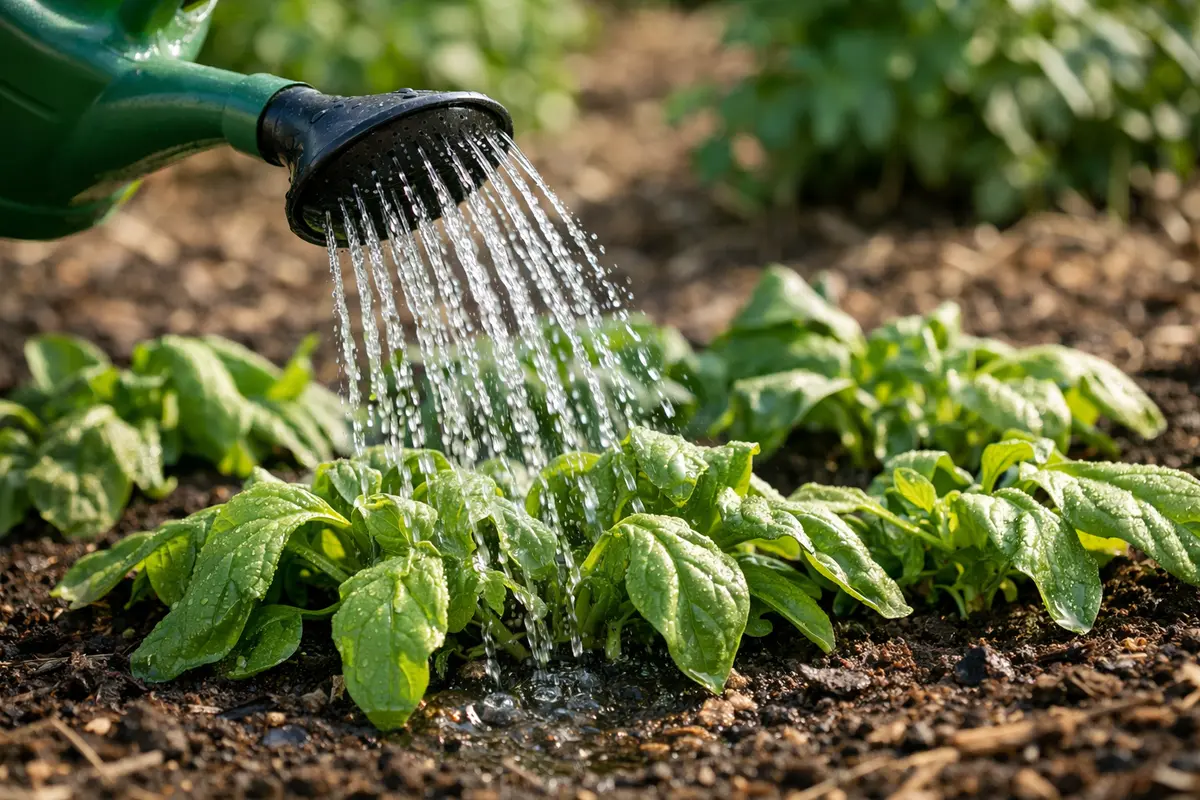
Start by giving your wilted spinach leaves a thorough watering, ensuring the soil soaks deeply without becoming satur,ated. You should see the leaves perk up within a few hours, regaining some firmness and color. Continue to monitor soil moisture to maintain adequate hydration while avoiding root rot. Strong, consistent watering can improve recovery rates significantly, leading to lush green leaves rather than limp, droopy ones.
Recovery from a heatwave can take anywhere from a few days to weeks, depending on the severity of the wilting and environmental conditions. Healthy regrowth will manifest as new, fresh leaves sprouting from the base of the plant, indicating the plant’s resilience. It’s crucial to observe overall leaf conditions; new growth should not only be visible but also exhibit vibrant color and firmness. Optimal recovery is aided by moderate temperatures, partial shade, and consistent, even moisture in the soil. If you are dealing with a related issue, during drought recovery covers a similar problem in detail.
A common mistake during the recovery process is overcompensating with excessive water or fertilizers, which can further stress the plant. Aim to apply a balanced fertilizer sparingly after a week of recovery; over-fertilization can lead to leaf burn and stunt new growth. Instead of dumping large quantities of fertilizers, opt for foliar feeding or soil amendments as a gentler approach. The recovery timeline for wilted spinach can vary, but generally, you will begin to see health improvements within a few days after adequate watering, with leaf color returning to a rich green. However, if the leaves still appear discolored or limp after several days, a soil test may be needed to evaluate mineral levels and soil pH.
Be careful not to overwater during recovery, as this can lead to root rot and further stress the plant. Balancing water intake is crucial; check soil moisture before applying more water and apply fertilizers sparingly, as newly hydrated spinach does not require immediate nutrient boosts. Timing your watering to the cooler parts of the day can further optimize recovery efforts. Continuing this watering technique consistently is vital to reestablishing plant health.
Spinach is a cool-weather crop that thrives on ample moisture, and regular watering encourages healthy root growth and nutrient uptake while supporting new leaf formation. Adequate moisture post-stress allows plants to regrow robust, healthier leaves rather than maintaining a droopy appearance. Additionally, consider using a drip irrigation system or soaker hoses to deliver water more efficiently, minimizing evaporation loss.
This approach avoids the pitfalls of surface watering, which may only hydrate the top layer of soil and leave deeper roots dry. Be cautious not to introduce too much fertilizer during recovery, which can cause further stress. If you’re applying fertilizers, aim for a diluted organic option to minimize root shock. Monitor watering frequency; you may need to adjust as plants recover to prevent suffocating roots in overly wet conditions. For instance, if prolonged rain occurs after your watering routines, you might need to skip watering altogether to avoid waterlogging. Opt for low-nitrogen fertilizers during this time to support recovery without hindering it due to high salt content, as too much nitrogen can promote leafy growth at the expense of root health.
Step 4 – Water Spinach Deeply During Future Heatwaves
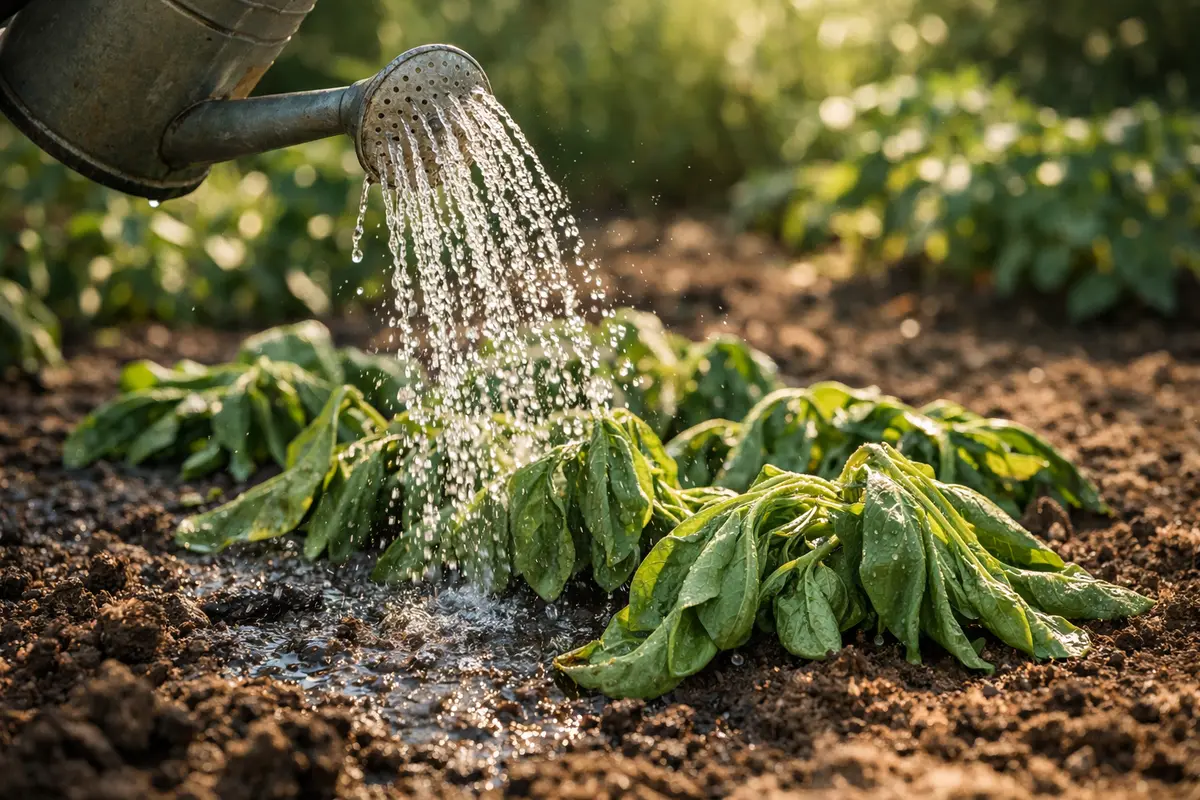
Start by watering your spinach deeply and consistently during heatwave conditions. This prevents soil from drying out, allowing leaves to remain hydrated and healthy. Schedule deep watering in the early morning to minimize evaporation, ensuring maximum moisture reaches the roots. This manner of watering allows plants to absorb moisture before temperatures rise, which is particularly crucial during extreme heat.
To maintain an effective routine, set a reminder to check soil moisture every two days during peak summer heat. If the top inch of soil feels dry, add water until it reaches a depth of at least six inches. Incorporate the use of a soaker hose to deliver water directly to the roots, promoting better absorption while preventing water waste through evaporation. Utilize mulch or a thick organic cover around the plants that can help soil retain moisture longer while protecting against soil temperature extremes.
Additionally, apply a layer of organic mulch around your spinach plants after watering. This will slow down evaporation rates and keep the soil temperature stable. During intense heat, consider using shade cloth in combination with deep watering to provide a cooler environment for your plants. This dual approach can significantly mitigate the risk of wilting by allowing them a respite from direct sunlight during peak hours. A related fix is explained in watering humid weather if you want to compare approaches.
Pay attention to weather forecasts for upcoming heatwaves. On days when high temperatures are predicted, create a habit of preemptively watering in the evening before the heat arrives. This will ensure that your spinach benefits from moisture before the soil begins to dry out and heat up, further protecting the plants. Implementing these sustained watering practices will help your spinach remain healthy and reduce wilting occurrence.
Monitor your plants regularly for signs of stress. If you notice any signs of wilting or browning leaves, adjust your watering routine promptly to avoid any additional stress on the plants. Periodic checks for water moisture levels and your continued efforts are key to halting any derailing of your plants’ progress. Remember, the key to preventing future wilting lies in being proactive with your watering schedule and ensuring consistent soil moisture at all times.
Step 5 – Inspect Spinach After Recovery for Signs of Stress
Begin by checking your spinach plants for signs of stress after they have started to recover. Observe for fresh growth and new leaves forming, which indicate that the plants are bouncing back well. Take care to monitor these changes every few days, as early detection of any issues can prevent problems from worsening. Ultimately, a vigilant eye allows for prompt adjustments if the situation declines once more.
For vibrant health, fully recovered spinach should display bright green leaves that are firm to the touch. Signs of improvement include crisp, upright foliage, indicating that the plants are regaining their strength. Conversely, if drooping, yellowing, or wilting reappears, it could suggest that the plants may be facing additional stress from either over or under-watering, requiring timely adjustments. Root evaluation may also reveal problems; if the system appears damaged, consulting local resources for remediation could assist in successful recovery. For a closely related scenario, see drooping sunflower stems.
If stress returns, check for wilting or discolored leaves, which may suggest underlying issues. Evaluate the environment for temperature fluctuations, excessive sunlight exposure, as well as potential pest problems that might be affecting the water conditions. Frequent inspections for pests, along with maintaining cleanliness around the garden to deter these issues, will support the spinach’s overall health. Keep a close watch every 2-3 days to quickly identify any new challenges, and consider implementing beneficial insects or organic pest control as necessary to maintain optimal growth. Healthy soil amendment practices—balancing organic matter—can enhance resilience against future environmental stressors.
FAQ
How long does it take for spinach to recover from wilting?
Typically, if you follow the steps for watering and care, you should see a significant improvement in 2-3 days. Healthy new growth is a good sign that the plant is recovering well. However, persistent issues might prolong recovery time, requiring additional attention. In more severe cases where stress is prolonged, it might take up to a week for spinach to fully bounce back due to factors such as soil health, root conditions, and environmental support.
Can spinach leaves continue to wilt after watering?
Yes, if spinach leaves continue to wilt after watering, it may indicate root damage, compacted soil, or potential pest issues. Investigate the soil texture, aeration, and moisture levels, and look for signs of pests affecting root health to address underlying problems promptly. If overwatering occurs, allowing the soil to dry out slightly before watering again can prevent additional stress and promote healthier conditions for recovery. Ensuring airflow around the plants, especially during recovery, is critical to minimizing continued wilting.
Will removing wilted leaves help spinach recover?
Removing severely wilted leaves can help the plant redirect energy to healthier parts, promoting new growth. Ensure you only remove the most affected leaves to reduce stress and encourage recovery without causing further damage. Cut leaves with clean, sharp scissors or pruners to minimize the risk of introducing any pathogens into the plant system. Additionally, always check for any pests hiding on the underside of the leaves before removing them. If issues persist with wilting after removing unhealthy leaves, reevaluate your care routine for any necessary adjustments, as underlying problems such as poor soil drainage or nutrient imbalance may need addressing.