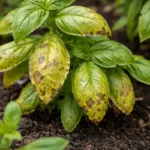
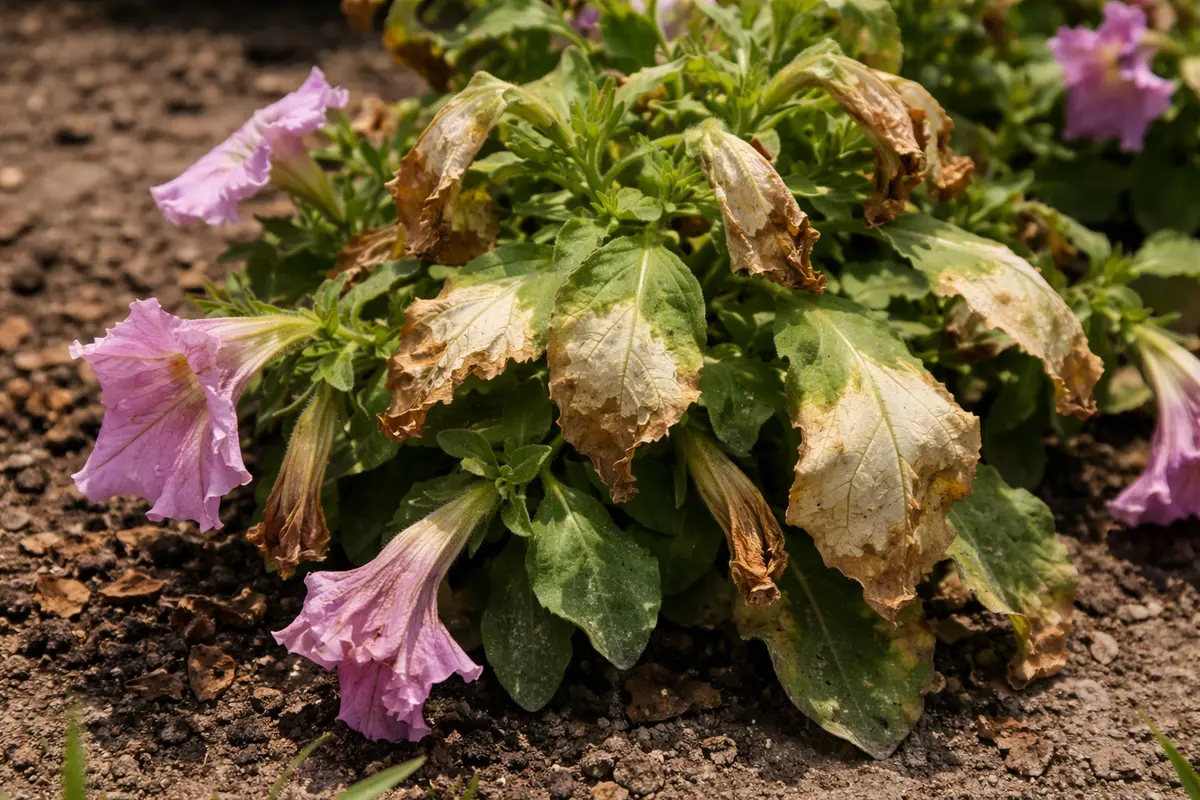
You may notice your once-vibrant petunias looking sad and droopy after enduring a heatwave, which is why you need to know how to fix drooping petunias after a heatwave. This wilting is a clear sign of stress, often caused by dehydration and sunburn on the delicate flowers. If left unaddressed, the problem gets worse, leading to further damage and potential loss of blooms, but fixing it is possible now—just water deeply and trim back any severely affected growth to encourage recovery.
Step 1 – Water Drooping Petunias to Revive Them
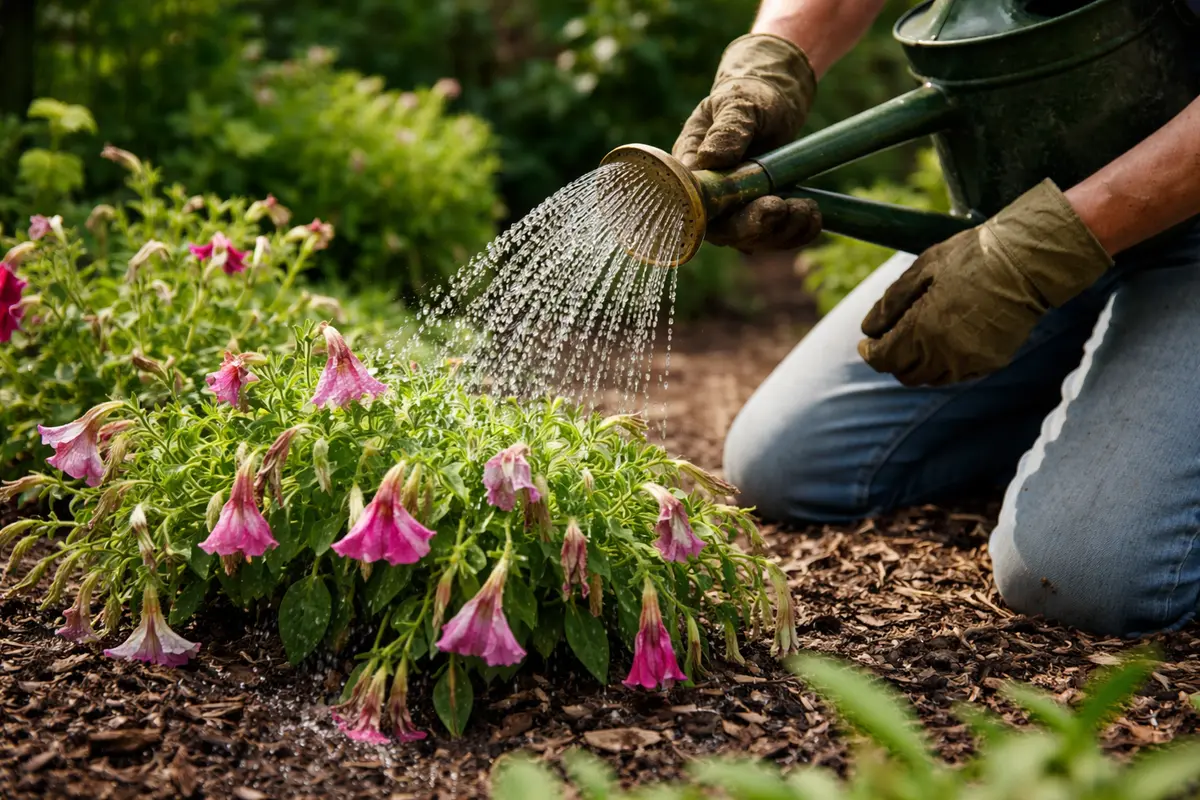
Water the drooping petunias immediately to provide essential moisture. You will see the leaves begin to perk up noticeably within 1-3 hours, which indicates a revival of turgor pressure in the plant’s cells. Start by saturating the soil around the base of the plants, ensuring that water penetrates deep into the root zone—ideally, about 6-12 inches deep to reach the entire root system.
When petunias suffer from dehydration, their leaves begin to droop due to a lack of water flowing through the plant. This hampers their ability to conduct photosynthesis, leading to tissue damage if stress continues for too long. Rapid action by watering not only helps to restore the plant’s turgor pressure within a few hours but also reestablishes its ability to uptake nutrients from the soil, promoting further recovery before temperatures soar again. Observing the plant responding positively to the watering gives immediate feedback on the success of this first step.
A common mistake gardeners make is to only water the surface of the soil without checking for deeper moisture levels. If the top layer is dry but the deeper soil remains wet, overwatering can occur, leading to root rot. Always touch the soil at least 2-3 inches below the surface to gauge moisture levels before watering. Additionally, if any leaves begin to yellow, it could indicate root problems rather than merely a lack of water. Yellowing often happens when there is either over- or under-watering. If you experience these symptoms, assess soil moisture levels and adjust your watering accordingly, ensuring you meet the plants’ needs without saturating them excessively.
Step 2 – Assess Soil Quality Impacting Petunias
Start by checking the soil moisture levels around your petunias after a heatwave. Water the plants thoroughly until the soil feels moist but not waterlogged; within a few hours, you should see the leaves perk up and regain their original shape. If the soil remains dry and your plants still look distressed, it may indicate a larger issue.
The drooping leaves are often a sign of underwatering caused by extreme heat, leading to a lack of moisture available for the roots. In hot conditions, petunia plants may lose water faster than the roots can absorb it, resulting in dehydration that visibly manifests as wilting. If the soil is dry to the touch, it indicates insufficient moisture for healthy root function and means that you need to act quickly.
If the soil smells sour, check for root rot instead, which can occur in overly wet conditions, leading to severe damage if not addressed. In this case, remove the affected plants and improve drainage to prevent further issues. It’s crucial to note that root rot usually gives off an unpleasant odor reminiscent of putrid organic matter. Petunias thrive in well-draining soil with good aeration; if the soil is too dense or contains too much clay, it can hold excessive moisture that harms the roots. To prevent this, incorporate organic matter like compost, which improves drainage and provides essential nutrients for recovery. Mixing coarse materials like perlite or sand can also enhance aeration, encouraging healthier root development and reducing the risk of future problems.
If your petunias still appear unresponsive after extra watering, inspect the soil closely for sour odors or an overly muddy texture, which can signal root rot. A freshly watered, healthy soil should feel crumbly and have an earthy scent distinct from foul odors. In such cases, take immediate action to improve soil drainage or consider repotting the plants into fresh, well-aerated soil to promote healthier root growth. To ensure the best outcome, check for any signs of rot, such as mushy or discolored roots, and prune back any affected areas promptly before replanting to prevent the spread of disease. Recognizing these signs early prevents a minor issue from escalating into a major problem.
Step 3 – Test for Root Rot in Petunia Plants
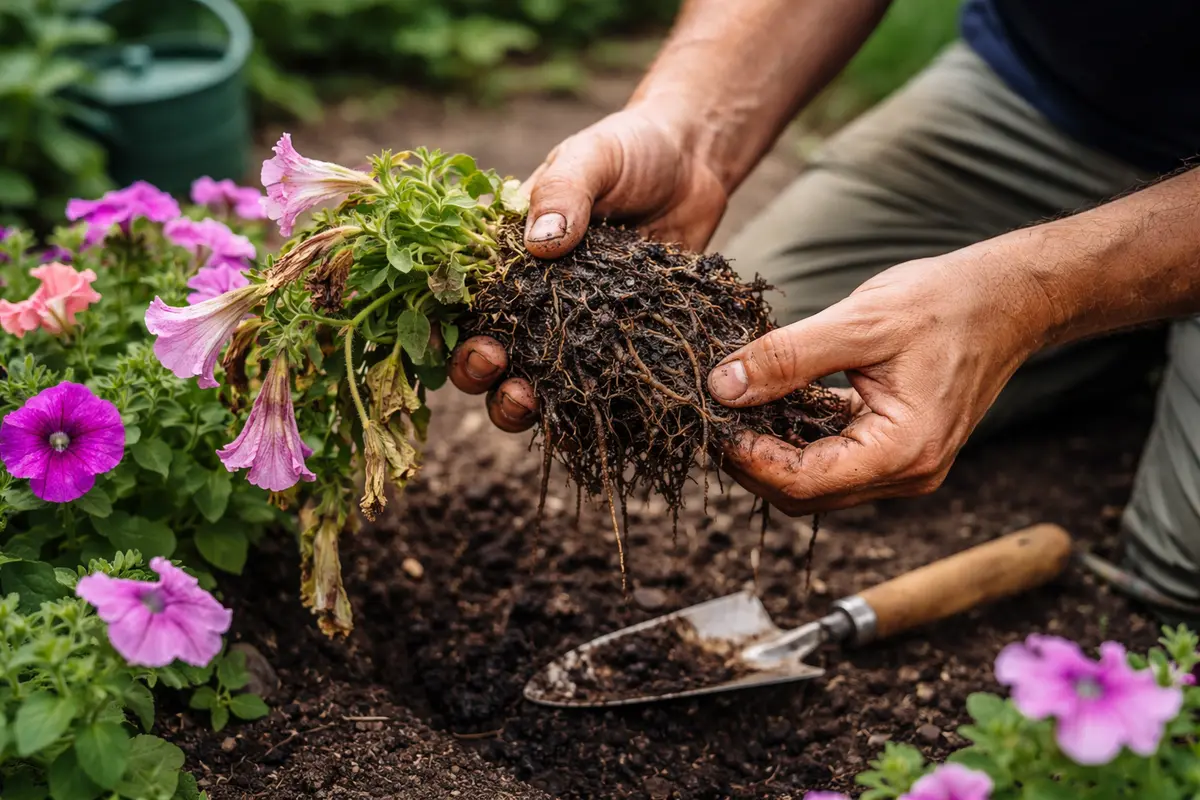
Inspect the roots of your petunias for signs of rot by carefully removing the plant from its pot. Healthy roots should look firm and white, while rotten roots appear brown and mushy. You can distinguish healthy roots from damaged ones quite clearly; good roots should feel crisp and have a shiny surface. Take special care when lifting the plant to assess the roots, as excessive handling can cause further stress during this crucial evaluation phase.
Root rot occurs when roots sit in saturated soil for extended periods, driven primarily by poor drainage or overwatering. Once roots begin to rot, they lose their ability to absorb moisture and nutrients, exacerbating the drooping issue. Affected plants may show yellowing leaves and stunted growth in addition to wilting—watching closely for these additional indicators helps determine whether further intervention is necessary. If the petunias are not responding to supplemental watering or continue to droop, root health is likely compromised.
If you suspect root rot but are unsure, consider pulling back on watering for a few days. Reduce water to only what is necessary to maintain moisture without over-drenching, observing any improvements in the overall health of the plant while tracking new signs of wilting or discoloration. If the issue does not improve and the symptoms persist, you might need to take drastic measures and repot the plant. Be prepared for this step by having an appropriate pot and suitable soil ready in case the roots need liberation from their unhealthy environment. It’s critical to act within a few days of identifying the issue, as prolonged exposure to rot can cause irreversible damage to your plants.
Step 4 – Apply Fertilizer for Petunia Revival
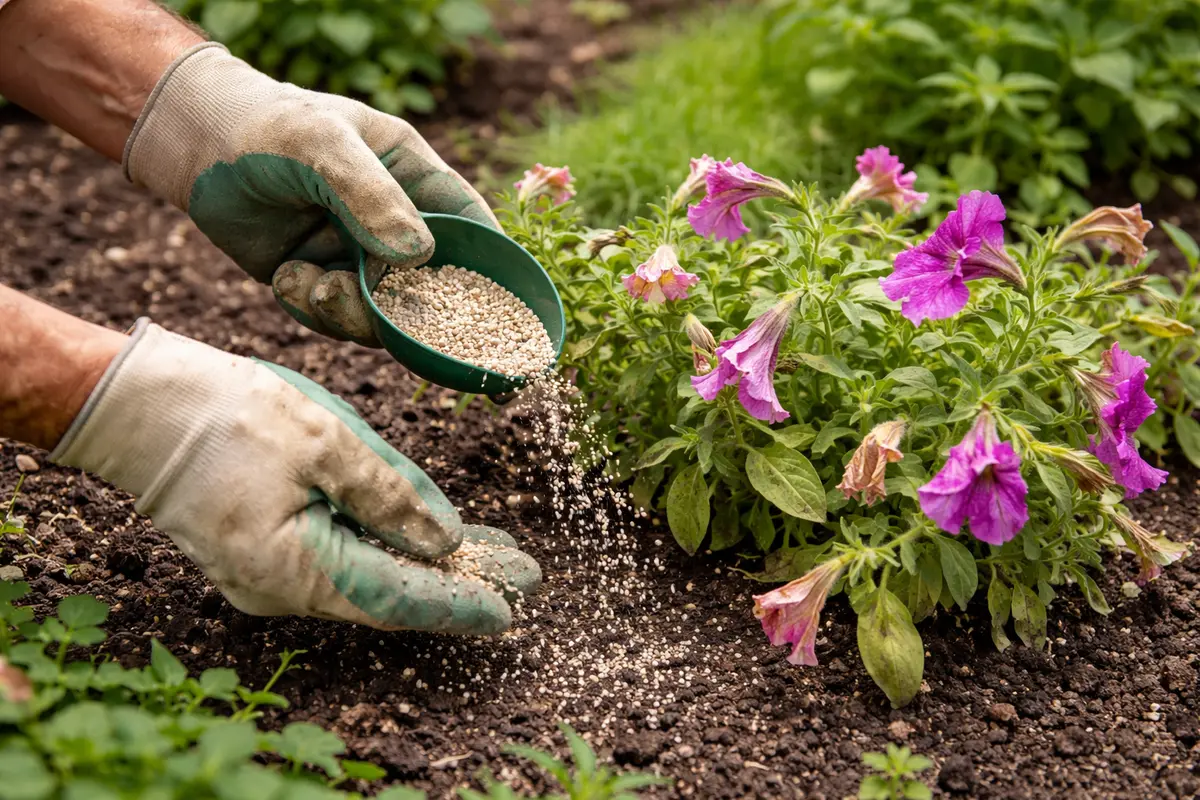
Apply a balanced, water-soluble fertilizer to your petunias to encourage healthy recovery after their heat-induced stress. Ideally, within a week, you should notice new growth emerging as your plants respond positively to the nutrients. Always dilute the fertilizer according to package instructions, which is typically about half strength for plants in recovery, to prevent burning the fragile roots that may already be stressed.
Fertilizer promotes vigorous regrowth by supplying essential nutrients that may have been depleted during stressful conditions. After heat stress, petunias notably benefit from a boost in nitrogen, phosphorus, and potassium, enhancing flowering, foliage health, and overall vigor. On average, a monthly application during the growing season typically supports petunia health post-recovery, allowing for gradual nutrient absorption to fuel recovery without overburdening the plants initially.
However, avoid over-fertilizing, as doing so can lead to salt build-up in the soil, which might cause further stress to your plants. Signs of over-fertilization include leaf tips turning brown and crispy, and this is a common scenario for those who attempt to overcompensate for previous neglect. Additionally, if you find that the leaves are developing a shiny or waxy appearance, this could indicate excess fertilizer buildup. Monitor the petunias closely for any foliage changes, and if you suspect you’ve over-fertilized, switch to a flush of plain water to leach excess salts from the soil. This flush should ideally involve watering the soil deeply to ensure that the salts wash away effectively, thereby reducing the chances of any cumulative damage over time.
Step 5 – Water Petunias Regularly During Heatwaves
Start by watering your petunias deeply in the early morning before the heat intensifies. This routine ensures the soil has enough moisture, which will help the plants perk up and regain their vitality throughout the day. Consistent and proactive watering will make a significant difference in how your petunias handle extreme temperatures.
Heatwaves often cause petunias to droop due to rapid moisture loss from the soil and foliage. When temperatures soar, dry air pulls water from the plants more quickly than they can absorb it, leading to visible wilting. Establishing a morning watering habit addresses the root cause by delivering hydration before evaporation peaks, which helps to prevent recurrence of drooping later in the day.
In addition to morning watering, on particularly hot days, make it a practice to check the soil moisture level in the afternoon and provide a light misting if it feels dry. If you notice your petunias remaining limp despite your watering efforts, check instead for root rot, which may be caused by overly wet soil conditions leading to an inability for the root system to function properly. Adjust your watering schedule accordingly if this occurs.
During prolonged periods of hot weather, petunias can lose moisture rapidly due to high evaporation rates and increased transpiration. Consistently monitoring and watering mitigates the risk of severe wilting, helping your plants thrive even under harsh conditions. Providing a deep watering every few days ensures that roots receive adequate moisture while preventing waterlogged conditions that could compromise root health. This balanced approach allows for both hydration and the prevention of root-related issues that can occur in overly wet soil.
Be mindful of any changes in weather patterns, as sudden shifts, such as unexpected rains or drops in temperature, can impact your watering routine. For instance, if a cool front moves through, adjust your watering schedule accordingly to prevent excess moisture from accumulating due to cooler temperatures and lower evaporation rates. Incorporating mulch around your petunias can also help retain soil moisture by reducing evaporation—this tactic can prove especially useful during intense heat periods by keeping the root zone cooler and moist.
Step 6 – Check Petunia Leaves for New Wilting Symptoms
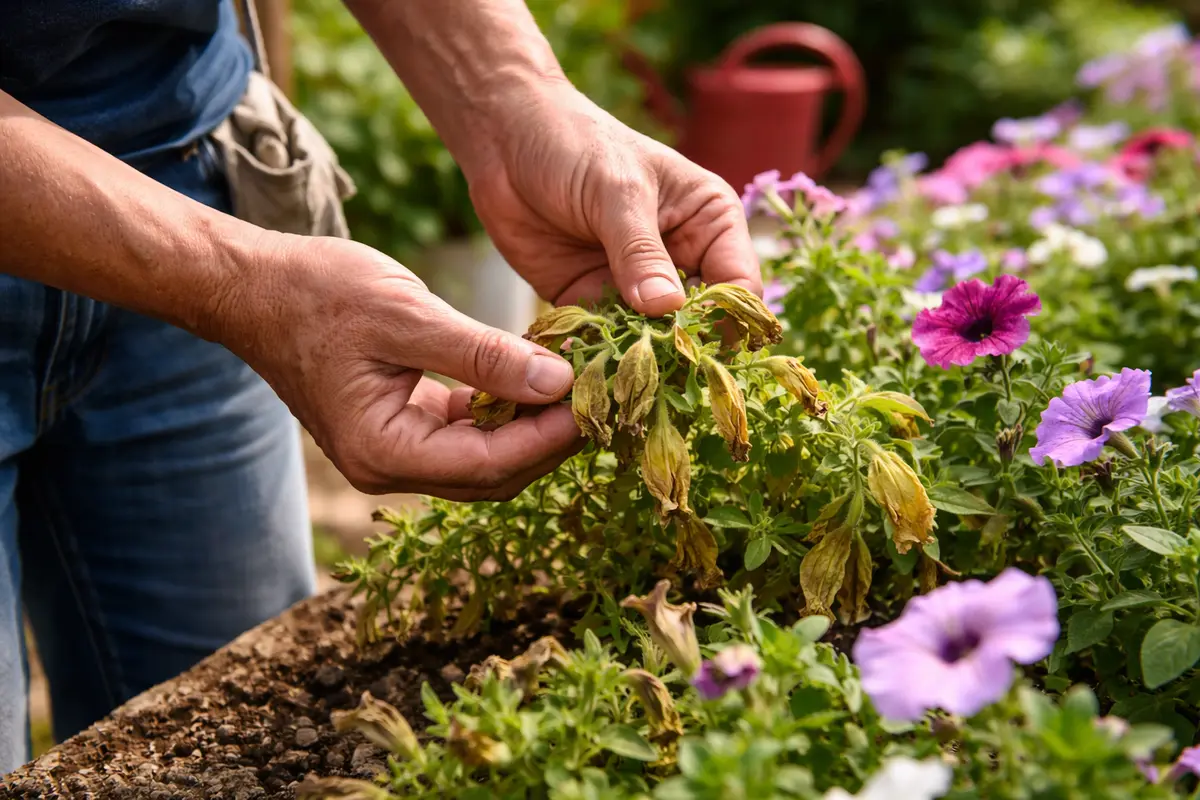
Recheck the petunia leaves for any new wilting symptoms every few days for the next week. You should observe if the leaves appear firm and upright again; healthy foliage should retain its vibrant color and texture. This tracking process is essential for establishing whether your recovery measures have been effective, enabling you to adjust your care practices as necessary.
A fully recovered petunia should exhibit vibrant, healthy leaves, showing no signs of drooping or discoloration. Inspect for new buds and flowers, which signal that your attention has paid off and that the plant is capable of producing healthy new growth. If new wilting occurs despite your efforts, this could indicate ongoing root issues, nutrient deficiencies, or environmental stressors, such as fluctuating temperatures or pest problems.
If you notice that wilting persists or returns, consider reevaluating the care methods currently in place. This could involve investigating for signs of disease or pest infestation that might have been overlooked initially. Introducing beneficial insects or organic pest control methods can often revitalize struggling plants. If new blooms don’t emerge as expected after several weeks of attentive care, it may be necessary to seek advice from a gardening expert, who can provide tailored solutions to your ongoing challenges. Regular monitoring not only helps catch potential problems early but also enhances your understanding of how various factors affect your petunias’ health.
FAQ
Can I save drooping petunias after a heatwave?
Yes, you can save drooping petunias by promptly watering them and addressing any soil issues. It may take a week for signs of recovery to show, including firmer leaves and new growth. The crucial factor is timing; the sooner you initiate corrective measures, the better the chances your petunias will bounce back to their former glory.
Should I remove any damaged petals or leaves?
Yes, promptly remove any visibly damaged petals or leaves to encourage new growth and prevent disease spread. Regular pruning during hot weather can help the plant focus its energy on healthy growth. Ensure you clean your pruning shears before use to avoid transmitting diseases from one plant to another, which is especially important during recovery periods.
How often should I water petunias during summer heat?
During the summer heat, water petunias every other day or as soon as the top inch of the soil feels dry. This routine helps maintain consistent moisture levels, crucial for their recovery and growth. Pay attention to weather conditions; adjust the frequency based on rain, humidity levels, and observed responses from the plants. Consider increasing the watering frequency during particularly hot spells.