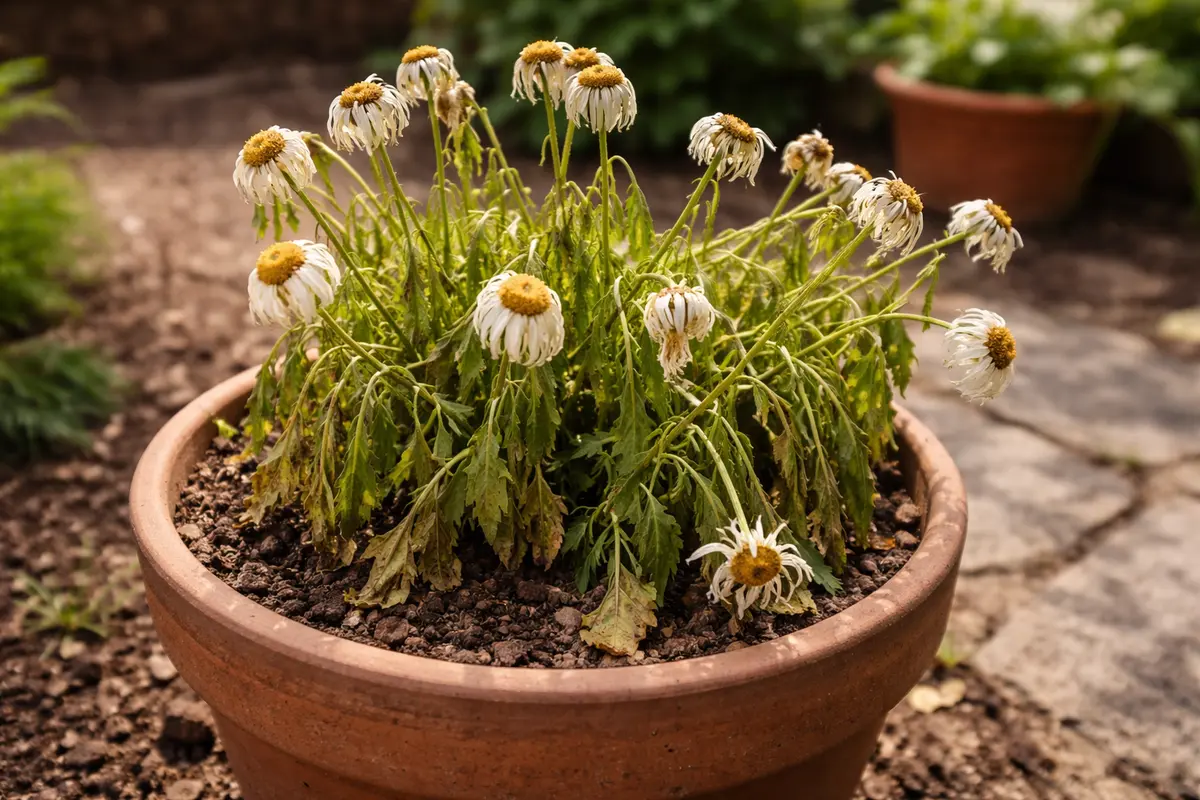
You may notice your beautiful daisies drooping and wilting during particularly hot summer days, which is why you need to know how to fix wilting daisies in pots after sunny days. This wilting occurs as the plant struggles to maintain its moisture levels under intense sunlight, leading to leaf drop and overall weakness. If left untreated, this issue can weaken the plant and stall growth, making recovery harder later on; however, fixing it is possible now if you water thoroughly and monitor the soil moisture regularly.
Step 1 – Water Daisies to Revive Wilting Leaves
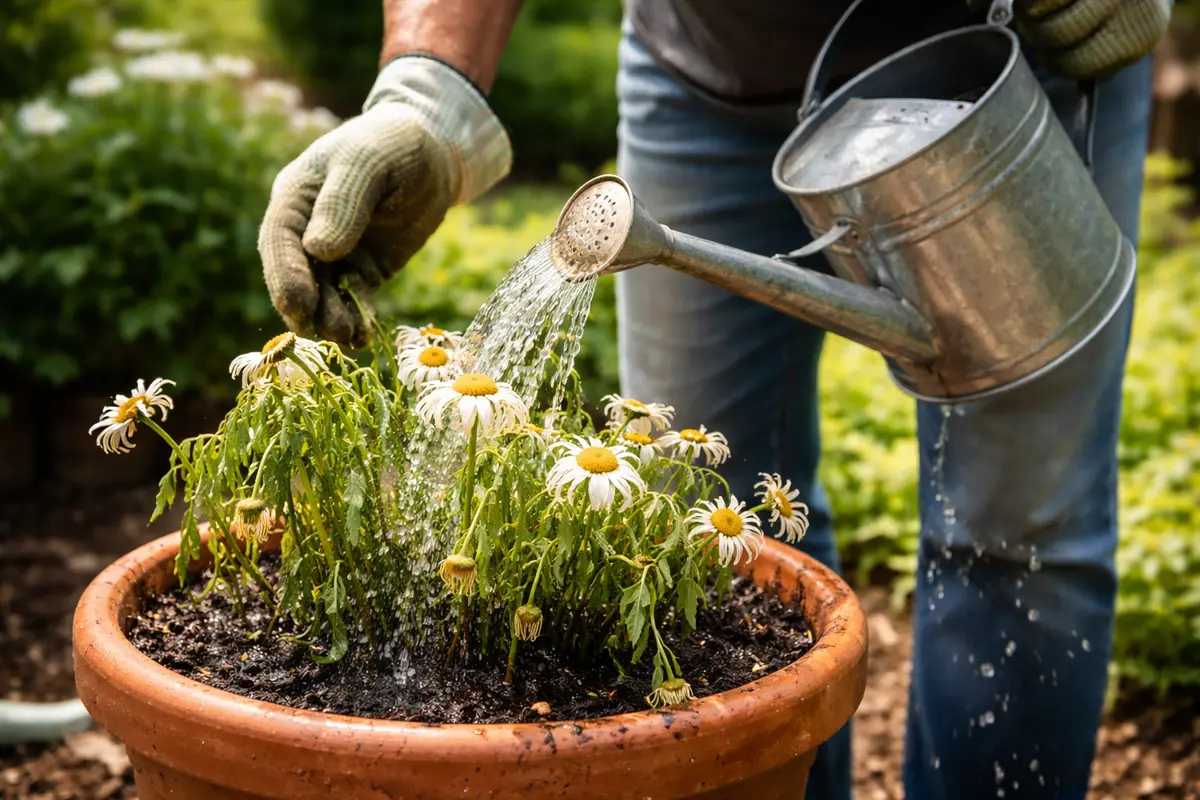
Water the daisies thoroughly to revive their drooping leaves. Pour water slowly until you see it start draining out of the bottom of the pot. This process should result in visibly perking leaves within a few hours as they begin to absorb the moisture. It’s critical to ensure the water reaches the roots, so if the pot does not have drainage holes, consider transferring the daisies to one that does; trapped water can lead to root rot rather than recovery. Aim for approximately one quart of water per standard-sized pot for best results.
Daisies thrive in well-drained soil but can experience wilting when they dry out quickly, especially after a hot day. The process of photosynthesis requires ample water, and when combined with high temperatures or direct sun exposure, it can lead to rapid moisture depletion. If not addressed swiftly, the leaves may turn brown and crispy, indicating significant damage from dehydration. The immediate impact of watering resets the moisture balance, allowing the roots to recover and better absorb water and nutrients, essential for the rejuvenation of the entire plant. An effective hydration strategy, including thorough watering, can prevent this initial stress response from escalating.
This situation often arises when gardeners mistakenly assume that after a sunny day, the daisy plants simply need time to recover on their own. However, in pots, the soil can dry out incredibly fast, causing wilting to worsen. Over-reliance on natural rainfall or neglecting to actively check soil moisture can exacerbate this problem. To prevent further stress and increase their chances of recovery, it’s vital to water the daisies promptly after identifying signs of wilting. If action takes too long, wilting can escalate to irreversible leaf loss, significantly diminishing the plant’s flowering potential. It’s crucial to check the moisture levels at least every other day during particularly sunny spells to catch any signs of drying early on.
Step 2 – Check Soil Moisture Levels for Daisies
First, check the soil moisture around the daisies. If the soil feels dry several inches down, water the plants deeply until moisture seeps from the drainage holes. As a result, you should observe the flowers perk up within a few hours after watering.
Wilting occurs when the soil dries out, causing reduced water absorption by the roots. When daisies lack moisture, their tissues lose turgor pressure, leading to limp flowers and leaves. In contrast, if your daisies are wilting but the soil is wet, the problem may stem from root rot, preventing the plant from taking in oxygen and nutrients necessary for healthy function.
If the soil smells sour or feels mushy, cut back on watering and improve drainage by repotting in fresh soil. On the other hand, if the leaves are yellowing alongside wilting, check for pests such as aphids, which can cause stress and dehydration.
Excessively dry soil prevents the daisies from absorbing the necessary moisture, leading to further wilting and potential leaf drop. Ideally, daisies thrive with consistently moist soil; however, allowing the top layer to dry out can confuse them, making them sluggish to absorb water reliably. Regularly checking moisture levels helps maintain an ideal growing condition while helping prevent direct wilting, but be vigilant about not over-saturating the soil, as it can lead to root suffocation. Consider using a moisture meter if you find it difficult to determine the moisture level accurately; this can help provide a more definitive reading without checking purely by feel.
If the soil appears too wet or has a sour smell, it may indicate root rot, demanding immediate action to save the plant. In such a case, ensure your pots possess adequate drainage; this means checking that the holes are clear and not blocked by roots or soil material. If the soil is overly saturated and the plant wilts even after watering, consider repotting the daisies into dry, well-drained soil to resolve root issues. Gently lifting the plant and inspecting the roots for discoloration or mushiness can help confirm whether overwatering is an underlying problem. If root rot is suspected, promptly trimming away any affected roots can significantly improve the overall health of your daisies. Always remember, it’s an immediate problem if the soil remains consistently wet; daily checks can determine whether the watering needs adjustment.
Step 3 – Add Nutrients to Help Daisies Recover
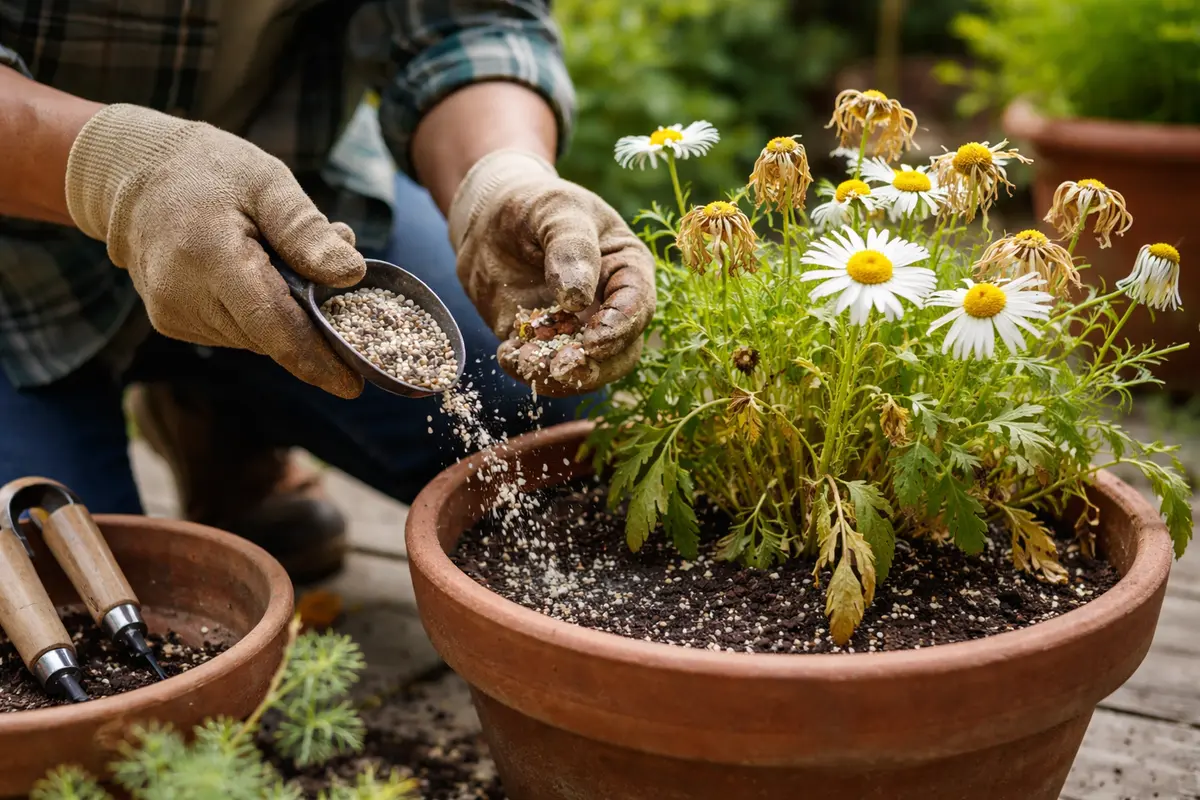
Water the daisies thoroughly, ensuring that the soil is evenly moist but not soggy. Within a few hours, you should notice the petals perk up and regain their firmness. To prevent future wilting, establish a routine of watering in the early morning or late afternoon and monitor for signs of dehydration, like drooping leaves.
Recovery typically takes a few hours, but if the daisies are consistently exposed to high temperatures without sufficient moisture, wilting may recur within days. Observe the soil and flowers closely; if the soil dries out too quickly after watering, it might indicate poor drainage or an overly sunny spot, signaling the need for adjustment in care practices.
A frequent error during recovery is overwatering, which can lead to root rot. If daisies begin to droop again shortly after you’ve watered, check for standing water at the base of the pot; proper drainage should allow excess water to escape easily. Adjust watering frequency based on soil moisture levels—daisy roots prefer a balanced moisture supply.
The recovery timeline for wilting daisies typically spans 24 to 48 hours, depending on their severity of wilting. Keeping them in partial shade during the hottest parts of the day can help prevent recurrence, as heat stress is often triggered by prolonged exposure to direct sunlight without sufficient water. If the daisies remain limp even after watering, check that the soil is not overly compacted, which can impede water absorption.
A common mistake during recovery is overwatering, which can lead to root rot and worsen the situation. Adjust your watering frequency based on the severity of wilting; if the foliage appears overly dry after a day, add more water gradually instead of flooding the pot. If the leaves start yellowing even after watering, check that the pot has drainage holes to prevent standing water.
Nutrients play a crucial role in recovery, as they support new leaf and flower development. A balanced fertilizer restores essential minerals, particularly nitrogen, phosphorus, and potassium, all of which the plants might have depleted during exposure to sunlight. Regular monitoring of your daisies during this period yields valuable insights into their recovery process. Look for signs such as bright green leaves, increased branching, and the appearance of flower buds, all indicating that nutrient uptake is successful. Inspect the undersides of leaves as well; this can reveal nutrient deficiencies when leaves show signs of spots or discoloration.
A common mistake during this stage is over-fertilizing; an abundance of nutrients could burn the roots, consequently stressing the plants even further. Stick closely to the recommended dosage and aim for applications every 4-6 weeks, especially following any observed signs of growth improvement. Additionally, seasonal changes greatly affect nutrient requirements; daisies typically require more frequent feeding during their active growth phase in spring and summer but should see a reduction in fertilizing frequency during fall and winter. Failing to adjust nutrient applications according to the plant’s growth cycle may lead to nutrient imbalances, resulting in deficiencies or toxic build-up that further complicates recovery efforts. Always consider how the temperature and daylight length might affect nutrient uptake and adjust your feeding schedule accordingly.
Step 4 – Inspect Daisies for Signs of New Wilting
Start by checking the soil moisture of your potted daisies each day, especially after sunny days. Observe if the top inch of soil feels dry to the touch, as this is a sign that your daisies need water. Recheck the soil moisture every morning for consistent conditions to ensure the plants are recovering adequately.
A fully recovered daisy plant displays vibrant green leaves and sturdy, upright stems, contrasting with the limp, dull appearance seen during wilting. Look for the petals to be fully open and bright, rather than droopy or shriveled. If the color of the foliage begins to fade, or if the leaves feel crispy to the touch, these could indicate that the wilting problem is returning.
If you notice signs of wilting returning despite proper care, immediately adjust your watering schedule, ensuring you provide consistent moisture. If issues persist even after increased watering, consider repotting your daisies with fresh soil to improve drainage and nutrient availability.
A fully recovered plant will exhibit vibrant green, upright leaves, often with new growth emerging prominently from the center. Conversely, if you observe signs of returning wilting, such as drooping or discoloration, these may indicate that the problem has resurfaced, likely due to insufficient watering or nutrient levels. Recognizing these symptoms promptly allows you to take quick corrective measures. If symptoms arise following recent care activities, this may suggest other underlying issues such as pests, disease, or inadequate light exposure that should also be addressed. This vigilance will help drastically reduce the likelihood of continued wilting and potential plant failure.
If the wilting returns despite appropriate follow-up actions, reassess your watering schedule and potting conditions before proceeding any further. It’s key to monitor temperature or humidity shifts, particularly in late summer, as these elements can introduce stress if not managed effectively. There is also potential for pests. Be alert to the appearance of aphids or spider mites, which can significantly affect the overall vitality of your daisies, often requiring a separate treatment approach. Inspect the roots for signs of stress; compacted potting mix may hinder water absorption, leading to further wilting. Make it a point to thoroughly inspect for pests or diseases affecting the daisies. Being proactive about both watering and pest management is crucial to ensuring your daisies thrive.
FAQ
How long does it take for wilting daisies to recover?
Recovery time for wilting daisies can vary; typically, you should see signs of improvement within a few hours after watering. Fertilizing can also expedite the process. If done correctly, visible new growth should appear within a week. Keeping track of your watering schedule and adhering to a consistent routine is key to ensuring they stay healthy. Watch for increased leaf turgidity and color return to monitor improvements effectively.
Can overwatering cause daisies to wilt?
Yes, overwatering can lead to root rot, which compromises the daisies’ ability to absorb water and nutrients properly. To check for this, inspect the soil for sogginess and a foul smell; these signs necessitate immediate action by repotting the plant in fresh, dry soil. Ensure adequate drainage is maintained, and adjust your watering frequency to prevent recurrence of wilting. It’s important to allow the top layer of the soil to dry slightly between waterings to maintain a healthy root environment.
Should I remove wilted leaves from my daisies?
Removing wilted or dead leaves can indeed help redirect the plant’s energy to new growth. However, be cautious; wait until the plant has made a recovery before engaging in excessive pruning. Cleaning up damaged leaves might also improve airflow around the plant and reduce disease risks. If multiple leaves are wilting, this could signal significant stress on the root system that needs to be addressed. Always ensure that any cuts or trims are made with sterile tools to prevent introducing pathogens.