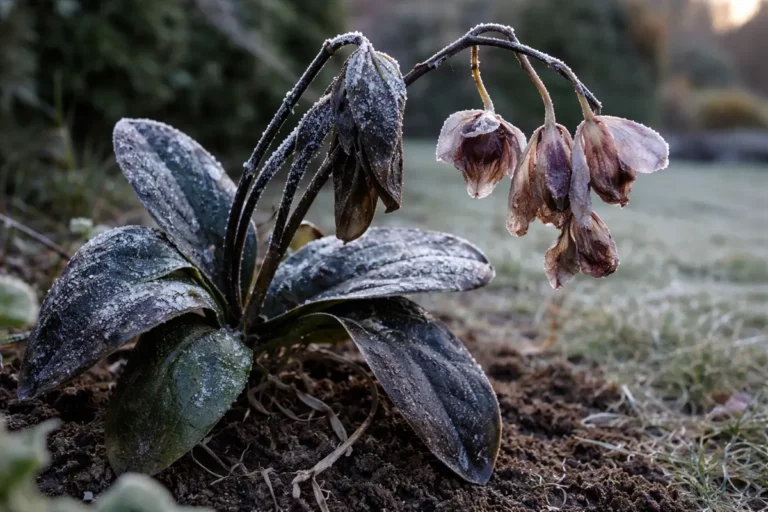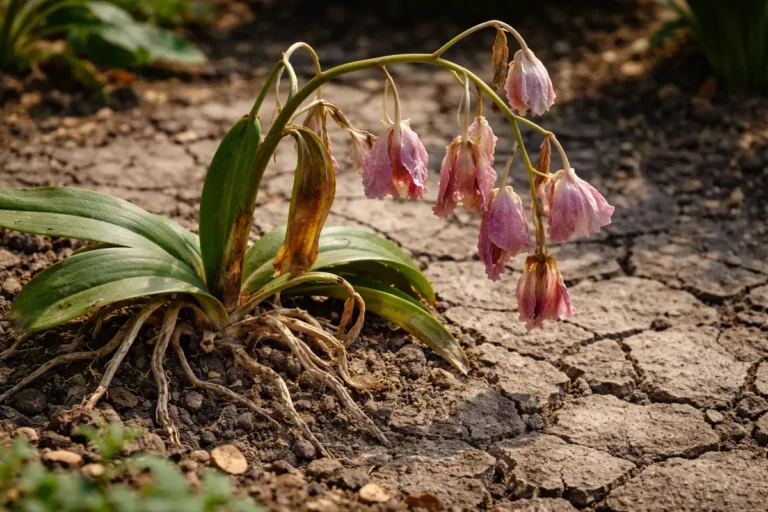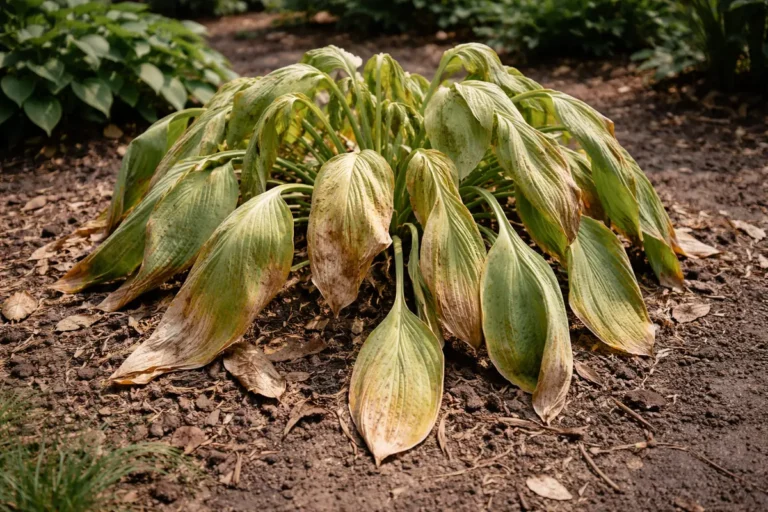
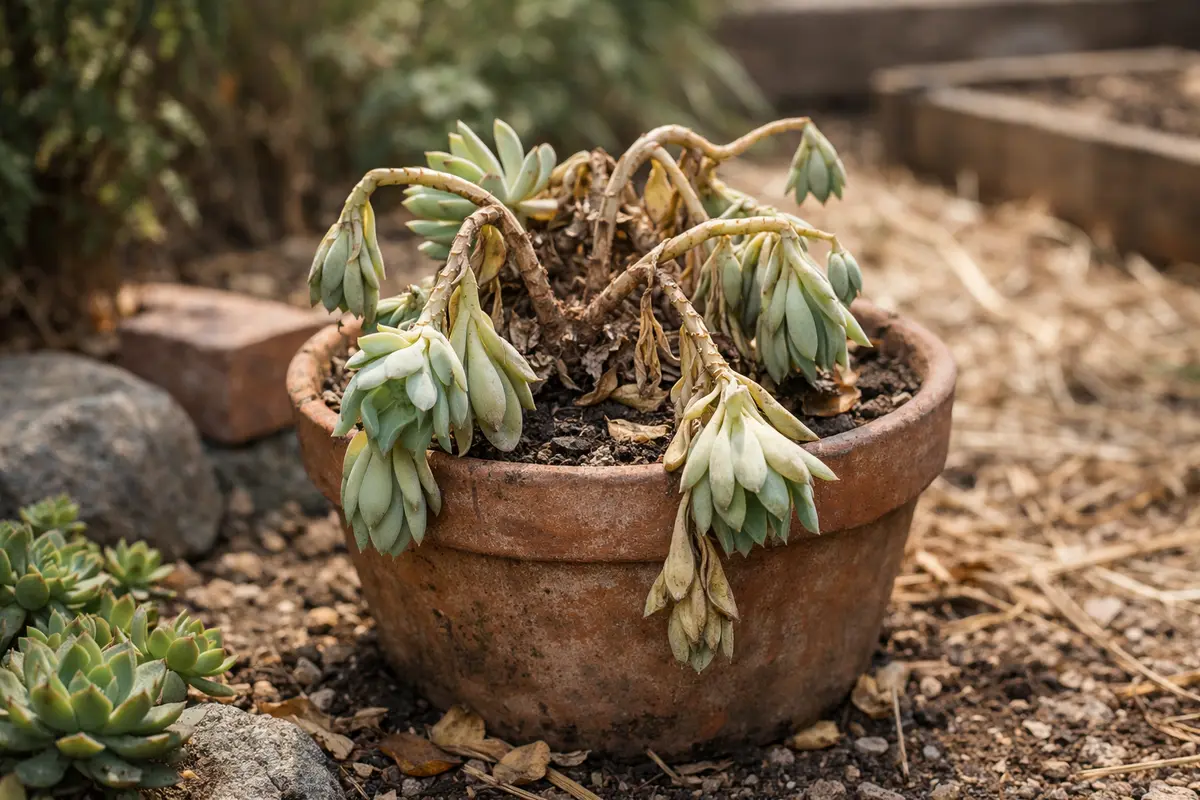
You may notice your succulents drooping and losing their plumpness during extreme summer heat, which is why you need to know how to treat wilting succulents in hot weather. This wilting occurs because the intense sun and high temperatures cause the plant to lose water quickly, leading to damage in the form of shriveled leaves. If left unaddressed, the condition can worsen, weakening the plant and making recovery much harder, but it’s possible to fix it now by adjusting your watering schedule and providing some shade.
Step 1 – Water Succulents to Revive Wilting Leaves
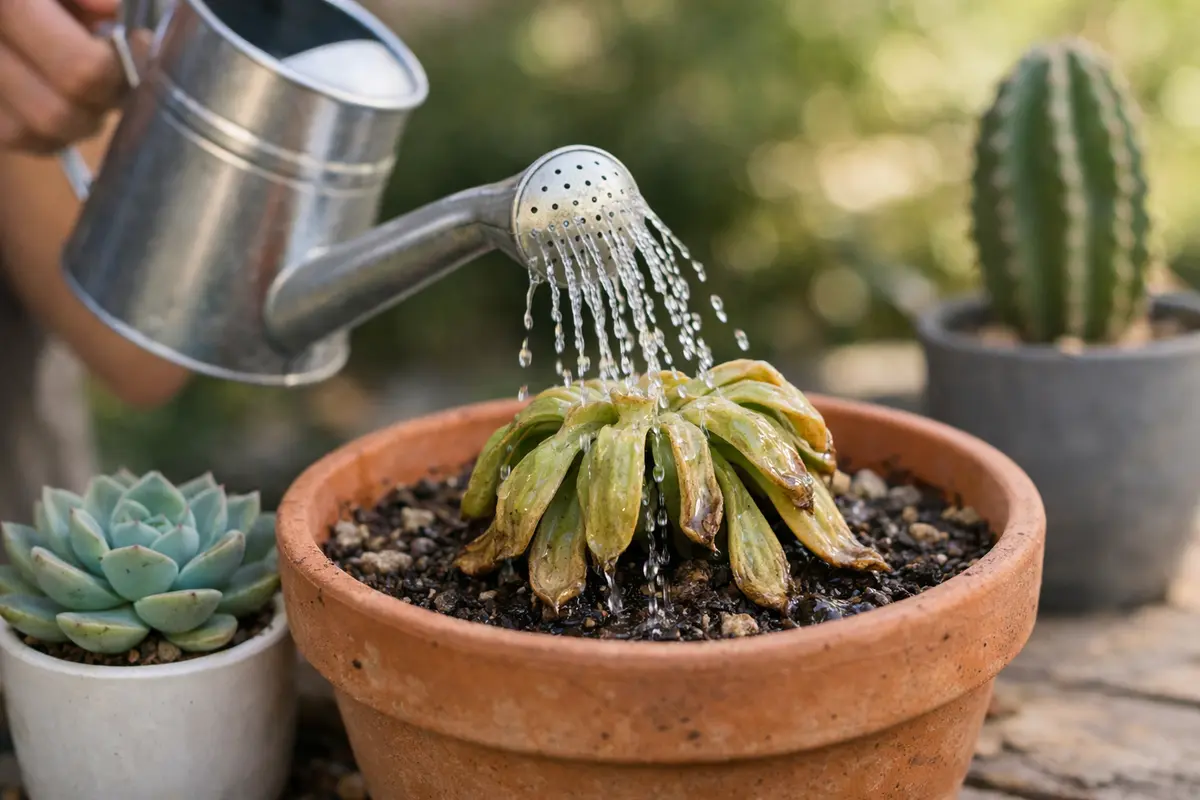
Start by watering your succulents deeply, ensuring the water reaches at least six inches into the soil. Check for drainage by seeing if water runs out of the pot’s bottom; this confirms that you have hydrated the roots adequately. After your first watering, you should notice the leaves becoming firmer and less limp within a few hours, indicating that moisture is being absorbed back into the plant’s cells. Fixing the water deficit now can prevent irreversible damage, as wilting leaves can lead to more severe symptoms like leaf drop if ignored.
Watering deeply helps to rehydrate the cells of the plant that may have started to collapse due to lack of moisture. Succulents store water in their leaves and stems, but extreme heat can deplete these reserves quickly. Saturating the soil encourages the roots to draw in moisture and nutrients, promoting overall plant recovery. Be aware that if you water your succulents in the late afternoon, they will utilize the moisture overnight, giving them a faster recovery time.
However, if you find that water is pooling on the surface or taking too long to drain, consider whether the pot has proper drainage holes. A common mistake at this stage is to apply only a small amount of water to the surface. This shallow watering doesn’t penetrate deeply enough to reach the roots, leading to uneven moisture levels that can worsen wilting. If the soil is compacted and dry to the touch, be sure to add more water until it drains out of the bottom. Conversely, allowing the water to sit in the saucer for too long invites root rot, especially if the pot lacks proper drainage holes. This back-and-forth balance in moisture is crucial, as once the roots are damaged, the plant may struggle to recover even after watering. It’s critical to monitor the pot’s weight after watering; if it feels unusually heavy, you may have overwatered. If you are dealing with a related issue, during heatwave drainage covers a similar problem in detail.
Step 2 – Assess Soil Moisture Levels for Succulent Health
Check the moisture level of the soil by sticking your finger about an inch deep into it. If the soil feels dry at this depth, it’s crucial to address the issue with thorough watering again. The absence of adequate moisture can lead to further irritation of the plant, promoting wilting and stress. If necessary, employ a moisture meter for a more precise reading if the soil mix is too coarse or you’re uncertain about depth. If the meter indicates soil moisture levels below 3 on a scale of 1 to 10, deep watering is essential.
When soil moisture levels are insufficient, succulents display symptoms such as wilting and leaf drop as they struggle to retain moisture. Hot weather accelerates soil drying, making frequent checks essential. Ideally, the soil should feel moist but not waterlogged, promoting healthy root growth while preventing fungal infections from over-saturation. If the soil is consistently dry, your succulent may need a re-evaluation of its watering schedule. Consider adjusting the timing to earlier in the day when temperatures are lower, which allows water to absorb more effectively instead of evaporating too quickly.
If the soil feels persistently wet after watering, this could indicate poor drainage or overwatering, leading to root rot. In this instance, dig slightly into the soil to feel if there’s a mushy texture present, which usually signifies root issues. If you suspect overwatering, allow the soil to dry out completely before introducing more water. You may need to repot your succulent in fresh, well-draining soil if this condition persists. Always examine the drainage holes in the pot to ensure they are clear, as blocked holes can trap excess water and result in decay. For example, if you use regular potting soil, it may retain too much moisture; switching to a gritty cactus soil mix can enhance airflow and quickly eliminate excess moisture, promoting root health.
Step 3 – Provide Shade for Wilting Succulents During Heat
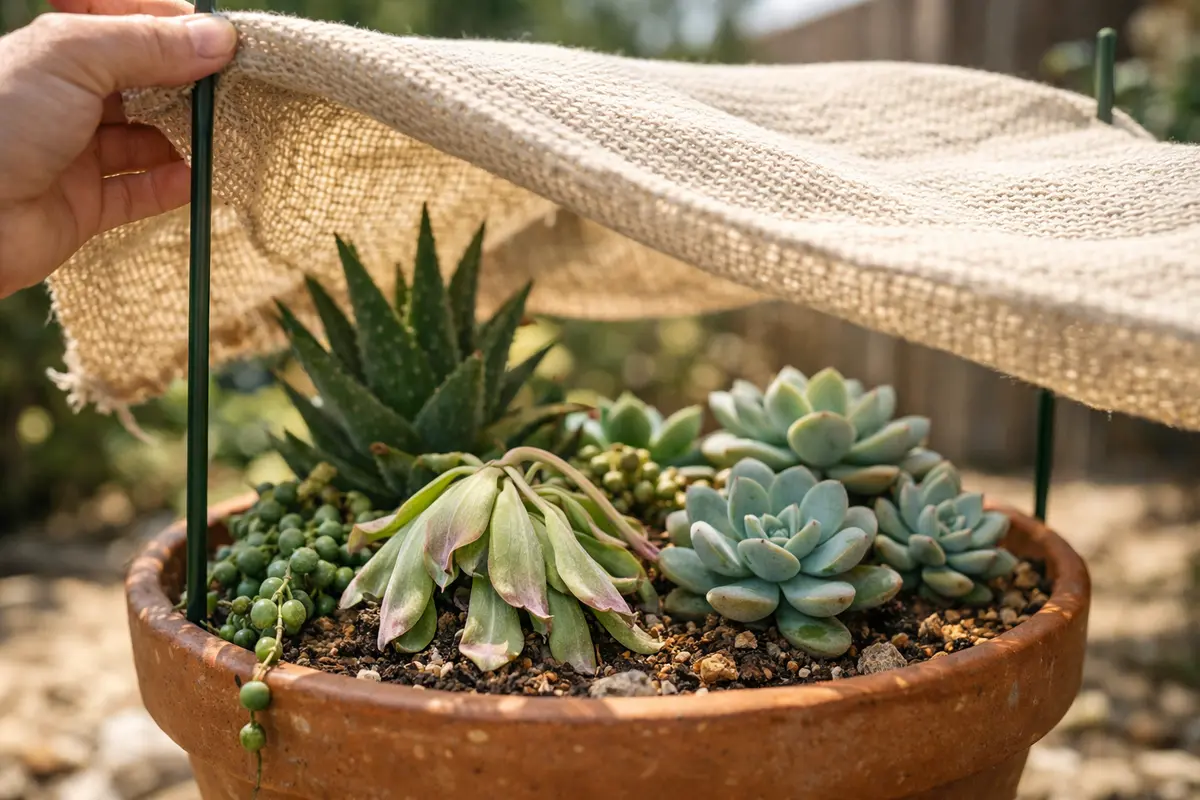
Move your wilting succulents to a shaded area or provide temporary shelter from intense sunlight. After making this adjustment, observe the plants over the next few days; you should see signs of recovery with the stress on the plants starting to decrease. New growth may even emerge as the plants become accustomed to the change. If your plants remain outdoors, consider using garden fabric or a shade cloth to lessen harsh sunlight while still allowing airflow.
Excessive sun exposure during peak hours can lead to sunburn, evidenced by browning or crispy edges on the leaves. This damage exacerbates wilting and can permanently harm the plant. By relocating the plants to a cooler, shaded area, they have a chance to recuperate from the heat stress and reduce the risk of further damage. This step allows the plants to focus on recovering rather than expending energy combating extreme temperatures. A shaded area should ideally be well-ventilated to help reduce humidity levels, which can also be an issue during hot spells. If shade cloth is used, ensure it is breathable, allowing some sunlight and air movement rather than complete obstruction.
A mistake many gardeners make is to leave the succulents exposed to harsh sunlight under the assumption that they need more light to recover. If wilting persists for several days after watering, reassess their exposure to direct sun. Additionally, establish a routine of at least partial shade whenever temperatures soar, especially during spikes over 85°F (29°C). Heat stress can drastically slow recovery, so it’s better to think proactively rather than reactively. Adjusting exposure based on local conditions—an urban environment might reflect more heat, thus affecting your plants differently than in a rural area—can be crucial in recovery. It is advisable to raise the pots off surfaces to ensure air circulation beneath them, enabling quicker drying after rains or watering. To gauge their preference, experiment with alternating shades and positions to see which spot provides the best recovery signs. For a closely related scenario, see hydrangeas heatwave recovery.
Step 4 – Inspect Leaves for Signs of Future Wilting
Start by checking the moisture level of the soil around your succulents. Use your finger to dig about two inches into the soil; if it feels dry, it’s time to water. Recheck the soil moisture every few days in hot weather, adjusting your watering schedule as needed to prevent wilting.
A fully recovered succulent will have plump, firm leaves and a vibrant color, indicating proper hydration. In contrast, early signs of the problem returning may include shriveled leaves that feel soft or squishy, signaling over or under-watering issues. If the leaves lose their vibrant color, it’s time to inspect the watering schedule once again.
If the wilting returns despite following proper care, streamline your watering routine further by ensuring that the pot drains adequately or switch to a soil mixture that promotes better drainage. Assess if the plant is receiving too much direct sunlight; if it’s not thriving in full sunlight, move it to a partially shaded area.
A fully recovered succulent will display vibrant, plump leaves with a healthy color, restoring their natural shape. If limpness or discoloration returns within a short time frame, it may indicate that environmental factors are still impacting the plants, or that the restoration process wasn’t thorough enough. An alert gardener can spot early signs of distress quickly and take necessary actions to prevent further deterioration. For example, consistent drooping could suggest either low humidity levels or an ongoing issue with root health, both needing immediate attention. If this is the case, consider increasing humidity through misting or placing a shallow tray of water nearby to elevate moisture around the plants.
If the succulents do not improve or exhibit recurring wilting, consider investigating the possibility of root rot or pest infestations. Pulling the plant out of the pot to observe the root system can reveal issues stemming from overwatering or pests. If you notice black, mushy roots, the plant is likely suffering from root rot. If this is the case, remove the affected pieces and repot in a fresh substrate. Additionally, applying organic pest treatments can address pest-related issues to prevent further damage. When removing any pests, also check under the leaves; pests like mealybugs often hide there, and can rapidly cause stress to the plant. When repotting, if you encounter a sticky residue on the roots, this could indicate pest presence and requires diligent removal before replanting. Always check both top and bottom leaves for signs of vermin while conducting your plant inspections.
FAQ
How long does it take for succulents to recover from wilting?
Recovery time for wilting succulents largely depends on the severity of the dehydration and environmental conditions. Typically, visual improvements can be seen within one to three days of adequate watering and relocating to indirect sunlight. However, full recovery may take several weeks, especially for plants that have suffered prolonged stress. If after two weeks there are no significant improvements, reassess other care factors such as soil quality and drainage. Checking the bottom leaves for firmness can also provide insight into their recovery status.
Can wilting succulents recover in cooler temperatures?
Yes, succulents often respond positively to cooler temperatures since these conditions reduce evaporation rates and plant stress. Gradually introducing them to warmer environments is ideal, as this helps prevent shock while they continue their recovery. However, be cautious of too sudden temperature changes, as rapid fluctuations can cause additional stress. Watch for signs of overexposure or rapid drying should the temperatures fluctuate too quickly, as this can lead to renewed stress. You might prefer moving your plants indoors during peak heat hours, gradually adjusting them to outside temperatures, allowing them to adapt without losing moisture. If you are dealing with a related issue, transplant shock containers covers a similar problem in detail.
Should I remove wilting leaves from my succulents?
Removing wilting leaves can indeed help the plant direct its energy towards healthier growth, but caution is advised. Only remove severed, shriveled leaves, as lightly wilted or naturally aging foliage might still have the opportunity to recover with proper care. Use clean, sharp scissors during this process to avoid spreading diseases or further damaging the plant. Monitor the new growth emerging in place of trimmed leaves to ensure you’re not inadvertently setting back recovery efforts by removing too much foliage at once. If other signs of distress manifest, it may be an indicator to reassess your watering or lighting conditions, thus preventing recurring issues while enhancing overall plant health.