Establishing a lush lawn is no simple feat, and one of the most critical factors in achieving success is proper watering. If watered improperly, grass seeds may never germinate, leading to wasted time, effort, and money. Knowing “How often should I water my new grass seed” is essential for fostering healthy plants and ensuring the longevity of your lawn. Mistakes made during this crucial phase can propagate issues down the line, leading to patchy spots and even weed infestations.
Start Here: Understanding Grass Seed Watering Needs
The journey to a vibrant lawn begins at planting, and watering plays a pivotal role. Grass seed requires consistent moisture to germinate effectively. Surprisingly, many new gardeners overwater their newly seeded areas, often leading to root rot or damping-off diseases. The key is to strike a balance; overly saturated soil can suffocate seeds, while too little water will cause them to dry out and fail to sprout.
Common Mistakes to Avoid
For those new to seeding, a typical pitfall is not adjusting watering schedules based on environmental conditions. If rain is in the forecast, reduce watering; conversely, increase watering during dry spells. This balance is vital, especially in sandy soils that drain quickly versus clay soils which retain moisture. A common error is watering too frequently without checking soil moisture — if the top inch appears dry, it’s time to water again. Ignoring soil types can lead to serious issues: light, sandy soils require shorter but more frequent watering, while heavy clay soils benefit from less frequent, deeper soakings.
Time Your Watering Correctly
Another frequently overlooked aspect is the timing of watering. Morning is generally the best time to water grass seeds. In the early hours, temperatures are cooler, reducing evaporation rates and allowing water to penetrate the soil deeply. Alternatively, watering in the late afternoon can lead to fungal diseases if the grass remains wet overnight. If watering in the evening is unavoidable, ensure it’s done early enough to allow the grass to dry before nightfall. Alternatively, using a misting system can also prevent diseases while ensuring a gentle application of moisture during this prime time.
Warning on Damage and Overuse
Consistent checks on moisture levels are necessary. Overwatering can weaken seedlings’ roots, making them susceptible to environmental stress and diseases. If wilting or discoloration occurs, it’s a signal to reassess watering practices. Stick to a schedule that provides moisture without saturating the area; aim for 1-2 inches of moisture per week, adjusting according to rainfall. If problems persist, consider switching to a less frequent but deeper watering method to encourage strong root development. Furthermore, it’s advisable to avoid using harsh chemicals or fertilizers immediately post-seeding, as these can exacerbate the effects of overwatering.
Narrow It Down: Assessing Your Grass Seed Situation
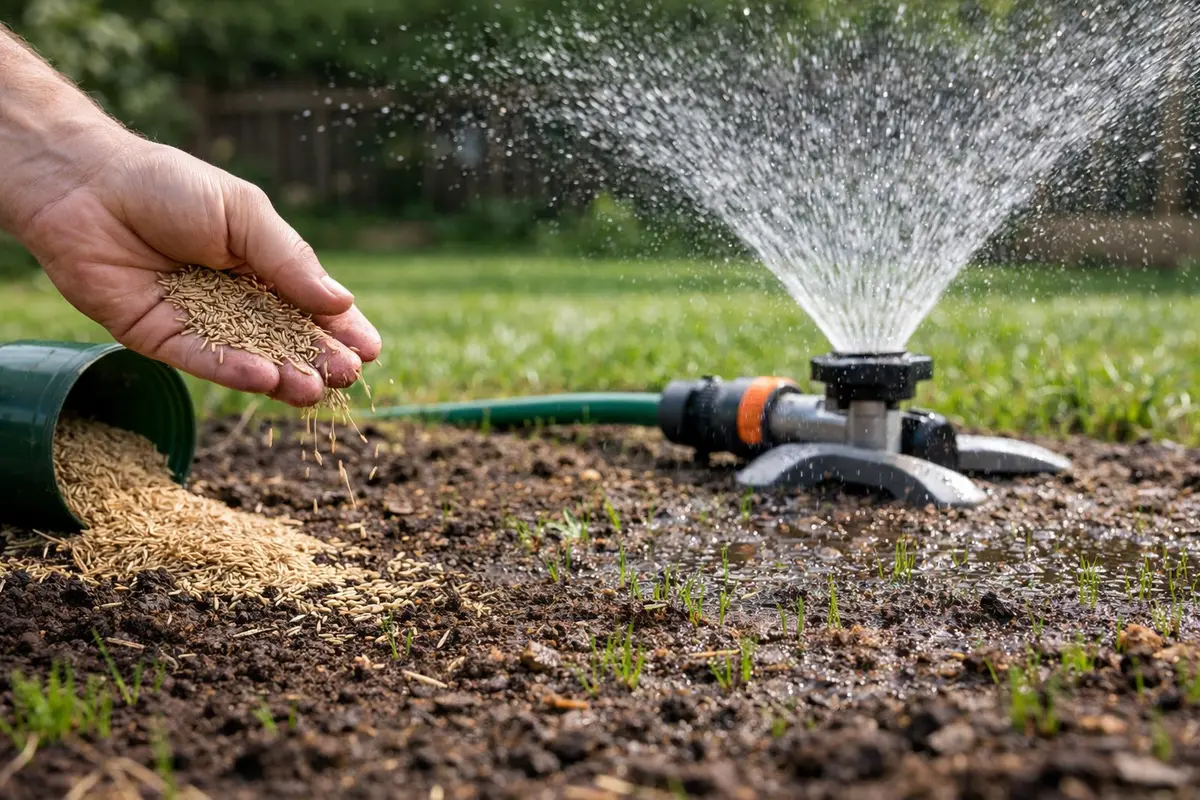
It all starts with understanding your lawn’s specific context. Factors influencing your seed watering needs include local climate, soil type, and even the variety of grass seed. For instance, Kentucky bluegrass thrives in cooler temperatures and may require less frequent watering than Bermuda grass, which loves the heat but needs consistent moisture.
Recognizing Environmental Factors
Take stock of your environment. If you live in a typically dry area, anticipate a slightly more aggressive watering routine than someone in a humid climate. During extremely hot weather, seeds may require watering twice a day, especially in sandy soils. Conversely, if you’re in an area with regular rainfall, it may be wise to scale back watering to prevent waterlogging the seeds. Note that seedlings often wilt or develop a grey hue in excessive heat; this signals it’s time to refresh the watering schedule.
Checking Your Soil Type
Soil structure plays a significant role in developing your watering strategy. Clay soils, for example, absorb water slowly and can lead to pooling if overwatered. In contrast, sandy soils drain quickly, making more frequent watering essential to keep seeds moist. Understanding these differences early on will inform your watering schedule effectively and avoid potential mishaps down the line. Use a soil moisture meter for precise readings; many beginners underestimate evaporation rates and can easily deplete their water resources.
Warning About Inconsistent Dampness
The critical thing to note is that inconsistent soil moisture can lead to uneven germination. Seeds that dry out during critical growth periods may die or develop diseases. Mark your watering regimen based on soil moisture checks to ensure seeds stay evenly moist. A simple finger test can help: if the top inch is dry, it’s time to water; if it feels damp, hold off. Similarly, pay attention to signs of over-saturation, such as surface pooling or mushy soil, which can lead to severe fungal issues.
The Fix Path: Step-by-Step Watering Instructions
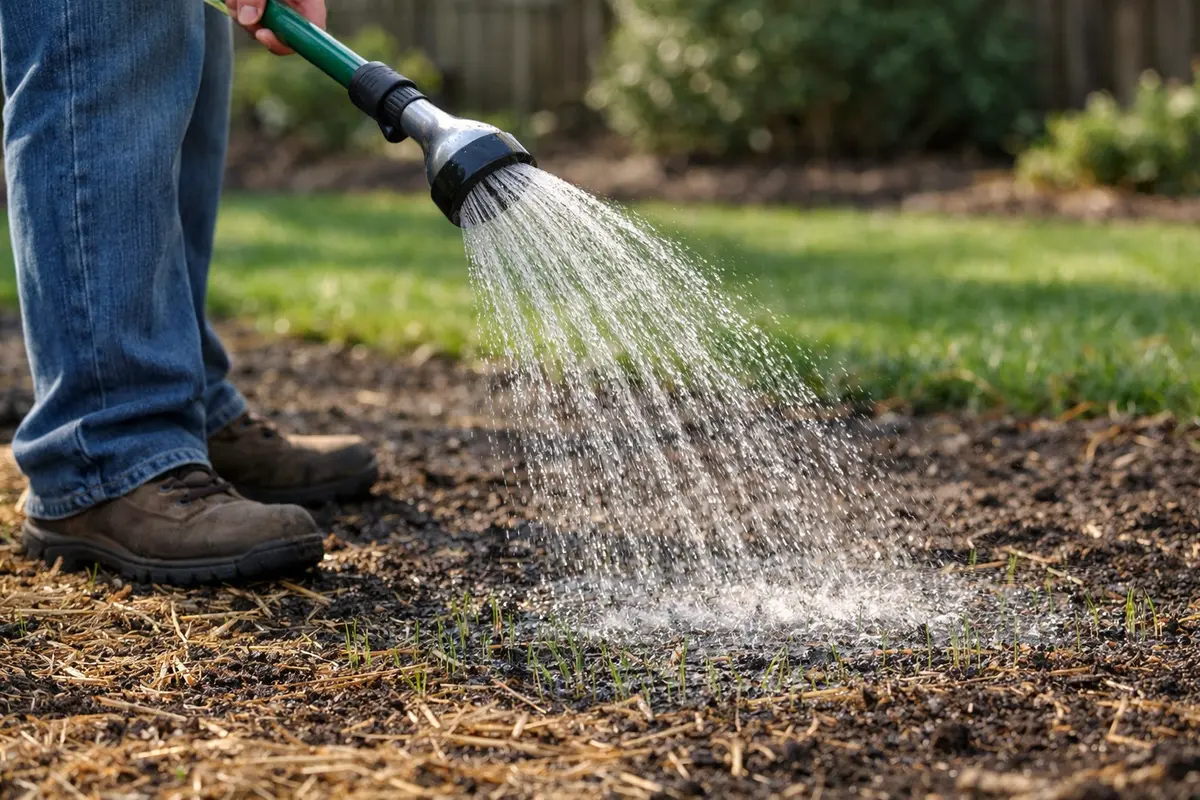
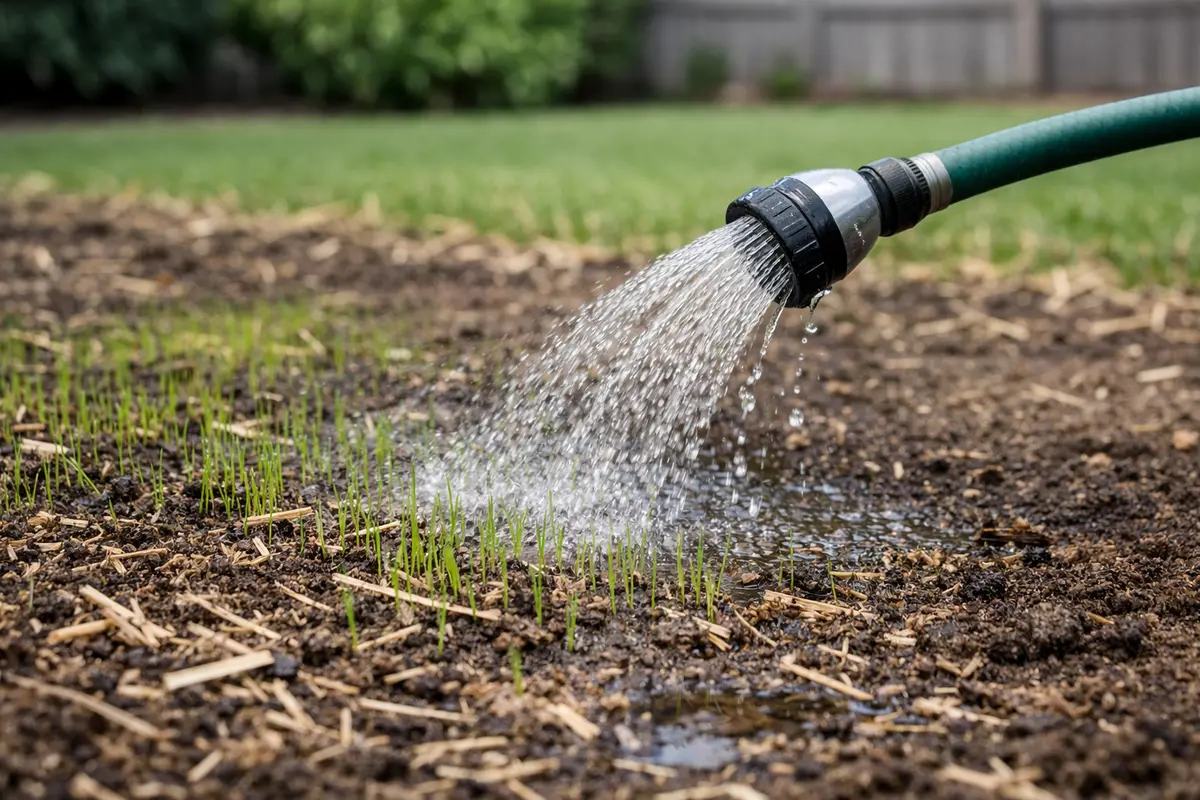
Establishing a proper watering routine is essential for nurturing young grass. A good rule of thumb for newly seeded areas is to water lightly and frequently at the onset of germination. During the first few weeks, aim for 10-15 minutes of watering, two to four times per day, depending on environmental conditions. This continual moisture access supports the delicate seedlings as they establish themselves in the soil.
Beginning Your Watering Routine
Start your watering in the early morning hours to allow the moisture to settle into the soil before the sun heats up. Remove any debris that might obstruct moisture absorption—this could include pine cones, leaves, or remnants of previous landscaping work. Moreover, a light mulch can help retain moisture as well, especially in exposed areas. Be mindful, though; overly heavy mulch can impede seed sprouting and may harbor pests.
Adjusting for Weather Conditions
Pay close attention to daily weather patterns; for example, if there are cloudy days or rain is forecasted, reduce your watering schedule accordingly. On extremely hot days or if the seedlings show signs of wilting, consider increasing your watering frequency. Utilizing a light misting system can also help avoid over-saturation while providing a gentle touch for fragile seedlings. This is particularly useful if you notice the soil drying out too quickly. If the soil frequently dries out within hours of watering, it may signal the need for a shift in strategy—from frequent light watering to fewer, deeper soakings.
Monitoring Soil Moisture and Adjusting Appropriately
It’s important to conduct daily checks of soil moisture. If you find that the seeds are struggling, consider adjusting your watering schedule. An easy way to gauge this is to check how long water stays on the surface before it begins to penetrate deeper into the layers of soil. Always be prepared to tweak your approach based on local heat patterns, the type of grass seed planted, and physical inspections of soil moisture. If you notice the soil is absorbing water slowly, this could indicate that it’s time to aerate the area or amend the soil to facilitate better moisture retention.
How to Verify It Worked: Signs of Healthy Grass Establishment
After several weeks, you’ll want to start observing the first signs of germination. A thick, rich green appearance indicates your grass is establishing well. However, various red flags may suggest potential issues in your watering routine.
Recognizing Positive Growth Indicators
Healthy grass seedlings will generally be around 2 to 4 inches tall within the first month. Look for a uniform color and upright posture; any browning or wilting could indicate insufficient moisture. Roots that extend beyond the upper soil layers show that your watering method is effective and that seedlings have solidly established themselves. Additionally, watch for grass that resists being pulled easily from the soil, which indicates strong root connections.
Identifying Early Warning Signs of Stress
If you notice drying or discoloration of seedlings, you may have an underlying watering issue. Dry spots alongside lush, green areas often indicate inconsistent moisture levels in the soil. Adjusting your watering routine immediately is crucial to avoid further complications, such as stressed roots or premature seedling death. If issues persist, it’s time to reconsider your watering approach or even consult a lawn care expert for tailored advice. More extreme wilting or discoloration may necessitate harvesting additional samples to check for root health.
Next Steps If Germination Fails
Should you find that seeds are not germinating effectively after a full growing season, consider scarifying the area lightly to encourage better water penetration. Alternatively, you may need to reseed during a more favorable season or replace any unsuitable grass varieties with those better adapted to your climate. Always conduct a soil test before reattempting to identify any underlying issues, such as nutrient deficiencies or pH imbalance, that might hinder future germination efforts.
Keeping Results: Long-term Care and Maintenance for Your Lawn
Even after successful establishment, your grass still requires ongoing maintenance, including a properly adjusted watering schedule. As your grass matures, tapering off watering frequency is crucial to cultivate deep roots—the hallmark of a resilient lawn. Additionally, it’s wise to establish a regular lawn maintenance routine that includes aeration and fertilizing at appropriate intervals.
Transitioning Watering Frequency
Once grass is actively growing, usually after 2–3 months, scale back watering to once every 3–5 days, ensuring deep soakings rather than shallow sprinkles. This encourages roots to delve deeper, improving drought resistance. The aim is to provide about 1 inch of water per week, combining rainfall and irrigation to achieve this goal. Keep in mind that during peak summer heat, you may need to adjust back to more frequent watering to stress-free wilt.
Understanding Seasonal Variation
Seasonality plays a significant role in lawn care; for instance, spring will typically require more frequent watering compared to the dry heat of summer. Adjust your routine as the temperatures rise or fall, and always check soil moisture before watering to avoid unnecessary saturation. Remember that cooler temperatures, such as in the fall, can signal a reduction in water needs, whereas early spring may require a more hands-on approach due to volatile weather patterns.
Avoiding Common Long-term Mistakes
Many homeowners forget to manage their irrigation systems correctly; periodic checks of sprinklers or irrigation settings are necessary to avoid uneven watering. Inconsistent watering schedules and pressure variations can lead to patchy lawns and increased weed competition. Make notes during seasonal transitions, documenting your lawn health and watering adjustments as needed, to guide timely adjustments throughout the year.
FAQ
How much water should I give my grass seeds daily?
In the initial stages, aim for about 10-15 minutes of watering, two to four times per day to keep the soil consistently moist. After three weeks, you can reduce watering frequency, allowing the grass to become more drought-resistant.
What should I do if my grass seeds aren’t germinating?
If your seeds aren’t sprouting after a few weeks, it may be time to check soil moisture levels or reconsider the type of grass seed used. Some grass types require specific conditions to germinate; others might fail due to temperature fluctuations or overly saturated soil. If in doubt, contact your local extension service for expert advice regarding specific seed varieties.
Can I overwater my new grass seed?
Yes, overwatering can lead to issues such as root rot and disease. It’s vital to ensure that the top inch of soil dries out slightly before watering again, as consistently wet soil will suffocate the seeds. If water begins pooling on the surface after watering, it’s a strong indicator that you are applying too much moisture.